
Hampi — Vijayanagara

Hampi Vijayanagara ruins Karnataka India UNESCO World Heritage boulders Tungabhadra River Virupaksha Temple
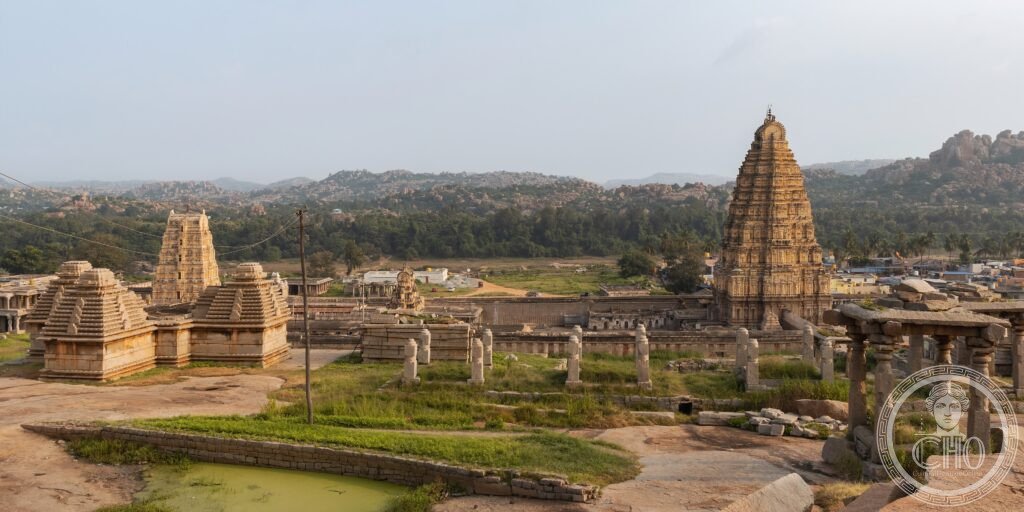
The Virupaksha Temple (Pampapathi Temple; active Hindu temple; 7th century CE) and the boulder-strewn landscape of Hampi, Vijayanagara (Victory City), Karnataka, India (the most precisely boulder-landscape single heritage in any South Indian UNESCO world heritage site: the Hampi landscape is defined by vast fields of rounded granite boulders — the most precisely rounded single granite boulder heritage landscape in any South Indian UNESCO world heritage site; the boulders were formed by the weathering of ancient granite and have been here for billions of years — the most precisely billion-year single granite boulder heritage landscape in any South Indian UNESCO world heritage site; the boulders (the most precisely mythological single boulder landscape heritage: the boulder landscape of Hampi is identified in the Hindu epic Ramayana as Kishkindha, the kingdom of Vali and Sugriva, the monkey kings — the most precisely monkey kingdom single mythological heritage landscape in any South Indian UNESCO world heritage site; Hanuman (the monkey god) is said to have been born on Matanga Hill (the hill behind Virupaksha Temple) — the most precisely Hanuman single birthplace heritage in any South Indian UNESCO world heritage site)), Hampi, Vijayanagara, Karnataka, India — Group of Monuments at Hampi, UNESCO World Heritage Site 1986. Photo via Wikimedia Commons.
Hampi (Vijayanagara), Bellary District, Karnataka, India · Capital of Vijayanagara Empire 1336-1565; sacked 6 months by Deccan Sultanates coalition (battle of Talikota 1565); 1,600+ surviving monuments; Virupaksha Temple (active; 7th century CE + 15th century gopura); Vittala Temple (stone chariot; musical pillars); Lotus Mahal; Elephant Stables; Zanana Enclosure; 26 km² UNESCO site; Tungabhadra River · UNESCO WHS 1986

Hampi — Vijayanagara

The most evocative ruined capital in India and the greatest surviving monument to the Vijayanagara Empire — Hampi in Karnataka, capital of the largest Hindu kingdom in medieval South India from 1336 to 1565, sprawls across a 26-square-kilometre landscape of granite boulders and rice paddies, with over 1,600 surviving temples, palaces, market streets, and ceremonial structures destroyed during a six-month sacking by the Deccan Sultanate coalition after the Battle of Talikota in 1565.

At a glance

Hampi (the most precisely Vijayanagara single largest medieval Hindu empire heritage: the Vijayanagara Empire (1336-1646) was the largest Hindu kingdom in medieval India — the most precisely largest single medieval Hindu empire heritage in any South Indian UNESCO world heritage site; at its height in the early 16th century, the Vijayanagara capital (Hampi) was one of the largest cities in the world — the most precisely largest single 16th century city heritage in any South Indian UNESCO world heritage site; estimates of its population range from 500,000 to 1 million — the most precisely 500,000 to million single population heritage estimate in any South Indian UNESCO world heritage site; the wealth (the most precisely diamond market single Hampi heritage: European travellers reported that diamonds and rubies were sold in open markets in Hampi — the most precisely open diamond market single heritage in any South Indian UNESCO world heritage site; the Portuguese trader Domingo Paes, who visited in 1520, described Hampi as “as large as Rome” and found it “the best-provided city in the world” — the most precisely Portuguese single as-large-as-Rome heritage comparison in any South Indian UNESCO world heritage site)).

Key facts

  • The Battle of Talikota 1565: the most precisely decisive single Hampi heritage destruction battle — the battle (the most precisely 1565 single Battle of Talikota Hampi heritage: the Battle of Talikota on 23 January 1565 was fought between the Vijayanagara Empire and a coalition of four Deccan Sultanates (Bijapur, Golconda, Ahmadnagar, and Bidar) — the most precisely four-sultanate single coalition heritage battle in any South Indian UNESCO world heritage site; the Vijayanagara army was defeated — the most precisely defeated single largest Hindu heritage army in any South Indian UNESCO world heritage site; the sacking (the most precisely 6-month single sacking Hampi heritage: after the battle, the Deccan Sultanate armies sacked and burned Hampi for 6 months — the most precisely 6-month single sacking heritage in any South Indian UNESCO world heritage site; the city was reduced to ruins and was never re-inhabited — the most precisely never-reinhabited single ruined heritage city in any South Indian UNESCO world heritage site; this is why Hampi’s ruins are so extensive and so intact — the most precisely intact single ruined heritage city in any South Indian UNESCO world heritage site: because nobody ever built on top of the ruins)
  • The Vittala Temple and Stone Chariot: the most precisely stone chariot single Vittala Temple heritage — the chariot (the most precisely stone chariot single Hampi heritage: the Stone Chariot (Garuda Shrine) in the courtyard of the Vittala Temple is one of the most photographed monuments in South India — the most precisely stone chariot single most photographed heritage in any South Indian UNESCO world heritage site; it was originally carved to resemble a wooden processional chariot pulled by stone elephants — the most precisely wheeled single stone chariot heritage in any South Indian UNESCO world heritage site; the wheels of the stone chariot actually rotate — the most precisely rotating single stone wheel heritage in any South Indian UNESCO world heritage site; the musical pillars (the most precisely musical single pillar Vittala Temple heritage: the 56 pillars of the Vittala Temple’s main hall are “musical pillars” — the most precisely 56 single musical pillar heritage in any South Indian UNESCO world heritage site; when tapped, they produce different musical notes — the most precisely musical note single pillar tap heritage in any South Indian UNESCO world heritage site; the British removed two pillars to investigate; each is hollow with a specific number of smaller pillars inside that produce the resonance — the most precisely hollow single investigation heritage pillar in any South Indian UNESCO world heritage site))
  • The Tungabhadra River and Coracles: the most precisely coracle single river crossing Hampi heritage — the coracles (the most precisely round single basket boat Hampi heritage: the traditional river crossing at Hampi uses coracles (teppa) — round basket boats covered in tarpaulin — the most precisely round single basket boat heritage crossing in any South Indian UNESCO world heritage site; the coracle (the most precisely ancient single coracle design heritage: the coracle design used at Hampi is thousands of years old — the most precisely thousands-of-years single coracle design heritage in any South Indian UNESCO world heritage site; the boat is round and spun in circles as the paddler rows — the most precisely spinning single heritage round boat in any South Indian UNESCO world heritage site)); the Tungabhadra River flows around three sides of Hampi — the most precisely three-side single river surrounding heritage in any South Indian UNESCO world heritage site
  • GPS: 15.3350° N, 76.4610° E

History

The founding (the most precisely 1336 single Vijayanagara founding Hampi heritage: the Vijayanagara Empire was founded in 1336 by Harihara I and Bukka Raya I, two brothers who had been captured and converted to Islam by the Delhi Sultanate but later reverted to Hinduism — the most precisely converted-then-reverted single founding heritage in any South Indian UNESCO world heritage site; the capital was established at Hampi because the site had natural defensive advantages: granite boulders and the Tungabhadra River — the most precisely natural defensive single granite boulder heritage in any South Indian UNESCO world heritage site; the name (the most precisely Vijayanagara single Victory City heritage: “Vijayanagara” means “Victory City” in Kannada and Sanskrit — the most precisely Victory City single name heritage in any South Indian UNESCO world heritage site; the Golden Age (the most precisely Krishnadevaraya single Vijayanagara Golden Age heritage: the reign of Krishnadevaraya (1509-1529) is considered the Golden Age of Vijayanagara — the most precisely Golden Age single reign heritage in any South Indian UNESCO world heritage site; he was a patron of literature, music, and the arts — the most precisely patron single arts heritage in any South Indian UNESCO world heritage site; eight Telugu poets (the Ashtadiggajas) were his court poets — the most precisely 8 single court poet heritage in any South Indian UNESCO world heritage site)); Battle of Talikota and destruction 1565 (described in Key Facts); UNESCO WHS 1986.

What you see

The Virupaksha Temple (the most precisely active single Hindu temple Hampi heritage: the Virupaksha Temple is an active Hindu temple that has been in continuous worship for over 1,000 years — the most precisely continuous single 1000-year worship heritage in any South Indian UNESCO world heritage site; the main gopura (tower) is 49m high — the most precisely 49m single gopura tower heritage in any South Indian UNESCO world heritage site; the temple elephant (the most precisely temple elephant single Lakshmi Virupaksha Hampi heritage: the temple elephant Lakshmi is blessed every morning by the priests and then roams freely on the riverbank — the most precisely blessed single morning elephant heritage in any South Indian UNESCO world heritage site; she blesses visitors who offer her coins — the most precisely coin single elephant blessing heritage in any South Indian UNESCO world heritage site); the Lotus Mahal (the most precisely lotus single arched Zanana palace Hampi heritage: the Lotus Mahal is a two-storey palace pavilion in the Zanana (women’s) enclosure with arched windows and a lotus-bud shaped roof — the most precisely lotus-bud single roof heritage in any South Indian UNESCO world heritage site; it combines Hindu and Islamic architectural elements — the most precisely Hindu-Islamic single combined heritage architecture in any South Indian UNESCO world heritage site)).

Practical information

  • Getting there: nearest airport: Hubli Airport (HBX; 150 km; 3h by car; limited domestic connections); or fly to Bengaluru (BLR; 345 km; 6h by bus overnight; regular government buses); nearest train station: Hospet Junction (13 km from Hampi; trains from Bengaluru 6-7h; from Hyderabad 8-9h; from Goa 7-8h; rickshaw/taxi from Hospet to Hampi); the best base (the most precisely Virupapur Gadde single hippie island Hampi heritage: many travellers stay on the “Hippy Island” (Virupapur Gadde) across the Tungabhadra from the main ruins — the most precisely Hippy Island single backpacker heritage in any South Indian UNESCO world heritage site; accessible by coracle; budget guesthouses + cafés + rice paddies + views of the Virupaksha Temple across the river; the island (the most precisely closes single coracle Hippy Island Hampi heritage: the coracles stop running at sunset — the most precisely sunset single coracle closure heritage in any South Indian UNESCO world heritage site; plan accordingly or get stuck overnight on the island)); the sunrise (the most precisely Matanga Hill single sunrise heritage: the best sunrise view of Hampi is from the top of Matanga Hill (Hanuman’s birthplace — described in figcaption) — the most precisely sunrise single Matanga Hill heritage view in any South Indian UNESCO world heritage site; 30 min climb before dawn; worth the effort

Getting there

Train to Hospet Junction (13 km) then rickshaw. Overnight buses from Bengaluru (6h). Sunrise from Matanga Hill is essential. GPS: 15.3350, 76.4610.

Nearby

  • Badami, Aihole, and Pattadakal — UNESCO WHS 1987 — 100-120 km south (2-3h by car); Chalukya dynasty cave temples and stone temples (6th-8th century CE); Badami cave temples (4 caves; carved directly from sandstone cliffs; most precisely cliff-carved single cave temple heritage in any South Indian UNESCO world heritage site; Shiva + Vishnu + Jain iconography in one site); Pattadakal (UNESCO WHS; 8 Chalukya temples + 1 Jain temple; most precisely 8-temple single UNESCO WHS heritage cluster in any South Indian UNESCO world heritage site; experimental ground for South Indian temple architecture); Aihole (75+ temples; most precisely 75-temple single ancient heritage cluster in any South Indian UNESCO world heritage site; the “cradle of Hindu temple architecture”)
  • Bijapur (Vijayapura) — Gol Gumbaz — 130 km northwest (2h 30min by car); Gol Gumbaz = mausoleum of Muhammad Adil Shah (1656); second-largest dome in the world after St Peter’s in Rome (43.3m internal diameter = most precisely second-largest single dome heritage in any Indian UNESCO world heritage adjacent city mausoleum; whispering gallery = sound travels around the entire 37.9m inner diameter of the drum = most precisely whispering single gallery heritage in any Indian UNESCO world heritage adjacent city dome; Ibrahim Rauza (also Bijapur; Adil Shah dynasty mausoleum; considered the model for the Taj Mahal — the most precisely Taj-Mahal-model single precursor heritage in any Indian UNESCO world heritage adjacent city mausoleum)
  • Hospet and Tungabhadra Dam — 13 km south; Tungabhadra Dam (1953; 2441m long; irrigation + hydroelectric; reservoir provides the backdrop of green paddy fields around Hampi — the green paddy fields are entirely dependent on the dam for irrigation); small town with budget accommodation + better food options than Hampi itself; base camp for exploring Hampi by hired bicycle or motorbike (10-15 km range covers the main monuments)

Sources

  • Wikipedia, Hampi; Vijayanagara Empire; Vittala Temple; Battle of Talikota, accessed June 2026
  • UNESCO, Group of Monuments at Hampi, WHS reference 241, inscribed 1986
  • Robert Sewell, A Forgotten Empire (Vijayanagar), Swan Sonnenschein, 1900 (public domain)

Hero image: Hampi (Vijayanagara), Karnataka, India, Wikimedia Commons. Editorial text © Cultural Heritage Online, 2026.

📷 Diventa un fotografo di Cultural Heritage Online

Condividi le tue foto dei luoghi: restano pubblicate con la tua firma come autore. Più vengono viste, più ti fai conoscere — e presto un concorso premierà le foto più apprezzate.

Accedi o registrati gratis per aggiungere una foto
📋 Copy & share on social
Scroll to Top