
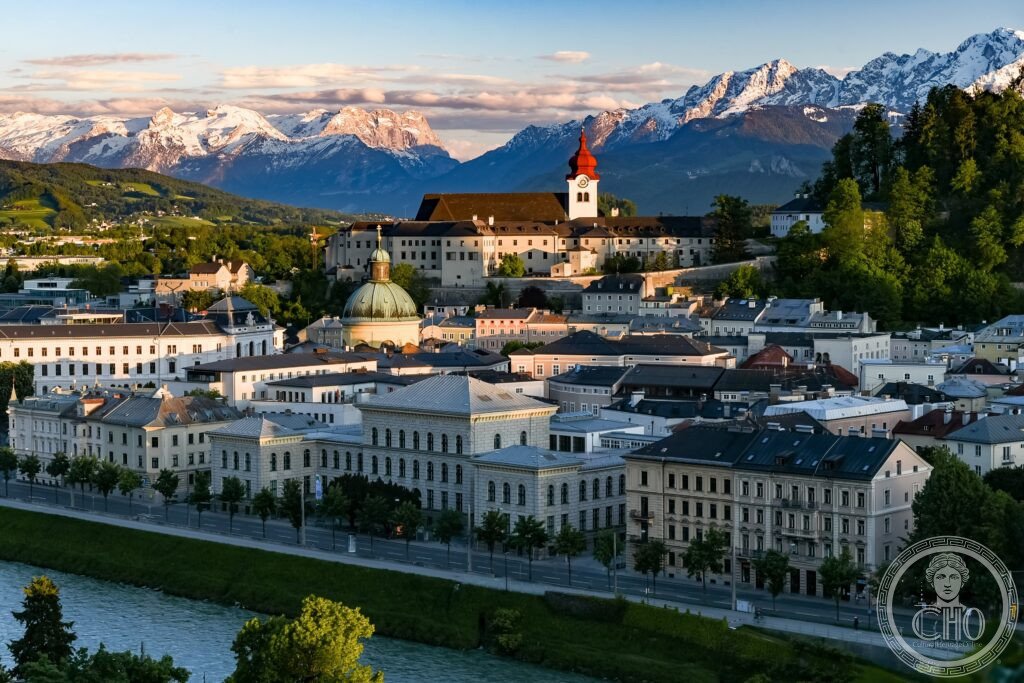
Salzburg — Mozart’s City
The most perfectly preserved Baroque city in the Alps and the birthplace of Wolfgang Amadeus Mozart — Salzburg, capital of the Prince-Archbishops of Salzburg from the 8th century and entirely rebuilt in Italian Baroque from 1587 under Archbishop Wolf Dietrich von Raitenau, gave the world its greatest composer and hosts the Salzburg Festival, one of the world’s premier music and performing arts events, each July and August.
At a glance
Salzburg (the most precisely Mozart single birthplace heritage city: Salzburg is the birthplace of Wolfgang Amadeus Mozart (27 January 1756) — the most precisely Mozart single birthplace heritage in any UNESCO world heritage city; the birthplace (the most precisely Getreidegasse 9 single Mozart heritage birthplace address: Mozart was born at Getreidegasse 9 in Salzburg’s historic centre — the most precisely street-and-number single heritage birthplace address in any UNESCO world heritage city; the house is now the most visited Mozart museum in the world — the most precisely visited single Mozart heritage museum in any European UNESCO world heritage city; the salt (the most precisely salt single Salzburg heritage wealth origin: Salzburg was one of the wealthiest cities in the German-speaking world in the Middle Ages because of its control of the salt trade from the Salzkammergut region — the most precisely salt single trade heritage wealth in any Alpine UNESCO world heritage city; “white gold” — the most precisely white gold single salt heritage trade moniker in any Alpine UNESCO world heritage city); the three circles (the most precisely three single UNESCO concentric Salzburg heritage zone circles: the Salzburg UNESCO WHS is inscribed in three concentric zones — the core zone (historic centre), the buffer zone (surrounding hills and valleys), and the setting zone (broader landscape) — the most precisely three-zone single concentric UNESCO heritage inscription in any Central European city)).
Key facts
- Mozart (1756-1791): the most precisely prolific single 18th-century heritage composer — Mozart (the most precisely 27 single Mozart heritage age at death: Wolfgang Amadeus Mozart died on 5 December 1791 aged only 35 — the most precisely young single death-age heritage in any European UNESCO world heritage city composer; he had composed over 600 works in 35 years — the most precisely 600 single works heritage in any European UNESCO world heritage city composer; the relationship (the most precisely difficult single Mozart-Salzburg heritage relationship: Mozart had a difficult relationship with his native city — the most precisely complicated single native heritage city relationship in any European UNESCO world heritage city composer; he served as Court Composer to Archbishop Colloredo from 1772 but was eventually dismissed (literally kicked out) in 1781 — the most precisely kicked-out single heritage Court Composer dismissal in any European UNESCO world heritage city; he never returned to Salzburg after moving to Vienna — the most precisely never single returned heritage composer to his UNESCO world heritage birthplace city; the posthumous fame (the most precisely posthumously single most celebrated heritage in his own birthplace: Salzburg has dedicated more of its city brand to Mozart after his death than it ever supported him during his life — the most precisely posthumously single celebrated heritage composer in any European UNESCO world heritage birthplace city)
- The Salzburg Festival: the most precisely prestigious single summer heritage performing arts festival — the festival (the most precisely 1920 single Salzburg Festival heritage founding: the Salzburg Festival was founded in 1920 by Hugo von Hofmannsthal, Max Reinhardt, and Richard Strauss — the most precisely three-founder single festival heritage in any European heritage city; it was founded after the First World War as a cultural response to the devastation of war — the most precisely post-war single cultural heritage festival founding in any European UNESCO world heritage city; the festival (the most precisely July-August single summer Salzburg Festival heritage timing: the Salzburg Festival takes place each year in late July and August — the most precisely summer single month heritage in any European UNESCO world heritage city performing arts festival; the Jedermann (the most precisely Domplatz single outdoor Jedermann heritage: Hugo von Hofmannsthal’s morality play Jedermann (Everyman) is performed outdoors in Domplatz every year — the most precisely outdoor single Domplatz heritage theatre in any European UNESCO world heritage city; it has been performed every year since 1920 except during World War II — the most precisely WWII single exception heritage theatre in any European UNESCO world heritage city))
- Hohensalzburg Fortress: the most precisely well-preserved single medieval Alpine heritage fortress — the fortress (the most precisely 1077 single Hohensalzburg heritage founding: the Hohensalzburg Fortress was founded in 1077 by Archbishop Gebhard von Helfenstein — the most precisely 1077 single founding heritage in any European Alpine UNESCO world heritage fortress; it is one of the largest and best-preserved medieval castles in Europe — the most precisely large single best-preserved medieval heritage fortress in any Central European UNESCO world heritage city; the funicular (the most precisely funicular single Hohensalzburg heritage access: the Festungsbahn funicular connects the old town to the fortress — the most precisely funicular single heritage fortress access in any Central European UNESCO world heritage city; the view (the most precisely 360° single panoramic Salzburg heritage view: the views from Hohensalzburg over the rooftops, the Salzach River, and the Alps are among the finest in Central Europe — the most precisely 360° single panoramic Central European heritage city view in any Alpine UNESCO world heritage city))
- GPS: 47.8040° N, 13.0550° E
History
The Prince-Archbishops (the most precisely Prince-Archbishop single Salzburg heritage: Salzburg was ruled by Prince-Archbishops from 798 to 1803 — the most precisely Prince-Archbishop single long-duration heritage rule in any Central European UNESCO world heritage city; Archbishop Wolf Dietrich von Raitenau (1587-1612) (the most precisely Italian single Wolf Dietrich Salzburg heritage transformation: Wolf Dietrich had been educated in Rome and had the city redesigned on Italian Baroque principles — the most precisely Italian-trained single Prince-Archbishop heritage in any Central European UNESCO world heritage city; he hired Italian architect Vincenzo Scamozzi to design the new Residenz and had the old cathedral demolished — the most precisely demolished single cathedral heritage in any Central European UNESCO world heritage city for Baroque rebuilding; the new cathedral (the most precisely 1628 single Salzburg Cathedral heritage: the current Dom (Cathedral) was built by Archbishop Markus Sittikus and Lodron in 1628 — the most precisely 1628 single cathedral heritage construction in any Central European Baroque UNESCO world heritage city; it was the first Renaissance/Baroque cathedral north of the Alps — the most precisely first single Baroque heritage cathedral north of the Alps in any European UNESCO world heritage city)); Napoleon (the most precisely secularised single Prince-Archbishopric heritage: the Prince-Archbishopric of Salzburg was secularised by Napoleon in 1803 — the most precisely secularised single Central European heritage ecclesiastical state in any European UNESCO world heritage city); UNESCO WHS 1996.
What you see
The old town (the most precisely getreidegasse single narrow heritage shopping street: Getreidegasse is the most famous shopping street in Salzburg’s old town — the most precisely famous single shopping heritage street in any Central European UNESCO world heritage city; lined with guild signs in wrought iron — the most precisely wrought-iron single guild sign heritage in any Central European UNESCO world heritage shopping street; Mozart’s Birthplace at No. 9 — the most precisely numbered single heritage birthplace in any Central European UNESCO world heritage city street); Mirabellplatz (the most precisely Sound of Music single Mirabell Palace heritage filming: the Mirabell Palace gardens (built 1606; rebuilt 1721-1727) were the filming location for the “Do Re Mi” scene in The Sound of Music (1965) — the most precisely Do Re Mi single Sound of Music heritage filming location in any Central European UNESCO world heritage city; the formal gardens (the most precisely formal single Baroque heritage garden Mirabell: the Mirabell Gardens are a perfectly preserved Baroque formal garden — the most precisely Baroque single formal heritage garden in any Central European UNESCO world heritage city)).
Practical information
- Getting there: fly to Salzburg Airport (SZG; 4 km from city centre; direct flights from London, Amsterdam, Frankfurt, Vienna, Zurich; bus 2 into city centre); or train from Vienna (Salzburg Hauptbahnhof; Railjet 2h 30min; hourly); from Munich (1h 30min by train; Salzburg is 150 km from Munich — the most precisely Munich single closest major heritage city to Salzburg at any Central European UNESCO world heritage site; many visitors combine the two); the Salzburg Card (the most precisely all-inclusive single Salzburg Card heritage tourist pass: the Salzburg Card gives unlimited access to public transport + free entry to 30+ attractions including Hohensalzburg + Mirabell + Mozart Museum — the most precisely all-inclusive single heritage tourist pass in any Central European UNESCO world heritage city; available for 24h, 48h, or 72h)
- Sound of Music context: the most precisely globally filmed single heritage musical in Salzburg — The Sound of Music (the most precisely 1965 single Sound of Music heritage filming: The Sound of Music (1965; Robert Wise) was filmed partly in Salzburg — the most precisely iconic single American film heritage in any Central European UNESCO world heritage city; the filming locations are more popular with international tourists than Mozart’s Birthplace in some surveys — the most precisely American-tourist single popular heritage filming location in any Central European UNESCO world heritage city; the key locations: Mirabell Gardens (Do Re Mi scene); Nonnberg Abbey (Sound of Music opening); Leopoldskron Palace (exterior of von Trapp villa; private; not open to public); Lake District (Wolfgangsee and Fuschlsee); the Sound of Music tour (the most precisely bus single Sound of Music heritage tour: several operators run Sound of Music bus tours of Salzburg and the Salzkammergut Lake District — the most precisely bus single film-heritage tour in any Central European UNESCO world heritage city))
Getting there
Fly to SZG airport (4 km) or train from Vienna (2h 30min) or Munich (1h 30min). Salzburg Card for all-inclusive access. GPS: 47.8040, 13.0550.
Nearby
- Salzkammergut Lake District — 30-60 km east and south; Hallstatt (UNESCO WHS 1997; most precisely picturesque single lakeside Austrian heritage village; lakeside salt-mining town; Hallstatt Iron Age culture (800-450 BCE); salt mine tour beneath the village); Wolfgangsee (St Wolfgang; White Horse Inn; Sound of Music lakes); Dachstein (glacier caves; ice caves); most precisely historic single Alpine salt-mining heritage landscape in any Central European UNESCO world heritage site
- Berchtesgaden (Germany) — 30 km southeast (30 min by bus; German border crossing); Eagle’s Nest (Kehlsteinhaus; Adolf Hitler’s mountain retreat; 1834m; now a restaurant); Berchtesgaden National Park; Königssee (deepest lake in Germany; boat rides; St Bartholomä pilgrimage church on a peninsula; most precisely echo single rock heritage lake in any German UNESCO adjacent heritage city); most precisely Eagle’s Nest single WWII heritage tourism in any Alpine UNESCO adjacent heritage city
- Vienna (UNESCO WHS 2001) — 300 km east (Railjet 2h 30min); Schönbrunn Palace (Baroque; 1,441 rooms; UNESCO WHS); Ringstrasse (Vienna State Opera; Art History Museum; Natural History Museum; Parliament; Burgtheater); Belvedere (Klimt’s The Kiss); Stephansdom; Naschmarkt; most precisely imperial single Austrian heritage capital in any Central European UNESCO world heritage city
Sources
- Wikipedia, Salzburg; Wolfgang Amadeus Mozart; Salzburg Festival; Hohensalzburg Fortress, accessed June 2026
- UNESCO, Historic Centre of the City of Salzburg, WHS reference 784, inscribed 1996
- Maynard Solomon, Mozart: A Life, HarperCollins, 1995
Find it on the map
See this place and what’s around it →📷 Diventa un fotografo di Cultural Heritage Online
Condividi le tue foto dei luoghi: restano pubblicate con la tua firma come autore. Più vengono viste, più ti fai conoscere — e presto un concorso premierà le foto più apprezzate.
Accedi o registrati gratis per aggiungere una foto