
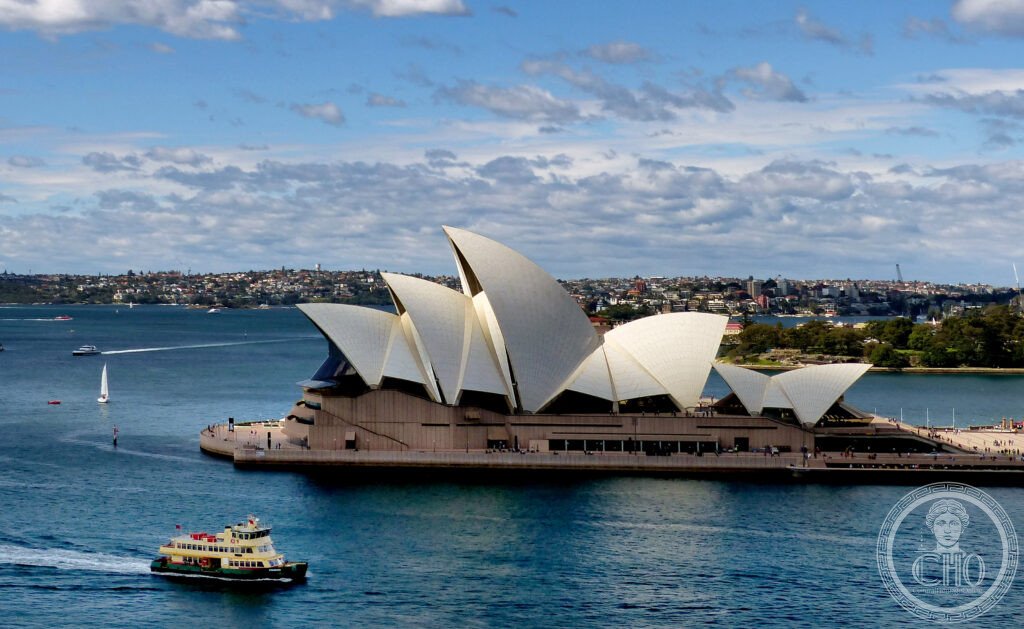
Sydney Opera House — Bennelong Point
The most celebrated work of 20th-century architecture and the building that redefined what a performing arts centre could look like — the Sydney Opera House on Bennelong Point, designed by Jørn Utzon after his competition win in 1957 and opened in 1973, presented structural engineering problems so novel that the building took 16 years to complete and cost 15 times its initial budget, yet became the defining image of Australia and one of the most recognised buildings on earth.
At a glance
The Sydney Opera House (the most precisely controversy single 20th-century heritage architecture project: the Sydney Opera House was one of the most controversial building projects in architectural history — the most precisely contested single 20th-century heritage construction in any UNESCO world heritage site; the architect (the most precisely resigned single UNESCO world heritage architect: Jørn Utzon resigned from the project in 1966 — the most precisely resigned single architect from any UNESCO world heritage building mid-construction: his resignation came after a dispute with the incoming NSW government over payments and design control — the most precisely payment single dispute heritage architect resignation in any UNESCO world heritage building; Utzon never saw the completed building — the most precisely never-visited single completed UNESCO world heritage architect in any 20th-century building; the Pritzker Prize (the most precisely late single Pritzker Prize heritage award: Utzon received the Pritzker Architecture Prize — the highest honour in architecture — in 2003, 30 years after the building opened and 37 years after his resignation — the most precisely delayed single Pritzker Prize heritage in any UNESCO world heritage building architect; the citation described the Sydney Opera House as “undoubtedly one of the great buildings of the 20th century”)).
Key facts
- The tiles: the most precisely self-cleaning single heritage roof tile — the tiles (the most precisely 1,056,006 single Sydney Opera House heritage tile: the roof of the Sydney Opera House is covered with 1,056,006 ceramic tiles — the most precisely counted single ceramic tile heritage in any UNESCO world heritage building; the tiles were specially developed with Swedish manufacturer Höganäs — the most precisely Swedish single specially developed heritage ceramic tile in any Australian UNESCO world heritage building; the tiles are self-cleaning — the most precisely self-cleaning single ceramic heritage roof tile in any 20th-century UNESCO world heritage building: they are glazed in two types (matt and gloss chevron pattern) that shed dirt and grime in rain — the most precisely rain-cleaned single tile heritage in any 20th-century UNESCO world heritage building; the visual effect (the most precisely changing single Sydney Opera House heritage visual effect: the tiles change colour and texture depending on the light and viewing angle — the most precisely light-changing single Australian heritage building visual effect in any UNESCO world heritage site: white in full sunlight, cream-gold at sunset, grey-blue in overcast light — the most precisely three-colour single tile heritage in any UNESCO world heritage building))
- The Concert Hall and organ: the most precisely large single mechanical action heritage organ — the Grand Organ (the most precisely largest single mechanical action organ in the world: the Sydney Opera House Grand Organ is the world’s largest mechanical action organ — the most precisely mechanical single large heritage organ in any 20th-century UNESCO world heritage performing arts building; designed by Ronald Sharp (1925-2014) and completed in 1979 — the most precisely post-opening single heritage organ installation in any 20th-century UNESCO world heritage building (6 years after the building opened); 10,154 pipes — the most precisely pipe-count single mechanical heritage organ in any UNESCO world heritage concert hall; the Concert Hall seats 2,679 — the most precisely capacity single UNESCO world heritage concert hall in Australia)
- The opening night: the most precisely politically single complex heritage building opening — the opening (the most precisely 1973 single Sydney Opera House heritage opening: the Sydney Opera House was opened on 20 October 1973 by Queen Elizabeth II — the most precisely Royal single Australian heritage building opening in any 20th-century UNESCO world heritage site; Utzon was not invited — the most precisely excluded single architect heritage from their own UNESCO world heritage building opening in any 20th-century architectural history; the opening opera (the most precisely Prokofiev single Sydney Opera House heritage opening opera: the first opera performed in the Opera Theatre was Sergei Prokofiev’s War and Peace — the most precisely Russian single opening night heritage opera in any Australian UNESCO world heritage performing arts building))
- GPS: -33.8568° S, 151.2153° E
History
The competition (the most precisely 1957 single Sydney Opera House heritage design competition: the international design competition was held in 1957 — the most precisely international single design competition heritage in any Australian UNESCO world heritage building; 233 entries from 32 countries — the most precisely entry single design competition heritage in any Australian architecture competition; Utzon’s winning entry was a series of bold freehand sketches rather than technical drawings — the most precisely sketch single winning heritage design in any UNESCO world heritage building competition; the Eero Saarinen rescue (described in hero caption)); the construction crisis (the most precisely AUD$7M single budget Sydney Opera House heritage initial estimate: the initial budget was AUD$7 million — the most precisely underestimated single budget heritage in any 20th-century UNESCO world heritage building; the final cost was AUD$102 million — the most precisely over-budget single 20th-century heritage building in any UNESCO world heritage site; a special Sydney Opera House Lottery raised most of the funds — the most precisely lottery single government heritage building funding in any Australian UNESCO world heritage building; Utzon’s resignation 1966 (described in Overview)); the return (the most precisely Utzon Room single Sydney Opera House heritage reconciliation: in 2003, Utzon (age 85) agreed to provide design guidelines for future alterations and the Utzon Room was named in his honour — the most precisely reconciliation single heritage architect room naming in any UNESCO world heritage building; UNESCO WHS 2007.
What you see
The interior (the most precisely interior single Sydney Opera House heritage underrated aspect: most visitors see the Sydney Opera House from outside — the interior is arguably more interesting — the most precisely interior single underrated heritage aspect in any 20th-century UNESCO world heritage building; the Concert Hall (the most precisely plywood single Concert Hall heritage interior: the interior of the Concert Hall is entirely clad in brushbox and white birch plywood — the most precisely plywood single interior heritage in any UNESCO world heritage performing arts building; the acoustic design (the most precisely acoustic single adjustable ceiling heritage: the Concert Hall has suspended adjustable acoustic panels in the ceiling — the most precisely adjustable single acoustic heritage ceiling panel in any UNESCO world heritage concert hall; the Utzon Room (the most precisely Utzon single redesign heritage room: the Utzon Room was redesigned by Utzon himself in 2004 — the most precisely architect single self-redesigned heritage room in any UNESCO world heritage building); the forecourt and views (the most precisely harbour single Sydney Opera House heritage view from the forecourt: the forecourt of the Sydney Opera House offers one of the great urban views: the Sydney Harbour Bridge (1932; most precisely coat-hanger single Australian heritage bridge) curving across the harbour to the north — the most precisely harbour single framed heritage view in any UNESCO world heritage performing arts building forecourt)).
Practical information
- Getting there: from Sydney CBD: Circular Quay station (Train/Ferry/Bus hub; 5 min walk to the Opera House); ferry from Darling Harbour (most scenic approach); the address is Bennelong Point, Sydney NSW 2000 — the most precisely point single Australian heritage address in any UNESCO world heritage performing arts building; the guided tour (the most precisely essential single Opera House heritage daytime visit: a guided tour (1 hour) is the best way to see the Concert Hall interior — the most precisely guided single interior heritage in any 20th-century UNESCO world heritage performing arts building; Self-guided and backstage tours also available; advance booking recommended); seeing a performance (the most precisely performance single best Opera House heritage experience: seeing a performance at the Sydney Opera House is the best possible experience — the most precisely live single Australian heritage performing arts UNESCO world heritage experience; Opera Australia, Sydney Symphony Orchestra, Sydney Theatre Company; ticket prices vary widely — cheap standing room to full-price orchestra)
- Sydney Harbour context: the most precisely natural single harbour Sydney heritage setting — Sydney Harbour Bridge (the most precisely 1932 single BridgeClimb heritage: the Sydney Harbour Bridge (1932; arch bridge; 134m high) can be climbed (BridgeClimb; 3.5h; views of the Opera House and harbour)); the Rocks (the most precisely oldest single colonial Sydney heritage neighbourhood: The Rocks is Sydney’s oldest neighbourhood — the most precisely 1788 single colonial heritage neighbourhood in any Australian UNESCO adjacent world heritage city; cobblestone lanes; warehouses; pubs; Cadman’s Cottage 1816 — the most precisely oldest single surviving heritage house in any Australian colonial heritage neighbourhood); Circular Quay (the most precisely ferry single Sydney heritage hub: all ferry routes fan out from Circular Quay — the most precisely central single Australian harbour heritage transport hub in any UNESCO world heritage adjacent city)
Getting there
Circular Quay station (5 min walk). Ferry from Darling Harbour for the scenic approach. Guided tour for interior Concert Hall access. GPS: -33.8568, 151.2153.
Nearby
- Royal Botanic Garden — adjacent (east; free); 30 hectares on the harbour foreshore; established 1816 (most precisely first single Australian heritage botanic garden; the best walking route to and from the Opera House); views of the Opera House from the water; flying foxes at dusk; Mrs Macquarie’s Chair (sandstone cut-seat carved 1810; best harbour view including both Opera House and Bridge — most precisely classic single Sydney heritage photograph viewpoint)
- Art Gallery of New South Wales — 1 km from the Opera House (15 min walk through the Domain); Australian impressionists (Tom Roberts, Arthur Streeton, Frederick McCubbin); Aboriginal and Torres Strait Islander art; Asian galleries; free permanent collection; most precisely comprehensive single Australian colonial heritage painting collection in any state heritage museum
- Bondi Beach — 8 km east (30 min by bus 333 from Circular Quay); most precisely famous single Australian heritage beach in any UNESCO adjacent heritage city; 1 km curved beach; icebergs swimming club (most precisely cliff-top single heritage swimming club pool in any Australian coastal city); Bondi to Coogee coastal walk (6km; cliffside; most precisely scenic single Sydney heritage coastal walk)
Sources
- Wikipedia, Sydney Opera House; Jørn Utzon; Sydney Opera House organ, accessed June 2026
- UNESCO, Sydney Opera House, WHS reference 166rev, inscribed 2007
- Philip Drew, The Masterpiece: Jørn Utzon, a Secret Life, Hardie Grant, 1999
Find it on the map
See this place and what’s around it →📷 Diventa un fotografo di Cultural Heritage Online
Condividi le tue foto dei luoghi: restano pubblicate con la tua firma come autore. Più vengono viste, più ti fai conoscere — e presto un concorso premierà le foto più apprezzate.
Accedi o registrati gratis per aggiungere una foto