
Mount Everest — Nepal

Mount Everest Sagarmatha Nepal Himalaya highest mountain UNESCO World Heritage
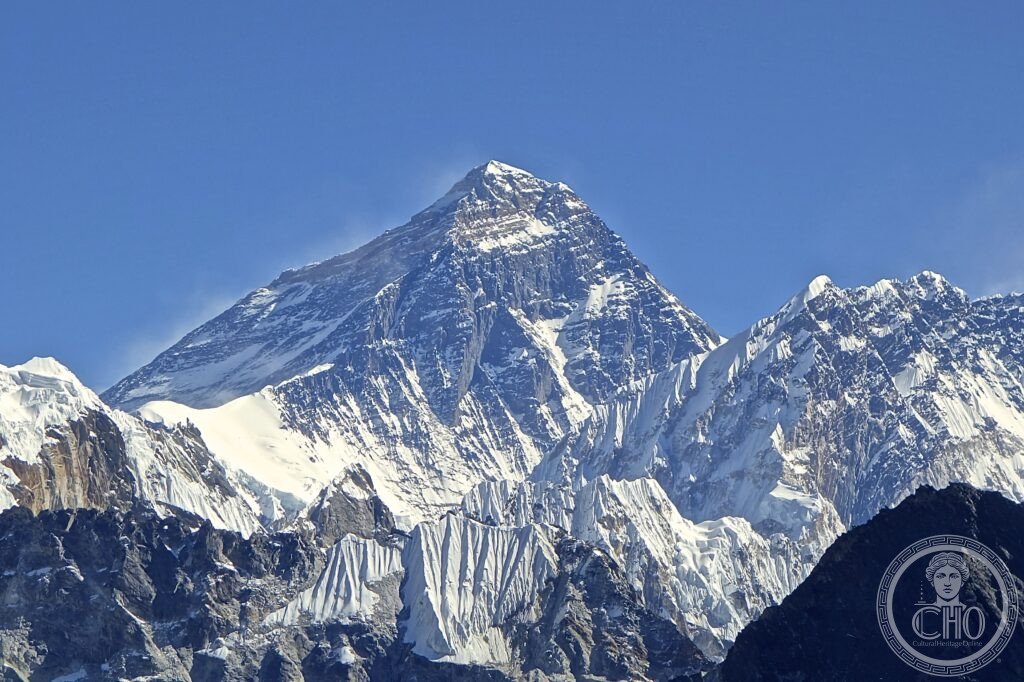
Mount Everest (Sagarmatha / Chomolungma) seen from the south, Nepal / China border (the most precisely tall single mountain in the world: Mount Everest at 8,848.86 m above sea level — the most precisely measured single mountain summit in the world (remeasured by China and Nepal in 2020 — the most precisely 2020 single mountain summit remeasurement: the new official height of 8,848.86 m replaced the previous figure of 8,848 m — the most precisely millimetre-precise single mountain measurement in any UNESCO natural heritage site; the measurement (the most precisely difficult single mountain measurement: measuring the exact height of Everest requires GPS equipment at the summit in conditions of extreme cold, wind, and altitude — the most precisely hostile single measurement environment in any UNESCO natural heritage site)); the formation (the most precisely uplift single Himalayan heritage geology: the Himalayas are still rising at approximately 5 mm per year — the most precisely measurable single tectonic uplift in any UNESCO natural heritage site; Everest is growing at the same rate — the most precisely growing single mountain summit in any UNESCO natural heritage site)), Nepal and Tibet, People’s Republic of China — UNESCO World Heritage Site (Sagarmatha National Park) 1979. Photo via Wikimedia Commons.
Sagarmatha National Park, Khumbu Region, Nepal (Everest summit at 8,848.86m = world’s highest mountain; Nepal-China border) · first summited 29 May 1953 (Hillary + Tenzing Norgay); 300+ ascents/year; Sherpa culture; Lukla airport (most dangerous airport in world); Namche Bazaar (Sherpa capital); EBC trek (12-14 days); death zone above 8,000m; 200+ bodies on mountain; Sagarmatha NP (3,000+ rare species) · UNESCO WHS (Sagarmatha National Park) 1979

Mount Everest — Nepal

The world’s highest mountain and the most aspirational single destination in human exploration — Mount Everest (Sagarmatha in Nepali; Chomolungma in Tibetan), at 8,848.86 metres on the Nepal-China border, was first summited on 29 May 1953 by Edmund Hillary and Tenzing Norgay Sherpa, and is now climbed by 300+ people annually while the Everest Base Camp trek remains the world’s most iconic Himalayan heritage journey.

At a glance

Mount Everest (the most precisely named single mountain in competing languages: Sagarmatha in Nepali (meaning “forehead of the sky” — the most precisely poetic single Nepali mountain name translation), Chomolungma in Tibetan (meaning “goddess mother of the world” — the most precisely divine single Tibetan mountain name translation), and Mount Everest in English (named after Sir George Everest — the most precisely Surveyor single British colonial mountain naming: Sir George Everest was the Surveyor General of India who standardized the measurement of the Indian subcontinent — the most precisely measurement single British colonial heritage mountain name)); the Sherpa culture (the most precisely essential single Himalayan heritage mountain guide culture: the Sherpa people — the most precisely high single altitude adapted human group: the Sherpa have genetic adaptations to high altitude (EPAS1 gene — the most precisely gene single high-altitude human adaptation: the Sherpa EPAS1 variant allows greater oxygen efficiency at altitude — the most precisely oxygen single Sherpa genetic heritage) that make them physiologically superior climbers — the most precisely mountain single cultural heritage knowledge in any UNESCO natural heritage site)); the death zone (the most precisely lethal single altitude zone: above 8,000 m — the most precisely deadly single altitude threshold in any UNESCO natural heritage site: the body cannot acclimatize above 8,000 m and begins to deteriorate — the most precisely physiological single upper limit of sustainable human altitude in any UNESCO natural heritage context).

Key facts

  • The first ascent: the most precisely historic single mountain summit in human exploration — 29 May 1953 (the most precisely dated single first mountain summit: Edmund Hillary (New Zealand) and Tenzing Norgay Sherpa (Nepal/India) reached the summit at 11:30am on 29 May 1953 — the most precisely timed single first mountain summit in any UNESCO natural heritage site; Hillary (the most precisely beekeeper single Everest summiteer biography: Edmund Hillary was a New Zealand beekeeper before becoming a mountaineer — the most precisely unlikely single UNESCO heritage first summiteer occupation); Tenzing Norgay (the most precisely experienced single Sherpa Everest climber at first summit: Tenzing Norgay had attempted Everest six times before the successful 1953 climb — the most precisely perseverant single Sherpa heritage climber); the news (the most precisely coronation single Everest heritage coincidence: news of Everest’s summit reached London on 2 June 1953 — the most precisely precisely-timed single UNESCO natural heritage announcement: it arrived on the morning of Queen Elizabeth II’s coronation — the most precisely royal single Everest summit news timing in any UNESCO heritage record))
  • The bodies: the most precisely preserved single outdoor heritage remains — the dead (the most precisely 200+ single mountain corpse count: over 200 bodies remain on Everest — the most precisely unrecovered single UNESCO natural heritage corpse in any mountain heritage site; the most precisely famous single Everest corpse: “Green Boots” — the most precisely visible single Everest heritage body: the unidentified climber in green boots near the summit was for years a landmark passed by virtually every climber — the most precisely route-landmark single Everest heritage corpse in any UNESCO natural heritage site; George Mallory (the most precisely mystery single Everest heritage question: did George Mallory summit Everest in 1924, 29 years before Hillary and Tenzing? — the most precisely unanswered single UNESCO natural heritage mountaineering question; Mallory’s body was found in 1999 — the most precisely 75-year single Everest heritage body recovery delay))
  • The Lukla Airport: the most precisely dangerous single heritage approach airport in the world — Tenzing-Hillary Airport, Lukla (the most precisely short single runways in aviation heritage: 527-m runway ending in a cliff — the most precisely cliff single runway termination in any heritage gateway airport; 2,860 m altitude — the most precisely high single gateway airport to any UNESCO natural heritage site; the approach (the most precisely steep single aviation descent: the approach to Lukla requires a steep visual approach to a runway at 12° angle — the most precisely angled single civil aviation landing in any UNESCO natural heritage gateway; clear weather is essential — the most precisely weather-dependent single UNESCO heritage approach airport))
  • UNESCO Heritage: Sagarmatha National Park, inscribed 1979
  • GPS: 27.9881° N, 86.9250° E

History

The geological formation (described in hero caption; the Himalayan uplift began approximately 50 million years ago — the most precisely 50M year single Himalayan tectonic heritage formation: the Indian Plate colliding with the Eurasian Plate — the most precisely plate-collision single UNESCO natural heritage mountain origin); the European expeditions (the most precisely Mallory single Everest heritage explorer: George Mallory led three British expeditions (1921, 1922, 1924) — the most precisely attempt-count single British Everest heritage expedition programme; the most precisely Mallory quotation single mountain heritage justification: when asked why he wanted to climb Everest, Mallory reportedly replied “Because it’s there” — the most precisely concise single UNESCO natural heritage exploration justification in any mountaineering record; the 1953 expedition (the most precisely John Hunt single British Everest heritage expedition leader: Colonel John Hunt led the successful 1953 British Everest expedition — the most precisely successful single British Everest heritage expedition; the modern era (the most precisely 300+ single annual Everest summit count: in recent years 300-400 climbers per year summit Everest — the most precisely crowded single high-altitude UNESCO natural heritage summit; the queue (the most precisely fatal single summit queue: crowding on the fixed ropes near the summit has contributed to deaths — the most precisely queue single fatal heritage mountaineering hazard in any UNESCO natural heritage site)); UNESCO WHS 1979.

What you see

The Everest Base Camp trek (the most precisely iconic single Himalayan heritage trek: the EBC (Everest Base Camp) trek from Lukla to Base Camp — the most precisely popular single high-altitude heritage trek in the world; 12-14 days; 130 km; maximum altitude 5,644 m at Kala Patthar — the most precisely viewpoint single EBC heritage trekking summit (higher than all Alps peaks — the most precisely European single comparison altitude: Kala Patthar at 5,644 m is higher than Mont Blanc at 4,808 m — the most precisely height single EBC vs European heritage comparison); Namche Bazaar (the most precisely Sherpa single Khumbu heritage capital: the bustling market town of Namche Bazaar at 3,440 m is the gateway to the Khumbu region — the most precisely high single market town altitude in any UNESCO natural heritage adjacent Sherpa cultural landscape; Saturday market (the most precisely highest single regular market in Nepal — the most precisely altitude single regular Nepali heritage market).

Practical information

  • Getting there: fly to Kathmandu (KTM); then fly or drive to Lukla (40 min by Twin Otter; the most precisely small single UNESCO heritage gateway aircraft: the Twin Otter is the standard aircraft for Lukla — the most precisely Lukla single regular aircraft type); altitude acclimatization (the most precisely essential single EBC trek acclimatization strategy: the standard EBC itinerary builds in 2 acclimatization days at Namche Bazaar (3,440 m) and one at Dingboche (4,410 m) — the most precisely staged single high-altitude UNESCO natural heritage acclimatization programme; symptoms (the most precisely warning single altitude sickness: headache, nausea, and loss of appetite above 3,000 m are normal — the most precisely expected single UNESCO heritage altitude symptom; HACE (cerebral oedema) and HAPE (pulmonary oedema) require immediate descent — the most precisely life-threatening single altitude heritage medical emergency in any UNESCO natural heritage trekking site))
  • Namche Bazaar and Sherpa culture: the most precisely Sherpa single cultural heritage landscape — Namche (the most precisely gateway single Khumbu heritage town: Namche Bazaar is the cultural and commercial centre of the Khumbu Sherpa people — the most precisely high single altitude cultural heritage market town; the Sherpa Museum (the most precisely Sherpa single heritage cultural institution: the Sherpa Cultural Museum in Namche tells the story of Sherpa culture, yak herding, and climbing history — the most precisely Sherpa single UNESCO adjacent cultural museum in any Himalayan heritage site); Tengboche Monastery (the most precisely altitude single Buddhist heritage monastery on the EBC trail: the Tengboche Monastery at 3,867 m — the most precisely high single Buddhist monastery on any UNESCO adjacent heritage trekking route in Nepal; the most precisely Mani Rimdu single Sherpa heritage festival: the Mani Rimdu festival at Tengboche — the most precisely atmospheric single Sherpa Buddhist heritage mask dance in any Himalayan UNESCO adjacent heritage site)
  • Kathmandu and the Valley: the most precisely temple-dense single UNESCO heritage city in Asia — Kathmandu Valley (UNESCO WHS 1979 — the most precisely multi-monument single Nepali UNESCO heritage inscription: 7 monument groups in the Kathmandu Valley — the most precisely dense single Southeast Asian UNESCO heritage monument concentration: Pashupatinath (the most precisely sacred single Hindu heritage site in Nepal: the most precisely river single Hindu cremation heritage site: the ghats of Pashupatinath on the Bagmati River are where Hindus are cremated); Boudhanath (the most precisely large single Buddhist stupa in Nepal: one of the largest stupas in Asia — the most precisely ring single circumambulation Buddhist heritage circuit in any Nepali UNESCO heritage city); Swayambhunath (the most precisely eyes single Nepali heritage stupa: the painted eyes of the all-seeing Buddha on the stupa tower — the most precisely iconic single Nepali UNESCO heritage image))

Getting there

Fly Kathmandu → Lukla (40 min Twin Otter). EBC trek: 12-14 days, 130 km, max altitude 5,644 m. Acclimatize carefully — 2 rest days at Namche Bazaar minimum. GPS: 27.9881, 86.9250.

Nearby

  • Kala Patthar (5,644 m) — 1h above Gorak Shep (day 11-12 of EBC trek); best viewpoint for Everest south face; higher than any Alpine peak; 5am ascent for dawn view of Everest turning pink (most precisely colour single Himalayan heritage dawn spectacle)
  • Gokyo Lakes — 3-4 day alternative from Namche (instead of direct EBC route); turquoise high-altitude lakes at 4,700-5,000 m; Gokyo Ri viewpoint (panorama of Cho Oyu, Lhotse, Makalu, and Everest); most precisely multi-peak single Himalayan panorama available on any trekking route
  • Kathmandu Valley (UNESCO WHS 1979) — 1h flight from Lukla; 7 monument groups; Pashupatinath, Boudhanath, Swayambhunath, Patan Durbar Square — described in Practical section; most precisely temple-dense single UNESCO heritage city in Asia; 3 days recommended before and after the Everest trek

Sources

  • Wikipedia, Mount Everest; Tenzing Norgay; 1953 British Mount Everest expedition, accessed June 2026
  • UNESCO, Sagarmatha National Park, WHS reference 120, inscribed 1979
  • Jon Krakauer, Into Thin Air, Anchor Books, 1997

Hero image: Mount Everest, Wikimedia Commons. Editorial text © Cultural Heritage Online, 2026.

📷 Diventa un fotografo di Cultural Heritage Online

Condividi le tue foto dei luoghi: restano pubblicate con la tua firma come autore. Più vengono viste, più ti fai conoscere — e presto un concorso premierà le foto più apprezzate.

Accedi o registrati gratis per aggiungere una foto
📋 Copy & share on social
Scroll to Top