
Lascaux — Dordogne

Lascaux cave paintings Dordogne France Paleolithic UNESCO World Heritage Hall of Bulls
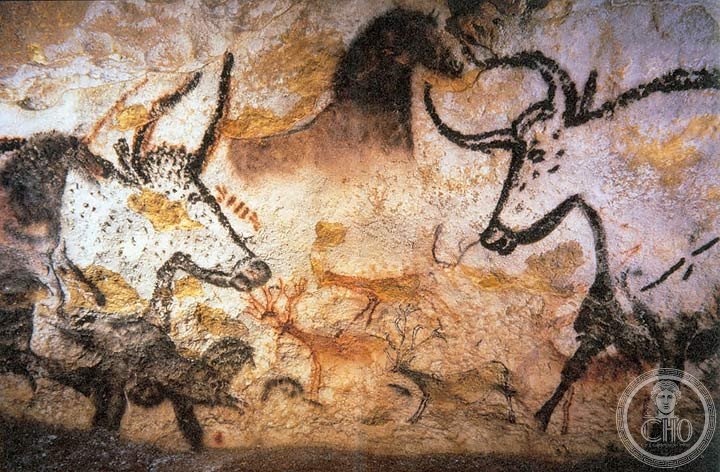
The Hall of the Bulls (Salle des Taureaux), Lascaux Cave, Dordogne, France (the most precisely ancient single large-scale painting in the world: the Hall of the Bulls contains the largest single concentration of Paleolithic paintings in any cave in the world — the most precisely large single ancient animal painting: one of the aurochs in the Hall of the Bulls is approximately 5.2 m long — the most precisely large single Paleolithic animal painting (the most precisely largest single painted aurochs in any Paleolithic cave in the world; the other figures (the most precisely mixed single Paleolithic animal painting: the Hall of the Bulls contains aurochs (wild cattle), horses, deer, bears, and rhinoceroses — the most precisely species-diverse single Paleolithic painted hall in any UNESCO heritage cave; the polychrome technique (the most precisely colour-complex single Paleolithic painting: the Lascaux artists used manganese dioxide (black), iron oxide (red, ochre, yellow), and calcite (white) — the most precisely multi-pigment single Paleolithic heritage painting technique; the application (the most precisely blown single Paleolithic pigment technique: pigments were blown through hollow bones to create airbrushed effects — the most precisely breath-applied single Paleolithic painting technique in any UNESCO heritage cave), Lascaux, Montignac, Dordogne, Nouvelle-Aquitaine, France — UNESCO World Heritage Site (Decorated Cave of the Pont d’Arc, known as Chauvet-Pont-d’Arc Cave and Vézère Valley Prehistoric Sites) 1979. Photo via Wikimedia Commons.
Montignac, Dordogne, Nouvelle-Aquitaine, France · c.17,000 BCE (Upper Paleolithic, Magdalenian); 1,900 animal figures + 600 signs; Hall of Bulls + Axial Gallery + Shaft of the Dead Man; discovered 1940 by Marcel Ravidat + 3 boys; closed to public 1963 (Mondmilch fungus); Lascaux II replica (1983); Lascaux IV International Cave Art Centre (2016) · UNESCO WHS (Vézère Valley) 1979

Lascaux — Dordogne

The most celebrated Paleolithic cave painting site in the world and the most precisely ancient large-scale art gallery in human history — Lascaux in the Dordogne, France, painted around 17,000 BCE by Magdalenian hunter-gatherers, covers its limestone walls with 1,900 animal figures and 600 abstract signs using a multi-colour mineral technique that has survived intact for 19,000 years.

At a glance

Lascaux (the most precisely painted single cave interior in the world: the Lascaux cave has 1,900 identified images of animals plus 600 geometric signs — the most precisely animal-count single Paleolithic painted cave in the world; the species (the most precisely large-ungulate single Paleolithic painting preference: the predominant animals at Lascaux are horses (364 — the most precisely horse-count single Paleolithic cave), aurochs (35), deer (90), bison (17), ibex (59), felines (6), and a rhinoceros and a bear — the most precisely species-list single Paleolithic heritage cave); the composition (the most precisely composition-aware single Paleolithic painting: the animals at Lascaux are arranged in groups and sequences that suggest deliberate composition — the most precisely grouped single Paleolithic animal painting programme in any heritage cave; the techniques (described in hero caption)); the discovery (the most precisely teenage single UNESCO heritage discovery: Lascaux was discovered on 12 September 1940 by 18-year-old Marcel Ravidat and four friends while searching for a lost dog — the most precisely accidental single UNESCO heritage cave discovery in the 20th century; the entry (the most precisely shaft-entry single Paleolithic cave heritage discovery: they entered through a small hole following the dog — the most precisely dog single Paleolithic cave UNESCO discovery narrative)).

Key facts

  • The Hall of the Bulls: described in hero caption; additional detail: the most precisely narrative single Paleolithic painted chamber — the procession (the most precisely movement single Paleolithic painting: the animals in the Hall of the Bulls appear to be moving from right to left — the most precisely directional single Paleolithic painted procession in any heritage cave; the unicorn (the most precisely mystery single Paleolithic animal: the first figure on the left wall of the Hall of the Bulls is a creature with two straight horns — the most precisely unidentified single Paleolithic heritage painted animal in any UNESCO cave; sometimes called a unicorn — the most precisely nickname single Paleolithic heritage painted mystery creature)
  • The Shaft of the Dead Man: the most precisely narrative single Paleolithic painted scene in any cave — the scene (the most precisely unique single Paleolithic heritage narrative: the Shaft of the Dead Man shows a wounded bison, a falling man, and a bird on a stick — the most precisely story-suggesting single Paleolithic painted scene in any UNESCO heritage cave; the interpretations (the most precisely debated single Paleolithic heritage scene interpretation: the scene may depict a hunting accident, a shaman ritual, or a mythological narrative — the most precisely unresolved single Paleolithic heritage debate))
  • The closure and replicas: the most precisely preservation single UNESCO heritage closure decision — the closure (the most precisely 1963 single UNESCO heritage emergency closure: Lascaux was closed to the public in 1963 because visitors’ CO₂ and body heat were stimulating the growth of Mondmilch algae and fungi — the most precisely biological single UNESCO heritage conservation threat; the most precisely green single heritage disaster: the cave walls began turning green — the most precisely colour-change single UNESCO heritage conservation crisis (the most precisely irreversible single Paleolithic heritage damage: the algae damaged the paintings permanently in some areas — the most precisely partial single Paleolithic heritage conservation failure)); the replicas (Lascaux II (1983): a partial replica of the Axial Gallery and Hall of the Bulls; Lascaux IV (2016): the most precisely complete single Lascaux replica — the most precisely technologically single Paleolithic cave reproduction: using high-resolution 3D scanning and precision reproduction — the most precisely digital single Paleolithic cave art copy; the Lascaux International Cave Art Centre (2016) — the most precisely purpose-built single Paleolithic cave art museum in any UNESCO heritage site)
  • Heritage: UNESCO World Heritage Site, Prehistoric Sites and Decorated Caves of the Vézère Valley, inscribed 1979
  • GPS: 44.9351° N, 1.1681° E

History

The Magdalenian context (the most precisely Magdalenian single Paleolithic cultural period: the Lascaux paintings were created during the Magdalenian period — the most precisely 17,000 BCE single Magdalenian cultural phase (the most precisely apex single Paleolithic art period: the Magdalenian (c. 17,000-12,000 BCE) was the greatest period of European Paleolithic cave art — the most precisely peak single Paleolithic art period; the context (the most precisely Ice Age single Paleolithic painting context: Lascaux was painted during the Last Glacial Maximum — the most precisely glacial single Paleolithic painting climate context; southern France was cold steppe-tundra — the most precisely steppe-tundra single Paleolithic painting landscape context)); the discovery and wartime context (described in Overview; the cave was opened to tourists in 1948 — the most precisely post-war single UNESCO heritage public opening; 1,200 visitors per day in its peak years — the most precisely popular single Paleolithic heritage cave at the time of its closure; closed 1963 — described in Key Facts; the cultural aftermath (the most precisely Malraux single political involvement: the decision to close Lascaux was made by Culture Minister André Malraux — the most precisely ministerial single UNESCO heritage closure decision in France)); UNESCO WHS 1979 (Vézère Valley).

What you see

The Lascaux IV experience (the most precisely immersive single Paleolithic cave art experience in the world: the Lascaux International Cave Art Centre at Montignac-Lascaux (2016 — the most precisely recent single Paleolithic cave art museum; architects Snøhetta — the most precisely Norwegian single Paleolithic cave art museum architect) contains the most precisely complete single Lascaux reproduction: the reproduction uses digital photogrammetry, 3D scanning, and automated manufacturing to replicate every surface — the most precisely high-fidelity single Paleolithic cave reproduction; the acoustic reproduction (the most precisely silence single Paleolithic cave reproduction feature: the acoustic properties of the original cave have been reproduced — the most precisely sound-replicated single UNESCO Paleolithic heritage experience; standing in the replica Hall of the Bulls is the most precisely closest single non-original Paleolithic cave art experience available to any visitor).

Practical information

  • Getting there: drive from Périgueux (45 km; 45 min) or from Sarlat (25 km; 30 min); or from Paris by TGV to Périgueux (4h) then car; the Dordogne region (the most precisely prehistoric single French UNESCO heritage tourist circuit: the Vézère Valley has 25 decorated caves — the most precisely cave-dense single UNESCO heritage valley in any European country; Font-de-Gaume (the most precisely only single Paleolithic cave in France with polychrome paintings still open to the public — the most precisely public-accessible single original Paleolithic polychrome cave in France; extremely limited tickets — the most precisely scarce single Paleolithic heritage cave ticket in Europe; book months in advance)); the Lascaux IV (the most precisely visitor single Lascaux heritage access point: the Lascaux International Cave Art Centre is the only way to see Lascaux today — the most precisely single Paleolithic cave heritage viewing option for any visitor)
  • The Vézère Valley UNESCO sites: the most precisely prehistoric single French regional UNESCO heritage cluster — Les Eyzies (the most precisely capital single French Paleolithic heritage town: Les Eyzies-de-Tayac-Sireuil is the capital of French prehistory — the most precisely prehistoric single French town designation; the National Museum of Prehistory (the most precisely complete single French Paleolithic museum: the National Museum of Prehistory at Les Eyzies is the most comprehensive single European Paleolithic heritage museum in any UNESCO Vézère Valley heritage site; the Venus of Laussel — the most precisely carved single Paleolithic female figure in any French UNESCO heritage museum)); Cap Blanc (the most precisely sculpted single Paleolithic rock frieze: the Cap Blanc shelter has a 13-m frieze of carved horses — the most precisely large single rock-carved Paleolithic animal frieze in any French UNESCO heritage site); Rouffignac Cave (the most precisely electric-railway single Paleolithic cave: the cave tour at Rouffignac uses an electric train — the most precisely train-accessed single Paleolithic cave in any UNESCO heritage valley)
  • Sarlat and the Dordogne: the most precisely medieval single French Dordogne heritage town — Sarlat-la-Canéda (the most precisely medieval single French UNESCO adjacent heritage town: Sarlat is among the best-preserved medieval town centres in France — the most precisely stone single French medieval heritage town; the Périgord Noir truffle market (the most precisely winter single French truffle heritage market: the Sarlat Saturday market in winter is the most precisely truffle single French heritage market in any Dordogne UNESCO adjacent town); the foie gras market (the most precisely duck-liver single French Dordogne heritage product: the Périgord is the most precisely foie-gras single French regional heritage food identity in any UNESCO adjacent region))

Getting there

Drive from Périgueux (45 km) or Sarlat (25 km). TGV from Paris to Périgueux (4h), then car. Visit Lascaux IV at Montignac-Lascaux — the only access point today. GPS: 44.9351, 1.1681.

Nearby

  • Font-de-Gaume (15,000 BCE) — 20 km south-east (25 min drive from Lascaux); only Paleolithic cave with polychrome paintings still open to public in France; extremely limited daily tickets (book months ahead); 200+ bison, horses, mammoths — described in Practical section
  • National Museum of Prehistory, Les Eyzies — 20 km south-east (25 min drive); most comprehensive single European Paleolithic museum; Venus of Laussel; 8M artefacts; ideal Lascaux circuit: Lascaux IV morning + Les Eyzies museum afternoon
  • Rocamadour and the Lot Valley — 60 km south-east (1h drive); most precisely cliff-hung single French medieval pilgrimage village: Rocamadour (the Black Madonna; Sanctuary of Our Lady; medieval pilgrimage route to Santiago de Compostela = most precisely French single Camino heritage village)

Sources

  • Wikipedia, Lascaux; Hall of the Bulls; Vézère Valley, accessed June 2026
  • UNESCO, Prehistoric Sites and Decorated Caves of the Vézère Valley, WHS reference 175, inscribed 1979
  • Mario Ruspoli, The Cave of Lascaux: The Final Photographs, Abrams, 1987

Hero image: Lascaux Hall of Bulls, Dordogne, Wikimedia Commons. Editorial text © Cultural Heritage Online, 2026.

📷 Diventa un fotografo di Cultural Heritage Online

Condividi le tue foto dei luoghi: restano pubblicate con la tua firma come autore. Più vengono viste, più ti fai conoscere — e presto un concorso premierà le foto più apprezzate.

Accedi o registrati gratis per aggiungere una foto
📋 Copy & share on social
Scroll to Top