
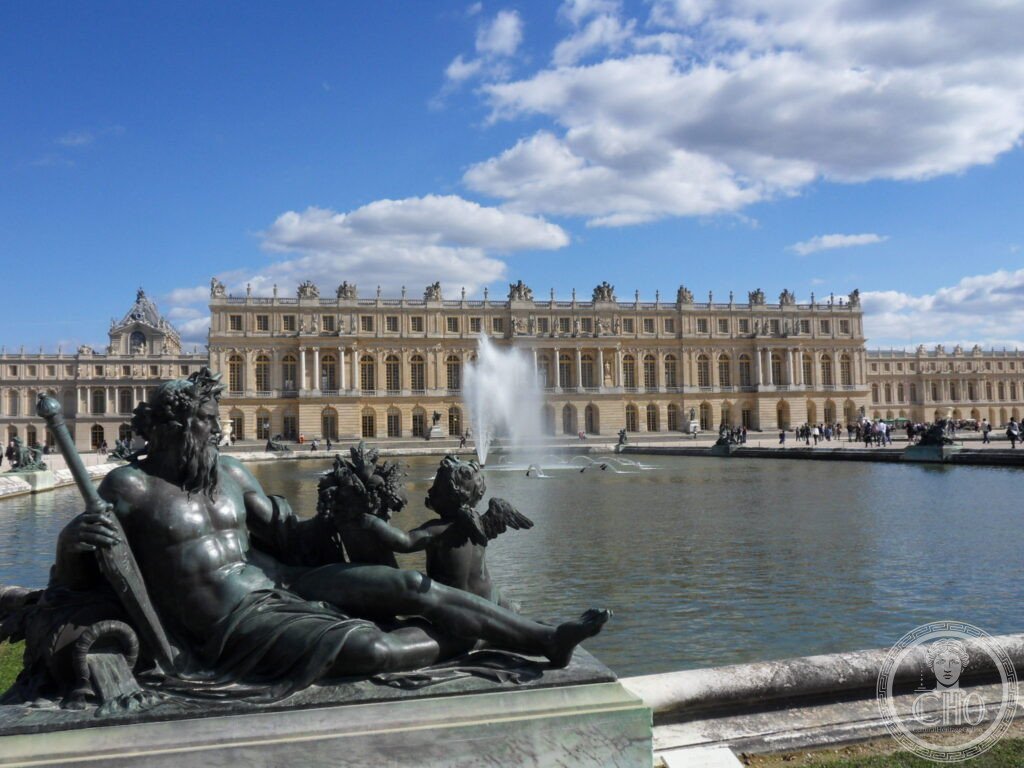
Palace of Versailles
The most influential single building in the history of European royal architecture and the palace that defined the French Baroque style — Versailles, rebuilt by Louis XIV between 1661 and 1710 as the seat of French royal power, set the design standard for every European court that followed, was the site of the signing of the Treaty of Versailles in 1919, and receives more visitors than any other palace in Europe.
At a glance
The Palace of Versailles (UNESCO WHS 1979; the most visited royal palace in Europe: 7.7 million visitors per year (the most attended single historic palace on the European continent; the only comparable European palace by visitor numbers is Schönbrunn in Vienna (3.4M) and the Alhambra in Granada (2.7M)); the scale (the most frequently cited scale data in any European palace: 700 rooms; 2,300 windows; 30,000 artworks including 6,000 paintings; 800 ha of gardens including 50 fountains with 620 jets; the Grand Canal (1,500 m × 62 m — the most geometrically assertive single water axis in any European royal garden; the axis extending the geometry of the palace to the horizon (3 km straight ahead from the royal bedroom) — the most precisely centralised single axis in the history of European garden design)); the political significance (the most politically consequential single building in European history by count of major political events: the French court moved to Versailles in 1682; the French National Assembly convened in the palace in 1789; the German Empire was proclaimed in the Hall of Mirrors in 1871; the Treaty of Versailles was signed in the Hall of Mirrors in 1919 (the most politically three-used single room in European palace history)).
Key facts
- The Hall of Mirrors (Galerie des Glaces): the most celebrated single room in European royal architecture — the Hall of Mirrors (73 m long; 10.5 m wide; 12.3 m high; 357 mirrors in 17 arcaded bays facing 17 windows overlooking the garden; 20,000 candles in 20 glass chandeliers and 150 candelabras — the most brilliantly illuminated single event space in 17th-century Europe; designed by Jules Hardouin-Mansart with painted ceilings by Charles Le Brun (1678–1686) (the most ambitious single painted ceiling programme in any secular French interior; 30 painted compositions celebrating the military victories of Louis XIV — the most self-glorifying single painted ceiling in French royal architecture); the mirror cost (the most economically significant single decorative decision in 17th-century French design: mirrors were a Venetian monopoly; France established the Manufacture royale des glaces de miroirs (the Saint-Gobain factory) to break the monopoly — the most consequentially protectionist single craft decision in French industrial history; the mirrors in the Hall of Mirrors were the largest produced in Europe at the time); the political use (the German Empire proclamation (18 January 1871; the Prussian military ceremonially proclaimed the German Empire in the Hall — the most humiliating single use of a French royal space in French history; the Treaty of Versailles (28 June 1919; the most consequential single diplomatic event of the 20th century — the treaty that ended World War I was signed in the same room where Germany had been proclaimed; the most symbolically loaded single choice of venue in the history of European diplomacy))
- The gardens of André Le Nôtre: the most influential formal garden in European history — Le Nôtre (André Le Nôtre (1613–1700): the most influential landscape architect in European history; the inventor of the French formal style (the most widely replicated single garden design approach in European royal architecture: the axial symmetry, the parterres de broderie, the bosquets, the allées — the most precisely defined single vocabulary of garden design elements in 17th-century Europe; copied at: Hampton Court (England), Herrenhausen (Germany), Nymphenburg (Germany), Caserta (Italy; the most extensively reproduced single French garden layout at an Italian royal palace — described in the Reggia di Caserta place card at culturalheritageonline.com)); the Grand Parterre (the central parterre of the garden: the most geometrically sophisticated single parterre in European royal garden history: the Parterre d’Eau (the two large rectangular water mirrors flanking the approach to the garden), the Parterre du Midi (the most ornate single side parterre), the Bosquet de la Colonnade (the most architecturally refined single outdoor “green room” in any European royal garden: 32 Ionic columns arranged in a circle in the forest)); the Grandes Eaux (the fountain spectacles: the most technologically complex single water show in any 17th-century European royal garden: 620 jets requiring a water supply system (the machine de Marly) that was the most complex single hydraulic engineering project in France until the Canal de Bourgogne))
- Marie Antoinette and the French Revolution: the most politically consequential single royal residence in modern European history — Marie Antoinette (Queen of France 1774–1793; the most famous single resident of Versailles after Louis XIV; the Petit Trianon (1768; the most personal single royal space in the Versailles complex: the small neo-classical palace given to Marie Antoinette by Louis XVI; the Hameau de la Reine (the Queen’s Hamlet: a model farm village in the garden of the Trianon — the most architecturally authentic pre-Romantic pastoral retreat in any European royal garden; the most photographed single example of aristocratic “playing at peasants” in European heritage tourism)); the October 1789 Women’s March on Versailles (the most decisive single popular action in the French Revolution: 7,000 Parisian women (and men disguised as women) marched 19 km from Paris to Versailles on 5 October 1789 and demanded bread; the next day they forced the king to return to Paris (the most consequential single forced migration of a European monarch — the king never returned to Versailles; the monarchy effectively ended at Versailles on 6 October 1789))
- Heritage: UNESCO World Heritage Site, Palace and Park of Versailles, inscribed 1979
- GPS: 48.8049° N, 2.1204° E
History
Louis XIII built a hunting lodge at Versailles in 1623 (the most consequentially modest origin of any major European palace: a single-storey brick hunting lodge with 26 rooms — the most radically transformed single building in European history); Louis XIV (the Sun King; r. 1643–1715) transformed the hunting lodge into the largest palace in Europe in three major campaigns (1661–1668: the first enlargement; 1669–1672: the second enlargement; 1678–1710: the third and largest enlargement — the most architecturally ambitious single construction programme in French history): the architects (Louis Le Vau (the most important French Baroque architect before Hardouin-Mansart; responsible for the second enlargement); Jules Hardouin-Mansart (1646–1708 — the most prolific French royal architect: designed not only the Versailles enlargement (1678–1710) but also the Place Vendôme, the Invalides dome, and the Place des Victoires — the most comprehensive single architect’s portfolio in French royal architectural history); André Le Nôtre (described in Key Facts)); the court (the most elaborate single social hierarchy in European history: 20,000 people lived at Versailles at the peak (1682–1789): servants, courtiers, and functionaries; the most precisely ritualised daily programme of any European court: the lever (the king’s rising; attended by chosen courtiers) and the coucher (the king’s retiring; the most privileged single daily attendance in French court life); UNESCO WHS 1979.
What you see
The Versailles visit (the most productively sequenced visit: the State Apartments (the Grand Appartement du Roi and the Grand Appartement de la Reine — the most formally decorated royal apartments in Europe; the Salon de Vénus, Diane, Mars, Mercure, Apollon (the planetary salon sequence — the most cosmologically organised interior decoration programme in French Baroque architecture) + the Hall of Mirrors (described in Key Facts)) + the gardens (the most recommended timing: arrive at the Grandes Eaux (fountain show: on Saturdays from spring to autumn; 9:00am–5:00pm) to see the gardens in their designed state — the gardens without fountains are beautiful; the gardens with fountains are the most precisely staged outdoor spectacle in any European royal landscape) + the Trianons (the Petit and Grand Trianon + the Hameau de la Reine (described in Key Facts)); the booking strategy (the most over-booked single heritage attraction in France: Versailles must be booked 2–3 months in advance for summer visits; the earliest morning entry (9am) is the most reliably crowd-free single time slot in the palace; the Grandes Eaux Saturday spectacle is the most recommended single timed event at Versailles).
Practical information
- Getting there: from Paris (the most convenient gateway: RER C train from Paris Saint-Michel Notre-Dame or Javel to Versailles Rive Gauche (40 min; the most frequently used single suburban train service in France for heritage tourism; the direct walking connection from Versailles Rive Gauche station to the palace entrance takes 10 min — the most walkable single railway-to-palace connection in Europe); by car (35 km from Paris by the D910; the most congested single heritage-site approach road in Île-de-France on summer weekends); the ticket (the Palace Passport (the most comprehensive single ticket: main palace + gardens + Trianon + Hameau; adults approximately €27; the most cost-effective single heritage ticket in Île-de-France); the Musical Gardens supplement (on Saturdays and select Tuesdays April–October: the Grandes Eaux (the fountain spectacle) is the most visually complete single experience of Versailles; supplement approximately €9.50); book online to avoid queues)
- Fontainebleau: the most historically complete royal forest in France — Fontainebleau (75 km south-east of Versailles; the Château de Fontainebleau (UNESCO WHS 1981; the most continuously inhabited royal residence in French history: every king of France from Louis VII (12th century) to Napoleon III (19th century) stayed here — the most historically lived-in single French royal building; the Galerie François I (1533–1540; the first Renaissance gallery painted programme in France — the most consequential single importation of Italian Renaissance taste into French court decoration; the Italian artists (Rosso Fiorentino and Francesco Primaticcio) who designed the gallery created the School of Fontainebleau — the most influential single art school in 16th-century France)); the Forest of Fontainebleau (the most extensive single royal hunting forest in Île-de-France: 25,000 ha; the finest rock-climbing in the Paris Basin: the sandstone boulders of Fontainebleau (the birthplace of modern free climbing in the 1890s; the most historically significant single landscape in the history of sport climbing)))
- Chartres Cathedral (UNESCO WHS 1979): the finest Gothic cathedral in France — Chartres (90 km south-west of Versailles; the Cathédrale Notre-Dame de Chartres (UNESCO WHS 1979): the most complete surviving 12th–13th century cathedral in France (the most completely preserved medieval Gothic programme: the architecture, the sculpture, and most critically the stained glass survive intact — the most intact single medieval glazing programme in any French Gothic cathedral); the south rose window (1223; the most complete single medieval rose window in France: 18 m diameter; 12,764 pieces of glass); the labyrinth (the finest preserved Gothic floor labyrinth in Europe: 12.9 m diameter; the most precisely geometrically constructed medieval labyrinth (the Chartres labyrinth type is the most widely reproduced single medieval labyrinth pattern in modern spirituality practice); the black Madonna (Notre-Dame de Sous-Terre — the most important Marian pilgrimage statue in France))
Getting there
RER C from Paris to Versailles Rive Gauche (40 min; 10 min walk to palace). Book online months in advance for summer. Best visit: 9am opening + Grandes Eaux Saturday fountain show. GPS: 48.8049, 2.1204.
Nearby
- Fontainebleau Château (UNESCO WHS 1981) — 75 km south-east (1h by RER D from Paris to Fontainebleau-Avon then bus); most continuously inhabited French royal residence — described in Practical section; the essential Île-de-France royal circuit: Versailles (full day) + Fontainebleau (half day + forest walk/bouldering)
- Chartres Cathedral (UNESCO WHS 1979) — 90 km south-west (1h direct train from Paris Montparnasse); finest Gothic cathedral in France — described in Practical section; the most important Gothic heritage circuit from Paris: Notre-Dame de Paris (now re-opened post-fire 2024) + Sainte-Chapelle + Chartres Cathedral (each representing a different century of Gothic glazing development)
- The Loire Valley châteaux (UNESCO WHS 2000) — 200 km south-west (2h by TGV from Paris Montparnasse to Tours); the finest Renaissance château landscape in France — the Loire Valley (Chambord (the most architecturally ambitious single Renaissance château in France: the largest château in the Loire Valley; 440 rooms; 365 fireplaces; the double-helix staircase attributed to Leonardo da Vinci — the most frequently attributed single architectural element to Leonardo in France), Chenonceau (the most visited château in France after Versailles: the bridge gallery spanning the Cher river — the most romantically sited single château room in France; the château was given by Henri II to Diane de Poitiers in 1547 — the most prestigious single royal gift in French Renaissance history), Amboise (the burial place of Leonardo da Vinci (died 1519) — the most historically consequential single burial in any Loire château: the tomb of the most multi-talented person in the history of Western art and science is in the Chapel of St Hubert on the château terrace))
Sources
- Wikipedia, Palace of Versailles; Hall of Mirrors; André Le Nôtre; Jules Hardouin-Mansart; Marie Antoinette, accessed June 2026
- UNESCO, Palace and Park of Versailles, WHS reference 83, inscribed 1979
- Tony Spawforth, Versailles: A Biography of a Palace, St Martin’s Press, 2008
Find it on the map
See this place and what’s around it →📷 Diventa un fotografo di Cultural Heritage Online
Condividi le tue foto dei luoghi: restano pubblicate con la tua firma come autore. Più vengono viste, più ti fai conoscere — e presto un concorso premierà le foto più apprezzate.
Accedi o registrati gratis per aggiungere una foto