

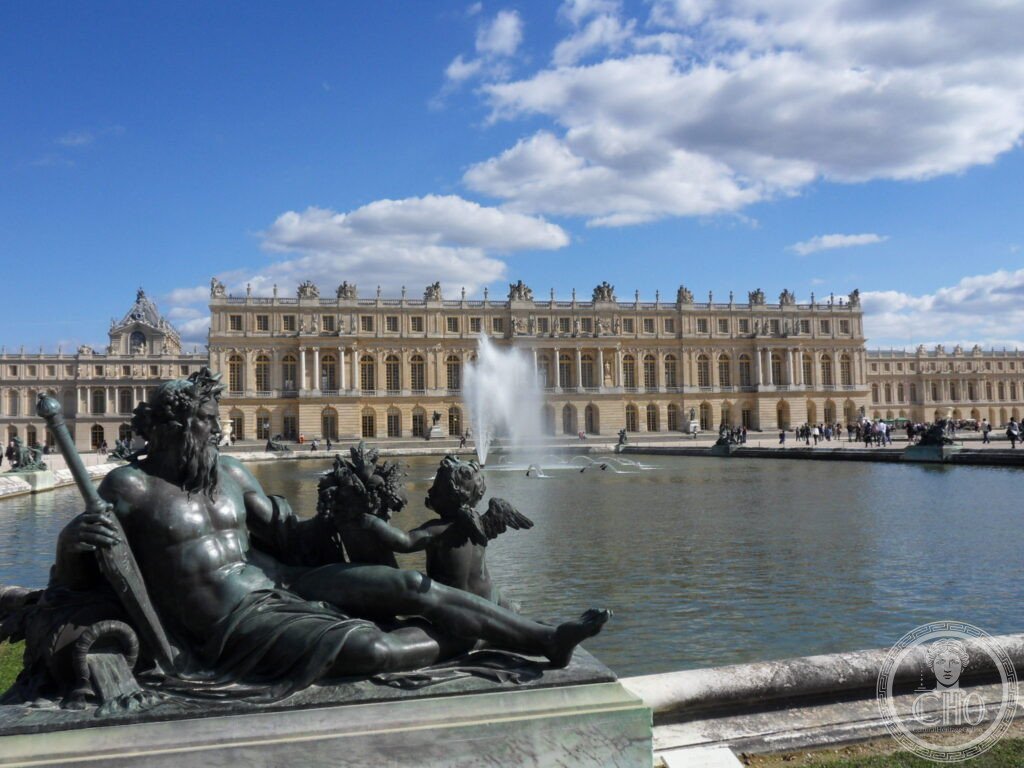
Palace and Park of Versailles
The most influential royal residence in European history and the template for palace design from Moscow to Washington — the Palace of Versailles (Château de Versailles), built for Louis XIV (the “Sun King”) beginning in 1661 on the site of his father’s hunting lodge, was the political, artistic, and cultural capital of France for over a century, and the model for the absolute monarchy that every European court aspired to imitate.
At a glance
The Palace and Park of Versailles (UNESCO WHS 1979; the most visited historic monument in France after the Louvre; approximately 7.7 million visitors per year (2023; the highest attendance of any European palace; the most visited non-museum heritage site in Europe); the scale (the palace itself: the main building (the Grand Château) has 700 rooms, 2,153 windows, and 67 staircases; the total floor area approximately 63,154 m² (the largest floor area of any royal palace in the world that is open to the public); the park and gardens: 800 ha — the largest royal gardens in Europe; the fountains (1,400 individual fountain jets; 55 major water features; the Grande Cascade and the Bassin d’Apollon — the most elaborate fountain system in any royal garden; the water supply (the most technically ambitious hydraulic project of 17th-century France: the Machine de Marly (1682; a system of 14 water wheels on the Seine at Marly-le-Roi that pumped water 162 m uphill to the Versailles aqueduct; the most sophisticated water-pumping machine of its era; it supplied 3,000 m³ per day to the Versailles fountains; the most expensive single piece of non-military infrastructure in the reign of Louis XIV)); the symbolic programme (every element of Versailles is designed to communicate a specific political message: the central axis of the palace and gardens points directly east-west (the direction of the sun’s daily movement — the most sustained solar metaphor in any architectural complex in history; Louis XIV was the Sun King (le Roi-Soleil) and Versailles was his solar machine; the Hall of Mirrors faces west so the setting sun strikes all 357 mirrors simultaneously in the late afternoon — the most deliberately theatrical natural lighting effect in any palace interior in Europe)).
Key facts
- The Hall of Mirrors: the most famous single room in Europe — the Galerie des Glaces (the Hall of Mirrors; 73 m long × 10.5 m wide × 12.3 m high; the most politically significant room in European history after the Vatican): the architecture (designed by Jules Hardouin-Mansart (1646–1708; the most important French Baroque architect; the architect of Les Invalides dome in Paris, the Grand Trianon at Versailles, and the Place Vendôme in Paris; the most prolific royal architect in French history); the 357 mirrors (the arched mirrors on the west wall face the 17 corresponding arched windows on the east wall; the mirrors were made in the Manufacture Royale des Glaces de Miroirs (established 1665 by Colbert specifically to reduce French dependence on Venetian mirror-glass; the most important single industrial policy decision in 17th-century French economic history; Venetian glassmakers were bribed or coerced into leaving Murano for France — the most audacious technology transfer in early modern European industrial history); the ceiling (the painted allegorical ceiling (1681–1686; Charles Le Brun; 30 paintings celebrating the military and political achievements of Louis XIV (r. 1643–1715); the most elaborate ceiling-painting programme in any palace in Europe; Le Brun painted the ceiling from scaffolding 12 m above the floor — the most physically demanding ceiling commission in French Baroque art)); the historical events (the proclamation of the German Empire (18 January 1871; the most humiliating political event in French national history: the German princes proclaimed Wilhelm I of Prussia as Kaiser of the new German Empire in the Hall of Mirrors of Versailles while French armies surrendered outside Paris; the most symbolically chosen location in any European proclamation ceremony); the signing of the Treaty of Versailles (28 June 1919; the treaty that officially ended World War I; the 44 Articles of the Treaty; the German delegation seated at the table under the ceiling paintings of Louis XIV’s military victories against Germany — the most deliberately designed act of geopolitical irony in any diplomatic venue)
- The Gardens of Le Nôtre: the most influential garden design in history — André Le Nôtre (1613–1700; the designer of the Versailles gardens; the most important landscape architect in European history; the inventor of the French formal garden style (le jardin à la française)); the design principles (the strict axial geometry (everything organized along a single central east-west axis aligned with the palace’s central windows and the Hall of Mirrors); the tapis vert (the “green carpet” of lawn along the central axis); the groves (the bosquets — the 13 themed garden rooms hidden in the geometric forest on either side of the central axis; the most elaborate garden theatre in Europe; each bosquet has its own name and decorative programme; the most famous: the Salle de Bal (the open-air ballroom with concentric semicircular stages); the Labyrinthe (demolished in 1778); the Théâtre d’Eau (the water theatre; the finest surviving bosquet); the fountains (the most important single sight in the gardens: the Bassin d’Apollon (the large pool at the end of the tapis vert, with the emerging sun-god Apollo in his chariot; the most important single sculpture in the Versailles gardens; the fountain of Latona (the most complex allegorical group; Latona, the mother of Apollo, asking Jupiter to punish the peasants who mocked her; the peasants transformed into frogs; the fountain jets arranged to simulate the transformation — the most literary fountain concept in any European royal garden))
- Marie Antoinette and the Trianon: the human face of Versailles — the Petit Trianon (Marie Antoinette’s private retreat; built for Louis XV (1762–1768; the architect: Ange-Jacques Gabriel; the most elegant Neoclassical building in France; the most restrained building at Versailles (no gilding, no painted ceilings, no sculptures — a deliberate contrast with the Grand Château)); the Temple of Love (the rotunda in the English Garden of the Petit Trianon; the most often photographed building in the Trianon gardens); the Hameau de la Reine (the Queen’s Hamlet; the rustic hamlet of 12 thatched buildings constructed for Marie Antoinette in 1783; the most famous example of aristocratic rusticity in European history (the Queen playing at pastoral life while the rural poor starved); the Hameau (working farm buildings; a mill; a dairy; the most deliberate architectural illusion in European aristocratic garden history — the rustic buildings were designed by Richard Mique to look as un-grand as possible, with deliberately asymmetrical plans and rough stone facades; the contrast with the formal palace is the most self-conscious architectural statement in pre-Revolutionary Versailles))
- Heritage: UNESCO World Heritage Site, Palace and Park of Versailles, inscribed 1979
- GPS: 48.8049° N, 2.1204° E
History
The Louis XIII hunting lodge (1623–1634; the first building on the site; a small brick-and-stone hunting lodge; the most modest predecessor of the most extravagant palace in Europe); the Louis XIV expansion (the most important expansion: 1661–1710; Louis XIV used three architects: Louis Le Vau (the first expansion 1661–1668; the envelope enclosing the original hunting lodge); Jules Hardouin-Mansart (the main palace facade, the Hall of Mirrors, the Grand Trianon, the Chapel Royal 1670–1708; the most productive architectural association in French history); the painters (Charles Le Brun; the ceiling of the Hall of Mirrors; the Apollo Salon); the move of the court (6 May 1682; Louis XIV officially moved the French court and government from the Louvre in Paris to Versailles; the most consequential single decision in French architectural history; the court (approximately 20,000 people: the nobility, the government, the servants — all concentrated at Versailles; the most elaborate court choreography in European history)); the 18th century (the reigns of Louis XV and Louis XVI; the construction of the Petit Trianon; the Garden of the Petit Trianon; the Hameau de la Reine (1783); the growing financial crisis of the French monarchy; 5–6 October 1789: the Women’s March on Versailles (the most important single event in the French Revolution at Versailles; 7,000 women marched from Paris to Versailles demanding bread; they forced Louis XVI and Marie Antoinette to accompany them back to Paris; the royal family never returned to Versailles; the most consequential 20-km walk in French political history)); the 19th century (the Hall of Mirrors (German proclamation 1871 and Treaty of Versailles 1919)); UNESCO WHS 1979.
What you see
The Versailles visit (the most visited heritage site in the Paris region; 7.7 million visitors/year): the palace interior (the Grands Appartements du Roi (the King’s State Apartments; 6 rooms themed around the planets: the Salon de Diane (billiards), the Salon de Mars (guards’ room), the Salon d’Apollon (throne room)); the Chambre du Roi (the King’s Bedchamber; the room where the Sun King rose and retired in the ceremony of the lever and the coucher — the most elaborate morning-routine ritual in European court history (the senior nobles had the right to be present while the king dressed; the opportunity to assist with a particular garment was a mark of the highest favour; the most precisely graded system of social proximity in 17th-century France)); the Hall of Mirrors (the most important room; buy a dated timed-entry ticket to avoid the worst crowds; the hall is most beautiful in the late afternoon when the setting sun strikes all 357 mirrors simultaneously; the most theatrical light effect in any palace in Europe)): the gardens (the Grande Perspective from the central terrace (the 3-km view from the palace to the horizon; the best overall view of the geometric garden layout; the fountain shows (the Grandes Eaux Musicales; weekends April–October; the most elaborate fountain performance in Europe; every fountain in the garden operates simultaneously to baroque music; the most water-intensive heritage event in Europe)).
Practical information
- Getting there from Paris: RER C from Paris Austerlitz/Invalides/Musée d’Orsay to Versailles-Château-Rive-Gauche (approximately 40 min; trains every 15 min; the cheapest and most reliable option (Navigo or zone 1-4 ticket); transilien N from Paris-Montparnasse to Versailles-Chantiers (30 min; fewer crowds on the train; 10-min walk to the palace); by car (25 km from Paris; 30 min without traffic; the palace car park is directly in front of the main gate; parking is expensive but convenient for visitors with prams); the ticket (the Passport ticket (the most comprehensive option; includes the palace, the Trianons, the gardens, and the Estate of Marie Antoinette); online booking strongly recommended (queues for on-the-day tickets are the most common complaint in Versailles visitor reviews — up to 3h wait in peak season); the fountains (the Grandes Eaux Musicales requires a separate add-on ticket to the garden admission))
- The French table near Versailles: the cuisine of the Île-de-France — the restaurant options at Versailles (the on-site restaurants in the palace (the Ore restaurant in the Pavillon Dufour — the most elegant lunch option; Alain Ducasse-branded; the most expensive; the lunch menu includes dishes inspired by the royal cuisine of Versailles (the most historically accurate restaurant experience in any UNESCO palace complex in France)); the market of Versailles (the covered market of Notre-Dame; the most authentic local food experience; open Tuesday, Thursday, Saturday, and Sunday mornings; the finest cheese selection in the Paris suburbs); the Versailles bakeries (the brioche de Nanterre (the finest brioche in the Île-de-France; made with the maximum permitted butter content (the ratio of butter to flour in a genuine brioche de Nanterre is 1:2 — the most butter-intensive French bread type))
- The Château de Chantilly and the Domaine de Chantilly: the most important private art collection near Paris — Chantilly (60 km north of Paris (1h by train from Gare du Nord); the Musée Condé (the finest collection of Old Master paintings in France outside the Louvre — the 30 miniatures from the Très Riches Heures du Duc de Berry (the most beautiful illuminated manuscript in the world; 1412–1416; the Limbourg brothers; the twelve calendar pages with the famous seasonal landscapes; the most photographed medieval manuscript pages in history); the Chantilly whipped cream (crème Chantilly; allegedly invented at the Château de Chantilly; the most polite culinary attribution dispute in French food history (the evidence for the Chantilly origin is weak; the cream is named for the town, not definitively invented there)); the Grandes Écuries (the stables of Louis-Henri de Bourbon, Prince of Condé; built 1719; the most elaborate horse stables in Europe (25,000 m² for 240 horses and 500 dogs); the Living Museum of the Horse (Musée du Cheval Vivant; the finest equestrian performance at any heritage site in France))
Getting there
RER C Paris → Versailles-Château-Rive-Gauche 40min. Online booking strongly recommended (queues up to 3h in summer). GPS: 48.8049, 2.1204.
Nearby
- The Louvre and central Paris (UNESCO WHS — Seine river banks 1991) — 25 km east (45 min by RER C); the greatest art museum in the world and the most important historic riverscape in Europe — the Louvre (the most visited museum in the world; approximately 9 million visitors per year; the most important collection: the Denon Wing (the Winged Victory of Samothrace (c.190 BCE; the finest Hellenistic sculpture in any museum; the most powerful single stone carving in the Louvre); the Venus de Milo (c.100 BCE; the most famous female nude in Western art); the Mona Lisa (Leonardo da Vinci; c.1503–1519; the most visited painting in the history of humanity; 6 million people per year cross the Salle des États to see a 77×53 cm portrait behind bulletproof glass at a distance of 6 m — the most anti-climactic museum experience in the world for many visitors; the most anticipated in the world for all)); the Seine banks WHS (the Pont Neuf (the oldest bridge in Paris; 1607; the most used bridge in Paris; the bridge from which the view of the Île de la Cité is the finest single urban vista in Paris); Notre-Dame Cathedral (the most important Gothic cathedral in France; partially restored after the 2019 fire and reopened December 2024))
- Fontainebleau and the Vaux-le-Vicomte — 55 km south-east of Versailles (1h by train); the two palaces that preceded and inspired Versailles — Fontainebleau (UNESCO WHS 1981; the forest hunting palace of the French kings from François I (r. 1515–1547) to Napoleon III; 40,000 ha of forest; the finest palace interior of the Renaissance in France (the Galerie François I; the finest ensemble of Mannerist frescoes in France)); Vaux-le-Vicomte (50 km south-east of Paris; the private château that Louis XIV was so envious of that he had its owner, Nicolas Fouquet, arrested and imprisoned for life; the team responsible for Vaux (the architect Louis Le Vau; the garden designer André Le Nôtre; the decorator Charles Le Brun) was immediately hired by Louis XIV to build Versailles — the most direct artistic transfer from a private commission to a royal one in French architectural history)
- Chartres Cathedral (UNESCO WHS 1979) — 90 km south-west of Versailles (1h 30min by train from Paris Montparnasse); the finest Gothic cathedral in the world and the most complete ensemble of medieval stained glass in existence — Chartres (the Cathedral of Notre-Dame de Chartres; the most important pilgrimage church in France (the Sancta Camisia — the tunic said to have been worn by the Virgin Mary at the Annunciation; the most venerated Marian relic in northern Europe; gifted to the cathedral by Charlemagne in 876 CE)); the stained glass (the Chartres stained glass: 176 windows (the most complete medieval stained glass cycle in the world; covering a total area of 2,600 m²); the Blue Virgin window (the most famous single window; the Virgin in the traditional blue mantle set in glass of the most extraordinary depth of blue (the “Chartres blue”; the formula for the glass has been partially reverse-engineered but the exact medieval technique has not been fully reproduced)); the Royal Portal (the finest ensemble of Romanesque column-figures in France)
Sources
- Wikipedia, Palace of Versailles; Hall of Mirrors; André Le Nôtre; Marie Antoinette, accessed June 2026
- UNESCO, Palace and Park of Versailles, WHS reference 83bis, inscribed 1979
- Stéphane Castelluccio, Versailles: Le Château de Louis XIV, Somogy, 2002
Find it on the map
See this place and what’s around it →📷 Diventa un fotografo di Cultural Heritage Online
Condividi le tue foto dei luoghi: restano pubblicate con la tua firma come autore. Più vengono viste, più ti fai conoscere — e presto un concorso premierà le foto più apprezzate.
Accedi o registrati gratis per aggiungere una foto