
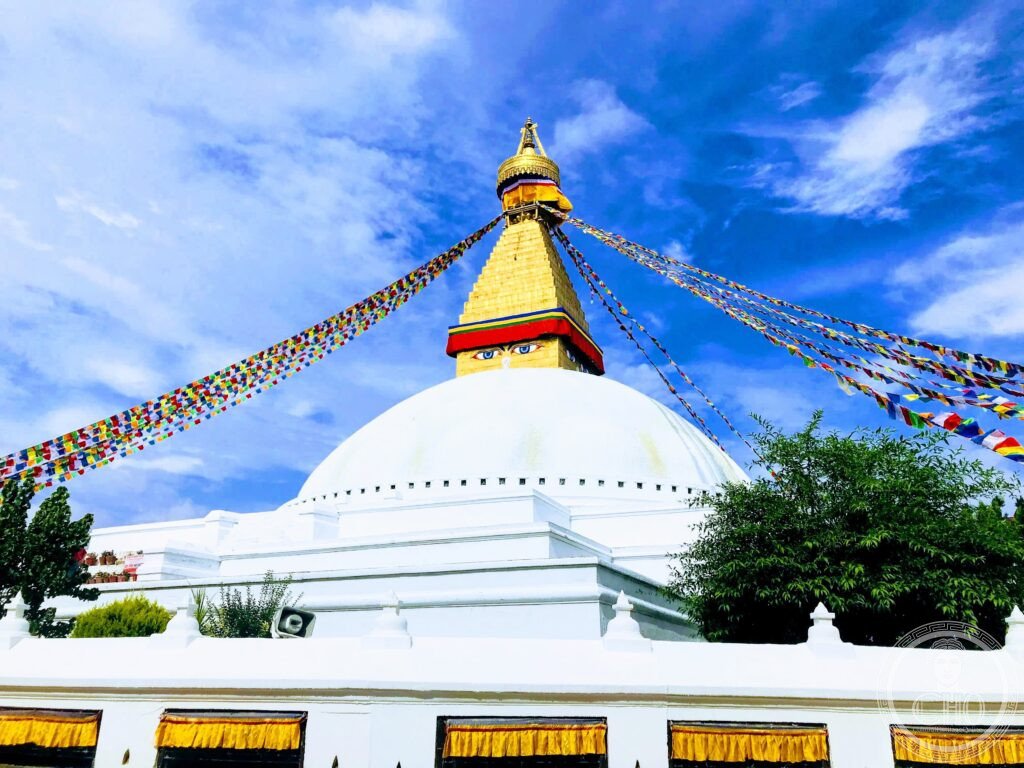
The sacred valley at the crossroads of Hinduism and Tibetan Buddhism and the gateway to the Himalayas. The Kathmandu Valley, surrounded by mountains in the only Himalayan kingdom that was never colonised, contains seven groups of UNESCO World Heritage monuments including the largest stupa in the world, the holiest Hindu temple in Nepal, the oldest existing stupa complex in the world, and three intact medieval Newar city centres with their distinctive pagoda architecture that influenced temple design across Southeast Asia.
At a glance
Kathmandu Valley (UNESCO WHS 1979; 7 monument zones within the valley; population of the Kathmandu metropolitan area approximately 1.5 million; population of Nepal approximately 30 million (the only Hindu kingdom in the world until 2008, when Nepal became a federal democratic republic following the end of the constitutional monarchy)) is located at approximately 1,400 m altitude in a bowl-shaped valley surrounded by the foothills of the Himalayan range in central Nepal. The valley has been inhabited continuously since at least the Licchavi period (4th–9th century CE; the period to which the earliest surviving monuments (Changu Narayan, 464 CE; the oldest surviving complete monument in Nepal) can be dated). The valley’s cultural significance derives from its unique position at the intersection of Hinduism (brought by successive waves of Indian influence) and Tibetan Buddhism (the northern neighbour whose cultural traditions entered the valley through trade and religious contact). The Newar people (the indigenous inhabitants of the Kathmandu Valley; a distinct ethnic group with their own language (Newari/Nepal Bhasa), religion (a unique synthesis of Hinduism and Buddhism that is practised by no other ethnic group), art, and architecture (the Newar pagoda (the multi-tiered roofed temple style; the most distinctive architectural form of the valley; the form that influenced temple architecture across Nepal, Tibet, and Southeast Asia))). The 2015 Gorkha earthquake (the most destructive earthquake to hit Nepal in 80 years; approximately 9,000 deaths; damage to the UNESCO-inscribed monuments was significant but not total; Dharahara Tower collapsed; Kasthamandap (the building that gave Kathmandu its name) collapsed; many structures in the Durbar Squares were significantly damaged; the restoration (in progress through 2026 and beyond; the most important single restoration project in the Himalayan region)).
Key facts
- Boudhanath Stupa: the largest stupa in the world and the most important Tibetan Buddhist site outside Tibet. Boudhanath, Jowo Khasa, was built in the 5th century CE on the old trade route between Nepal and Tibet, the Lhasa road: the stupa marked where travellers left the Kathmandu Valley for the Himalayan passes. The date of the original is disputed, though radiocarbon dating of the clay core supports one as early as the 5th century CE, and the form seen today comes largely from later rebuildings, after Tibetan invasions destroyed what stood before. The four painted eyes of the Buddha on the harmika, the square block above the dome, are the most distinctive element of Nepalese Buddhist iconography, looking out to the four cardinal directions; the question mark below them is read as a nose, and in the Devanagari numeral system it is the number 1, for unity. Around the stupa stand 42 Tibetan Buddhist monasteries, gompas, the largest concentration outside Tibet itself, many founded by refugees after 1959. The central religious act here is circumambulation: devotees walk clockwise, spinning the prayer wheels set into the outer ring, amid the smell of butter lamps and juniper incense and the sound of chanting and turning wheels. Dawn is the most atmospheric hour, when the monks make their ritual rounds before the crowds. The stupa went onto the UNESCO Danger List in 2015 after the earthquake and came off it in 2016, the restoration having succeeded.
- Pashupatinath Temple: the holiest Hindu temple in Nepal and the most sacred Shaiva site in Asia. Pashupatinath is the most important Hindu temple in Nepal and the principal seat of the worship of Shiva in his form as Pashupati, Lord of Animals. It was built in the 5th century CE, and the golden roof standing now dates to the 17th, after many rebuildings following fire, earthquake and invasion. The Bagmati flows past the complex, and on its western bank are the burning ghats: the open-air cremation pyres that are the most visible expression of Hindu funerary practice in the country. Bodies are cremated in full view of the river, and the smoke is plain to see from the footbridge across the Bagmati. The body, wrapped in white cloth, is laid on a wooden pyre and lit by the closest male relative; the cremation takes approximately 3h; the ashes are swept into the river. The Bagmati is the holiest water in Nepal and flows on into the Ganges in India, and joining the sacred rivers is the final destination. The inner sanctum, the main Shiva lingam shrine, is open only to Hindus; the complex, the ghats and the surrounding area are open to everyone.
- Swayambhunath: the oldest temple complex in the valley and the “Monkey Temple”. Swayambhunath is the most important Buddhist monument in the Kathmandu Valley, older than Boudhanath in cultural weight if not in size, set on a hill in the north-west and reached by 365 steps up a stone staircase between trees full of monkeys. The monkeys are the wildlife every visitor meets here. They are treated as sacred, as embodiments of the monkey god Hanuman in the Hindu tradition, and they are also accomplished thieves who have learned to take food, glasses and cameras from tourists: keep sunglasses in a pocket rather than on your face. The dome is the oldest part of the site, dated by researchers to approximately 2,500 years ago, and legend says it grew of itself from a lotus flower on the ancient lake that filled the valley before the city. The geology agrees that the valley was once a lake, drained by earthquake-driven changes, so the myth seems to keep the memory of a real event. The four all-seeing eyes of the Buddha here are older than those of Boudhanath, and were their model.
- Heritage: UNESCO World Heritage Site, Kathmandu Valley, inscribed 1979.
- GPS: 27.7172° N, 85.3240° E.
History
The ancient lake (the geological history; the Kathmandu Valley was an ancient lake that drained approximately 10,000–12,000 years ago through a gorge at Chobar cut by geological uplift). The Licchavi period (4th–9th century CE; the Licchavi dynasty (originally from northern India; the rulers under whom the first historical monuments were built; Changu Narayan (464 CE) is the oldest surviving inscribed monument in Nepal)). The Malla period (10th–18th century; the most architecturally productive period; the Malla kings built the Durbar Squares of Kathmandu, Patan, and Bhaktapur; the most important period of Newar art and architecture; the three kingdoms (the valley was divided into three rival kingdoms (Kathmandu, Patan, and Bhaktapur) from approximately 1482 to 1768, each competing to build the most magnificent temples and palaces — the architectural rivalry between the three Malla courts produced the highest concentration of Newar architecture in the world)). The Gorkha conquest (1768–1769; Prithvi Narayan Shah of the Gorkha kingdom conquered all three Malla kingdoms and unified Nepal for the first time; the Shah dynasty ruled Nepal until 2008). The Rana oligarchy (1846–1951; the Rana family controlled the government while keeping the Shah kings as figureheads). The modern Nepal (1951 onwards; democracy, monarchy, the 2006–2008 civil war and the transition to a republic; the 2015 earthquake). UNESCO WHS 1979.
What you see
There are three Durbar Squares. Kathmandu Durbar Square holds the Hanuman Dhoka, the palace of the Malla and Shah kings, and the Kumari Ghar, the house of the living goddess: the Kumari is a pre-pubescent girl chosen from the Shakya family of goldsmiths to be the living manifestation of the goddess Taleju, and she appears at the window at approximately 9–11am each day. Patan Durbar Square is the most intact of the three and the best-preserved Malla ensemble, with the Krishna Mandir, a 17th-century temple built entirely in stone in the Shikhara style — the north Indian spire form, unusual in Nepal, where the multi-tiered pagoda dominates. Bhaktapur Durbar Square is the most picturesque, with the 55-window palace, the pottery square of Kumale Tole and the Nyatapola Temple of 1702, the tallest pagoda in Nepal at 30 m over 5 storeys and the most perfectly proportioned in the valley. Of the great sanctuaries, go to Boudhanath at dawn, to Pashupatinath at dawn for the ghats, and to Swayambhunath at sunset, for the view over the Kathmandu Valley from the platform around the stupa.
Practical information
- Getting there: Tribhuvan International Airport (KTM; located within the Kathmandu Valley; 6 km from the city centre (the airport’s proximity to the city centre makes it the most urban major airport in South Asia; the flight path to the airport crosses directly over the city)). Major carriers: Qatar Airways (from Doha; the most convenient routing from Europe). Turkish Airlines (from Istanbul). Air India, Indigo, and other Indian carriers from Indian cities. Himalaya Airlines, Buddha Air, and other regional carriers within the Subcontinent. The overland routes (from India: the Sunauli–Bhairahawa crossing (the most used overland border crossing with India; 7h bus from Varanasi; the road from Gorakhpur to Sunauli (Indian side) and Belahiya (Nepali side) to Kathmandu); from Tibet/China (the Friendship Highway; Lhasa to Kathmandu (approximately 900 km; the road crosses the Gyatso Pass at 5,248 m; the road is open to foreign tourists only in organised tour groups with a Tibet Tourism Bureau permit; the permit and group requirement have been enforced strictly since the 2008 Tibetan unrest))).
- The Everest experience (without climbing): the view of the world’s highest mountain from Kathmandu. The mountain flight is operated from Kathmandu by several Nepali airlines — Buddha Air, Yeti Airlines, Tara Air — and runs 1h along the eastern Himalayas, with close views of Everest at 8,848 m, Kanchenjunga at 8,586 m, Lhotse at 8,516 m, Makalu at 8,485 m and other 8,000-m peaks. It costs approximately USD 200–250, the most expensive hour available in Nepal. Every window seat has a mountain view, since the aircraft always flies with the range on the right: choose your seat accordingly. The Everest Base Camp trek is the most popular in the country, 12–14 days starting from Lukla Airport, a 35-min flight from Kathmandu and the mountain airfield with the most dramatic landing strip in the world — a 527-m runway on a 12% gradient that ends at a cliff. From Lukla, 2,840 m, the trail climbs through Namche Bazaar, 3,440 m, the Sherpa capital, and up the Khumbu Valley to Base Camp at 5,364 m. No technical climbing is involved, but it demands good physical fitness and proper acclimatisation.
- Pokhara and the Annapurna region: the most beautiful mountain scenery accessible from Kathmandu. Pokhara (200 km west of Kathmandu (6h by bus or 25 min by flight; the most popular tourist destination in Nepal after Kathmandu)). The Phewa Lake (the mirror lake; the Machhapuchhre (Fishtail Mountain; 6,993 m) reflected in the lake at dawn is the most iconic image of the Annapurna region). The Annapurna Circuit (the most celebrated long-distance trek in the Himalayas; approximately 21 days; circumnavigates the Annapurna massif (8,091 m) through a complete altitudinal range from subtropical forest to high desert). The Annapurna Base Camp trek (10–12 days; the closer but lower alternative to Everest Base Camp; the glacial cirque at the base camp (4,130 m) is the finest Himalayan mountain amphitheatre accessible on foot in Nepal).
Getting there
Tribhuvan Airport (6 km from city). Qatar Airways via Doha or Turkish Airlines via Istanbul are the most common European connections. GPS: 27.7172, 85.3240.
Nearby
- Lumbini (UNESCO WHS 1997). 280 km west of Kathmandu (by bus or plane; Lumbini Airport serves the town directly). The birthplace of Siddhartha Gautama (the Buddha). Lumbini is the birthplace of Siddhartha Gautama, about 563 BCE or about 480 BCE: the date is debated, the Buddhist calendar placing his birth in 623 BCE and most academic scholarship between 563 and 480 BCE. The Maya Devi Temple is the chief monument and marks the exact spot of the Buddha’s birth. Beside it stands the Ashoka pillar, raised by Emperor Ashoka on his pilgrimage here in 249 BCE, whose inscription in Brahmi script reads: “In the twentieth year of his reign, King Piyadasi [Ashoka], beloved of the gods, came here himself and worshipped, saying: Here Buddha Shakyamuni was born” — the most important piece of physical evidence for the birthplace of the Buddha. Around the temple lies the Sacred Garden, with the pillar, the Nativity Pond where Queen Maya Devi is said to have bathed before giving birth, and the archaeological remains of ancient Buddhist buildings. Beyond it extends the monastery zone of the Lumbini master plan, where Buddhist communities from Thailand, China, Japan, Korea, Sri Lanka, Myanmar and other countries have each built their own: the most concentrated collection of national Buddhist architectures in the world.
- Chitwan National Park (UNESCO WHS 1984). 150 km south of Kathmandu (4h by tourist bus or 25 min by flight to Bharatpur Airport; the most important wildlife reserve in Nepal and one of the most important in Asia — Royal Chitwan was the first national park in Nepal, created in 1973, and is the most important for wildlife in the Terai, the lowland belt at the foot of the Himalayas. It holds the country’s most important population of Indian one-horned rhinoceros, Rhinoceros unicornis — approximately 700 animals, recovered dramatically from approximately 200 in the 1980s. It also has one of the highest densities of wild Bengal tigers in the world, Panthera tigris tigris, with approximately 100 individuals. Elephant-back safaris are being phased out for ethical reasons, and Jeep safaris are now the recommended way to see the park. In the Narayani River survives one of the last wild populations of the gharial, Gavialis gangeticus, the critically endangered fish-eating crocodilian).
- Bhaktapur. 13 km east of Kathmandu (30 min by micro-bus; EUR 5 foreigners entry fee). The most completely preserved medieval Newar city in the Kathmandu Valley. Bhaktapur, the “City of Devotees”, is the smallest of the three ancient cities of the valley and the one whose medieval fabric survives most completely. Kathmandu and Patan have been much altered by modern building; Bhaktapur has kept the strictest heritage protection, bars motor vehicles from the historic core and paves its streets with traditional brick. Its Nyatapola Temple of 1702, built by Bhupatindra Malla, is the tallest in Nepal — 5 storeys, 30 m — and the most perfectly proportioned pagoda in the valley. Its staircase is guarded by pairs of figures that grow stronger at every level: wrestlers × 10, the most powerful of humans, then elephants × 10, then lions × 10, then griffins × 10, and at the top the goddesses Baghini and Singhini, each 10× more powerful than the step below.
Sources
- Wikipedia, Kathmandu Valley. Boudhanath. Pashupatinath Temple. Swayambhunath, accessed June 2026.
- UNESCO, Kathmandu Valley, WHS reference 121rev, inscribed 1979.
- Mary Slusser, Nepal Mandala: A Cultural Study of the Kathmandu Valley, Princeton University Press, 1982.
Find it on the map
See this place and what’s around it →📷 Become a Cultural Heritage Online photographer
Share your photos of places: they stay published under your name as the author. The more they're seen, the more you get noticed — and soon a contest will reward the most appreciated photos.
Log in or sign up free to add a photo