
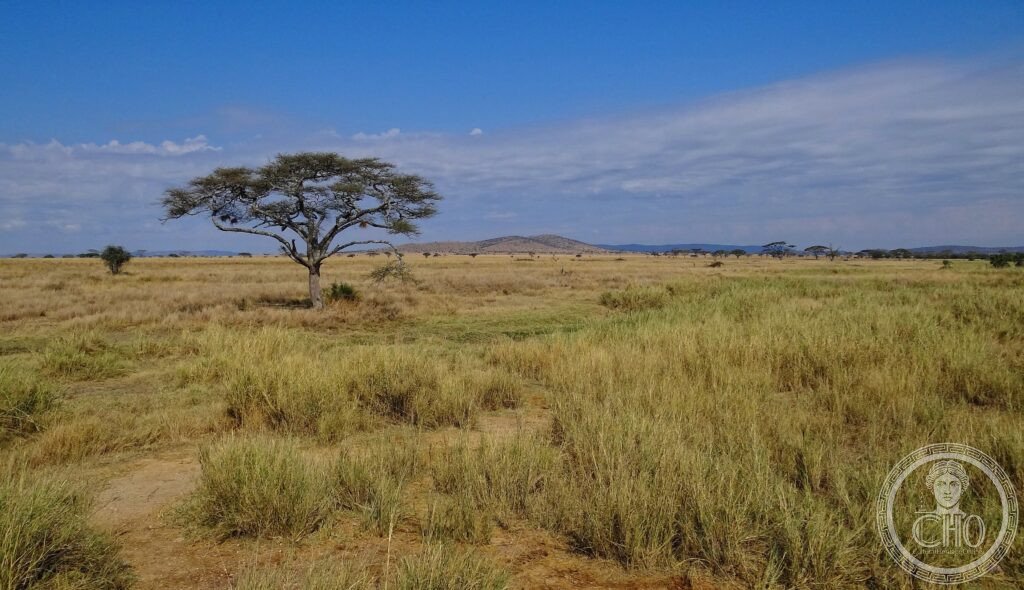
Serengeti National Park
The most famous wildlife spectacle on Earth and the site of the largest overland migration of mammals in the world — Serengeti National Park in northern Tanzania is the stage for the annual circular migration of approximately 1.5 million wildebeest and 200,000 zebra, a movement that drives the feeding behaviour of approximately 3,000 lions, 1,000 leopards, and 1,000 cheetahs across 14,763 km² of the most pristine savanna ecosystem surviving in Africa.
At a glance
Serengeti National Park (14,763 km²; a UNESCO WHS since 1981) forms the core of the larger Serengeti-Mara ecosystem (approximately 30,000 km² when the connected protected areas — Ngorongoro Conservation Area, Maswa Game Reserve, Loliondo GCA, Masai Mara NR in Kenya — are included); the park is divided into distinct zones with different landscapes and different wildlife concentrations: the southern short-grass plains (the famous “endless plains” of the Swahili word “siringet” from which the park takes its name; the calving ground for the wildebeest, January–March; the cheetah capital of Africa); the central Seronera area (the most accessible zone; the Seronera River woodland; famous for the highest density of leopards in any African ecosystem — the leopards of the Seronera valley are semi-habituated and are regularly seen in daylight hours in the riverine acacia fig trees); the western corridor (the Grumeti River; crocodile-infested crossing point for the migration in May–June; less visited than the north); and the northern Serengeti/Lamai triangle (the area bordering the Masai Mara; the Mara River crossings of July–October; the most dramatic wildlife theatre in the world; accessible only in the dry season).
Key facts
- The Great Migration: the largest overland migration of mammals on Earth — the term “Great Migration” refers to the annual circular movement of approximately 1.5 million wildebeest, 200,000 zebra, and 500,000 gazelle through the Serengeti-Mara ecosystem (a circuit of approximately 2,900 km; a movement that never stops, with animals always somewhere on the circuit, though the most dramatic moments are concentrated in the calving season and the river crossings); the circuit begins on the southern short-grass Serengeti plains (January–March: the calving season; approximately 400,000–500,000 wildebeest calves are born over a 3-week period — the synchronised mass calving is a predator saturation strategy: so many calves are born simultaneously that predators cannot possibly kill more than a fraction before the calves mature enough to run; the calving plains are also the cheetah-watching capital of Africa); from the southern plains the herds move north and west (April–June: through the central Seronera area and the western corridor; the Grumeti River crossings in May–June are less dramatic than the Mara crossings but still significant); then north into the northern Serengeti and Kenya’s Masai Mara (July–October: the Mara River crossings; the most dramatic wildlife spectacle in Africa; the herds repeatedly attempt river crossings at established crossing points — the same locations used year after year — and the Nile crocodiles wait at these points; an average of 30–50 crocodiles per crossing point is typical in the peak season; the herds then graze the short grass of the Mara through October before returning south in November–December
- The lion population: the largest lion population in Africa — the Serengeti holds approximately 3,000 lions, the largest continuous population of lions (Panthera leo) in Africa (the population with the next largest size is in the Kruger ecosystem of South Africa, approximately 1,700 lions; the Serengeti population is thus almost double the next largest); the lions of the Serengeti have been studied continuously since 1966 by the Serengeti Lion Project (originally established by George Schaller; continued by Craig Packer of the University of Minnesota from 1978 to 2013; one of the longest continuous wildlife studies in the world); the pride structure, individual identities, and genealogies of the lion population are completely known over multiple generations; the project has documented the dynamics of the predator-prey interaction in more detail than any other large carnivore system in the world
- Cheetah: the Serengeti southern plains contain the highest density of cheetahs in any ecosystem — the Serengeti holds approximately 1,000 cheetahs, more than any other ecosystem in Africa; cheetahs favour the open short-grass southern plains because the high visibility allows them to use their speed advantage (the cheetah, the fastest land animal, reaches 112 km/h in pursuit); cheetah mothers with cubs can often be found on the southern plains in the calving season (the simultaneous birth of hundreds of thousands of wildebeest calves and gazelle fawns provides the cheetah’s easiest hunting of the year); the Serengeti cheetah population has been studied by the Serengeti Cheetah Project (established 1975; one of the key datasets on cheetah ecology in Africa)
- Heritage: UNESCO World Heritage Site, Serengeti National Park, inscribed 1981
- GPS: -2.3330° S, 34.8330° E
History
The Masai grazed cattle across the Serengeti plains for centuries; German colonial Tanganyika created a partial game reserve in 1921; the Serengeti Game Reserve was formally gazetted in 1929; the reserve was upgraded to a National Park in 1951; the Masai were removed from the park area to the newly created Ngorongoro Conservation Area in 1959 (a displacement that remains controversial); UNESCO WHS 1981; the Serengeti Lion Project has been in continuous operation since 1966, making the Serengeti one of the most scientifically studied ecosystems in the world; the park boundary disputes (particularly the northern corridor and the proposed Serengeti highway across the migration path, which was blocked by international conservation pressure in 2011) have been a major conservation issue.
What you see
The Serengeti experience depends on the season: January–March on the southern plains (the calving season; vast open grassland; cheetahs on termite mounds scanning for prey; the extraordinary sight of thousands of wildebeest calves; lions on full-term hunts); April–June in the Seronera woodlands (the leopards of Seronera; the Seronera River; year-round residence of elephant, giraffe, baboon, and buffalo); May–June in the western corridor (the Grumeti River crossings; the hippo pools; massive crocodile concentrations); July–October in the north (the Mara River crossings; the most dramatic crossing points near Klein’s Gate and the Lamai Wedge; the river lined with wildebeest as far as the eye can see, then the sudden plunge, the wall of water, the churning crocodiles); November–December in the central Seronera (the herds returning south; the green season; fewer visitors).
Practical information
- Fees: USD $60/person/day entrance fee for non-residents (2026 tariff) plus vehicle fees; accommodation inside the park (which must be booked far in advance for the July–October peak) ranges from basic campsites (USD $35/person/night) to the luxury permanent tented camps (USD $500–1,500/person/night); the most famous properties (Four Seasons Serengeti, Singita Grumeti, Sanctuary Migration Camp, Asilia’s Namiri Plains) are among the most expensive wildlife lodges in the world
- When to go: the answer depends on what you want to see: calving season (January–March; southern plains; best for cheetah and newborn animals; lodge availability much easier than peak); river crossings (July–October; northern Serengeti; the peak season; lodge availability is extremely tight and prices are highest); green season (November–December, April–May; the “secret season”; half the price; dramatically fewer tourists; the landscape is lush green; excellent birding with the Palearctic migrants arriving; wildebeest moving through Seronera)
- Getting there: from Arusha (approximately 350 km; 6–7h by road; the road passes through Ngorongoro) or by charter aircraft to the many internal airstrips (Seronera, Grumeti, Kogatende, Fort Ikoma; scheduled Air Tanzania and charter flights from Kilimanjaro International Airport or from Wilson Airport in Nairobi; flying time approximately 45 min from Arusha); most visitors combine Serengeti with Ngorongoro (2 nights each) in a 5–6 day Tanzania safari minimum
Getting there
From Arusha by road (350 km, 6–7h) or charter flight (45 min) to Seronera/Kogatende/Grumeti airstrips. Most often combined with Ngorongoro in a 5-day circuit. GPS: -2.3330, 34.8330.
Nearby
- Ngorongoro Conservation Area — 80 km east of the Serengeti via Naabi Hill gate; see separate CHO place card; the natural combination with the Serengeti in any northern Tanzania wildlife circuit; the complete contrast between the open Serengeti plains and the enclosed caldera floor of Ngorongoro gives the combined visit a variety of landscapes and wildlife experience that neither site alone provides
- Masai Mara National Reserve (Kenya) — directly north of the northern Serengeti (the ecosystem is continuous; only the Kenya–Tanzania international border separates them); the Masai Mara (1,510 km²; a game reserve, not a national park, which means that some land use by Masai communities is permitted in the buffer areas) is the Kenya side of the same wildebeest migration; the river crossings on the Mara River happen on both the Kenyan and Tanzanian sides (the main Kenya crossing points are in the Masai Mara; the Tanzania crossings are in the northern Serengeti/Lamai Wedge); the Mara has a greater density of accommodation than the north Serengeti and is more easily accessible from Nairobi (approximately 270 km; 5h by road; or 45 min by charter flight from Wilson Airport); both the Serengeti and the Mara offer the crossing spectacle from July to October; the crossing date varies year to year and cannot be predicted accurately more than a few weeks in advance
- Ruaha National Park — 350 km south of the Serengeti (accessed by flight from Dar es Salaam or Arusha; approximately 1h 30 min by air); Tanzania’s largest national park and the “secret Serengeti” for serious wildlife travellers — Ruaha National Park (22,000 km²; southern Tanzania; established 1964) is Tanzania’s largest national park and one of the least visited major parks in East Africa; it holds one of the largest remaining populations of African wild dogs (Lycaon pictus; approximately 150 individuals in a fragmented population; the most endangered large predator in Africa), a large lion population (approximately 800–1,000 individuals), significant populations of greater and lesser kudu (unusual in East Africa), Roan antelope, sable antelope, elephant (approximately 10,000 individuals; one of the largest concentrations in Tanzania), and the Great Ruaha River (a seasonal river that shrinks to a series of pools in the dry season, creating extraordinary concentrations of hippo, crocodile, and waterbirds)
Sources
- Wikipedia, Serengeti National Park; Wildebeest migration in East Africa; Serengeti Lion Project, accessed June 2026
- UNESCO, Serengeti National Park, WHS reference 156, inscribed 1981
- George Schaller, The Serengeti Lion: A Study of Predator-Prey Relations, University of Chicago Press, 1972
- Craig Packer, Into Africa, University of Chicago Press, 1994
Find it on the map
See this place and what’s around it →📷 Diventa un fotografo di Cultural Heritage Online
Condividi le tue foto dei luoghi: restano pubblicate con la tua firma come autore. Più vengono viste, più ti fai conoscere — e presto un concorso premierà le foto più apprezzate.
Accedi o registrati gratis per aggiungere una foto