
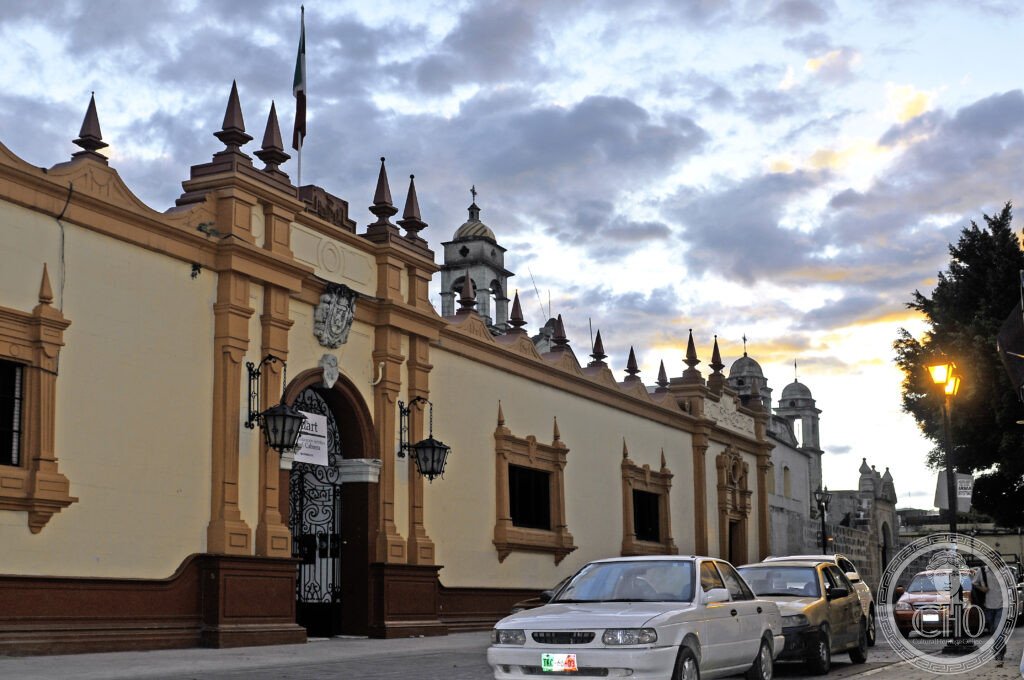
The capital city of the most culturally rich state in Mexico. Built in the valley where the Zapotec civilisation had flourished for 2,000 years before the Spanish arrival, Oaxaca de Juárez combines the finest Dominican Baroque church in Mexico (Santo Domingo), the most complete Monte Albán Zapotec ceremonial centre, three UNESCO World Heritage sites within one day’s visit, and the most celebrated regional cuisine in Mexico in a single, compact colonial city of green volcanic-stone architecture.
At a glance
Oaxaca de Juárez (population approximately 300,000; altitude 1,550 m) is the capital of Oaxaca State, southern Mexico, in the Central Valleys of Oaxaca, approximately 470 km south-east of Mexico City. The Spanish founded the city in 1529 in the former Aztec garrison town of Huaxyacac, which in turn stood in the valley that had been dominated by the Zapotec city of Monte Albán for approximately 1,200 years. UNESCO inscribed the Historic Centre of Oaxaca jointly with the Archaeological Zone of Monte Albán in 1987.
Key facts
- Templo de Santo Domingo de Guzmán: the finest colonial Baroque church in Mexico and one of the most extraordinary interiors in the Americas. Built by the Dominican Order between 1575 and 1731. The interior is covered from floor to ceiling vault with gilded plaster ornament (approximately 60,000 kg of gold leaf according to popular tradition, though the real figure is uncertain). The genealogical tree of the Dominican family of Oaxaca (the Guzmán family tree, with all the family’s notable members depicted in portrait medallions sprouting from the tree branches) occupies the entire underside of the entrance choir vault. A unique programme in colonial art. The adjacent Ex-Convent of Santo Domingo (now the Museo de las Culturas de Oaxaca) contains the Treasure of Tomb 7 of Monte Albán. The most important collection of pre-Columbian gold and jewellery in Mexico (500+ objects of gold, jade, turquoise, bone, and shell, including the famous gold pectoral with thirteen figures of Mictlantecuhtli, the Death God, found in 1932).
- Monte Albán: the most important archaeological site in Oaxaca. A hilltop ceremonial city of the Zapotec civilisation, built on a mountain above the Central Valleys beginning approximately 500 BC (making it one of the earliest cities in Mesoamerica). The site (12 km west of Oaxaca city) covers approximately 40 km² of the mountain, with a central ceremonial plaza (300 × 200 metres) surrounded by pyramidal platforms, a sunken ball court, a building (Building J) that may be an astronomical observatory (its unusual orientation and arrow-shaped plan may be aligned to observe the heliacal rising of Capella), and approximately 170 tombs excavated to date. At its peak (100–700 AD, the Monte Albán III period) the city may have had a population of 25,000. It was gradually abandoned after 700 AD. The view from the central plaza over the three branches of the Central Valleys is one of the great panoramic views in Mexico.
- The cantera verde (green stone): the characteristic architectural material of Oaxaca. A greenish-grey volcanic tuff (andesite, the “cantera” or quarry stone of Oaxaca) that gives the historic centre its distinctive colour tone. Unlike the red tezontle of Mexico City or the yellow stone of Guanajuato, Oaxaca’s cantera verde produces buildings that shift from grey-green to warm olive in direct sun. The stone is soft enough to carve in elaborate detail and the façades of the Santo Domingo church and the Teatro Macedonio Alcalá are the finest examples of cantera verde Baroque carving.
- Oaxacan cuisine: the most diverse and celebrated regional cuisine in Mexico. The culinary tradition of Oaxaca incorporates pre-Columbian Zapotec and Mixtec ingredients (chilhuacle chiles, hierba santa, black bean, tlayuda flatbread, mezcal, chocolate, mole negro with 30+ ingredients) with colonial-era additions. The “seven moles” of Oaxaca (negro, coloradito, amarillo, verde, chichilo, rojo, manchamanteles) define the style. The Mercado Benito Juárez and the Mercado 20 de Noviembre (where the market stalls grill chichaloyos and tlayudas to order) are the best places to experience the cuisine at source.
- The Guelaguetza: the most important traditional indigenous festival in Mexico. Held annually on the two Mondays following 16 July (the fiesta of the Virgen del Carmen) at the Guelaguetza amphitheatre above the city. Representatives of all eight Oaxacan indigenous communities (Zapotec, Mixtec, Mazatec, Mixtec, Chinantec, Triqui, Zoque, and Chatino) perform traditional dances, music, and rituals on the open-air hillside stage. The Guelaguetza name refers to the Zapotec tradition of communal gifting (offering agricultural surplus to the gods and to the community). The festival has been held annually since 1932 and draws several hundred thousand visitors.
- Heritage: UNESCO World Heritage Site, Historic Centre of Oaxaca and Archaeological Zone of Monte Albán, inscribed 1987.
- GPS: 17.0666° N, 96.7216° W.
History
The valley of Oaxaca has been inhabited since approximately 10,000 years ago. The first villages appeared around 2000 BC. The founding of Monte Albán around 500 BC represented the consolidation of Zapotec political power in the central valleys under a single ceremonial centre. The Zapotec civilisation built Monte Albán and developed the first writing system in Mesoamerica (the Zapotec script, approximately 600 BC, predating the later Mayan and Olmec scripts and the earliest surviving written language in the Americas). The Zapotec calendar, the Zapotec deity system, and the Zapotec social hierarchy influenced later Mesoamerican cultures including the Aztec. The Spanish conquistador Francisco de Orozco founded the Spanish settlement of Antequera (the city’s colonial name) in 1529, after the Aztec garrison (Huaxyacac) had already subjugated the Zapotec and Mixtec peoples of the valley. The Dominicans arrived in 1530 and immediately began the construction that produced the Santo Domingo complex.
Oaxaca’s most famous native son is Benito Juárez (1806–1872). A Zapotec-speaking indigenous man from the Sierra Juárez mountains north of Oaxaca City who rose to become the President of Mexico (1858–1872), defeating the French intervention and executing the Austrian Archduke Maximilian I (who the French had placed on the Mexican throne). Juárez’s defence of the constitution and his refusal to submit to foreign intervention made him the national hero of liberal Mexico. The city’s official name, Oaxaca de Juárez, commemorates him. His birthplace in the mountain village of Guelatao de Juárez (65 km north of Oaxaca) is a pilgrimage site for Mexican schoolchildren.
What you see
The historic centre is compact and walkable (the key monuments are within 10 minutes walk of the Zócalo, the main plaza). The circuit: Zócalo (the central plaza, flanked by the Cathedral and the Palacio del Gobierno, and filled with food stalls, marimba bands, and artisan sellers in the evening). Calle Macedonio Alcalá (the main pedestrian shopping and gallery street, which connects the Zócalo to the Santo Domingo church). Templo de Santo Domingo (allow 1 hour minimum). Museo de las Culturas de Oaxaca in the Ex-Convent (the gold treasure of Tomb 7, allow 1.5 hours). The Monte Albán site (12 km west, approximately 20 min by taxi or the Autobuses Turísticos shuttle from the Zócalo market) requires a separate half-day. The standard approach is morning at Monte Albán (before the midday heat) and afternoon in the historic centre.
The mezcal tastings (Oaxaca produces approximately 90% of Mexico’s mezcal, the artisanal agave spirit distilled in small village palenques) are easily combined with the heritage visit. The mezcalerías on Calle Murguía, Calle García Vigil, and the tourist zone are numerous and range from commercial to artisanal. The best single experience is visiting a working palenque in the Tlacolula Valley.
Practical information
- Admission: historic streets and Zócalo free. Templo de Santo Domingo free. Museo de las Culturas de Oaxaca approximately MXN 80 (about €4). Monte Albán site approximately MXN 90 (about €4.50; includes the on-site museum). Taxi to Monte Albán approximately MXN 200 one-way or MXN 350 return including 2-hour waiting time. The Autobuses Turísticos shuttle from Calle Mina runs several times daily (approximately MXN 60 return including shuttle wait).
- Getting there: Oaxaca International Airport (OAX). Direct domestic flights from Mexico City (1h, Aeroméxico, VivaAerobus, Volaris), Guadalajara (1.5h), Monterrey (2h), and Cancún (2h). International connections from Houston (United) and from Los Angeles (Volaris). The airport is 7 km from the historic centre (taxi MXN 200, 15 min). By overnight bus from Mexico City (ADO, 6–7 hours, 1st class; comfortable and the standard budget-traveller option). Highway 135D connects Oaxaca to Puebla and Mexico City (500 km total).
- Indigenous market circuit: the weekly markets of the Central Valleys of Oaxaca are among the most important traditional markets in Mexico. Tlacolula (Sunday, 30 km east, the largest regional market), Zaachila (Thursday, 15 km south, specialising in Zapotec food and livestock), Ocotlán (Friday, 30 km south, the main source of traditional black pottery made by the Rosa Real family). Combining Saturday in Oaxaca city with Sunday at Tlacolula is the most efficient 2-day market itinerary.
Getting there
Oaxaca Airport (OAX): 7 km, 15 min taxi. Direct flights from Mexico City (1h), LA (seasonal). Overnight bus from Mexico City (6–7h). GPS: 17.0666, -96.7216.
Nearby
- Hierve el Agua (petrified waterfalls). 70 km east of Oaxaca (2 hours by bus or tour, via Mitla). A natural spring at the edge of a cliff that deposits calcium carbonate as it flows, creating the appearance of frozen waterfalls cascading down the hillside. The “petrified falls” are 12 and 30 metres tall. The spring also fills two natural “infinity pools” at the cliff edge with the valley view below. The Zapotec used the site for ritual purposes. The road to Hierve el Agua passes through the Tlacolula Valley with multiple Zapotec archaeological sites (Yagul, Mitla).
- Mitla (Zapotec-Mixtec site). 45 km east of Oaxaca. The second most important archaeological site in Oaxaca after Monte Albán. A Zapotec ceremonial centre (active until the Spanish conquest) whose distinctive feature is the elaborately carved mosaic stonework covering the walls of the palaces: geometric patterns of cut stone assembled without mortar into continuous meanders, frets, and spirals. The carving technique and patterns have no equivalent in Mesoamerican architecture. Active excavations continue at Mitla.
- San Bartolo Coyotepec (black clay pottery). 12 km south of Oaxaca. The village where the barro negro (black clay) pottery tradition of Oaxaca originates. The distinctive shiny black surface is produced by burnishing the clay with a quartz stone before firing in a low-temperature reducing kiln. The most celebrated practitioner was Doña Rosa Real de Nieto (1900–1980), who developed the thin-walled, highly polished style that became the standard. Her workshop (now run by her family) and the municipal market where the pottery is sold are both accessible.
Sources
- Wikipedia, Oaxaca. Monte Albán. Templo de Santo Domingo de Guzmán, Oaxaca, accessed June 2026.
- UNESCO, Historic Centre of Oaxaca and Archaeological Zone of Monte Albán, WHS reference 415, inscribed 1987.
- Joyce Marcus and Kent V. Flannery, Zapotec Civilization, Thames and Hudson, 1996.
- INAH, Zone Arqueológica de Monte Albán: Plan de Manejo, 2018.
Find it on the map
See this place and what’s around it →📷 Become a Cultural Heritage Online photographer
Share your photos of places: they stay published under your name as the author. The more they're seen, the more you get noticed — and soon a contest will reward the most appreciated photos.
Log in or sign up free to add a photo