
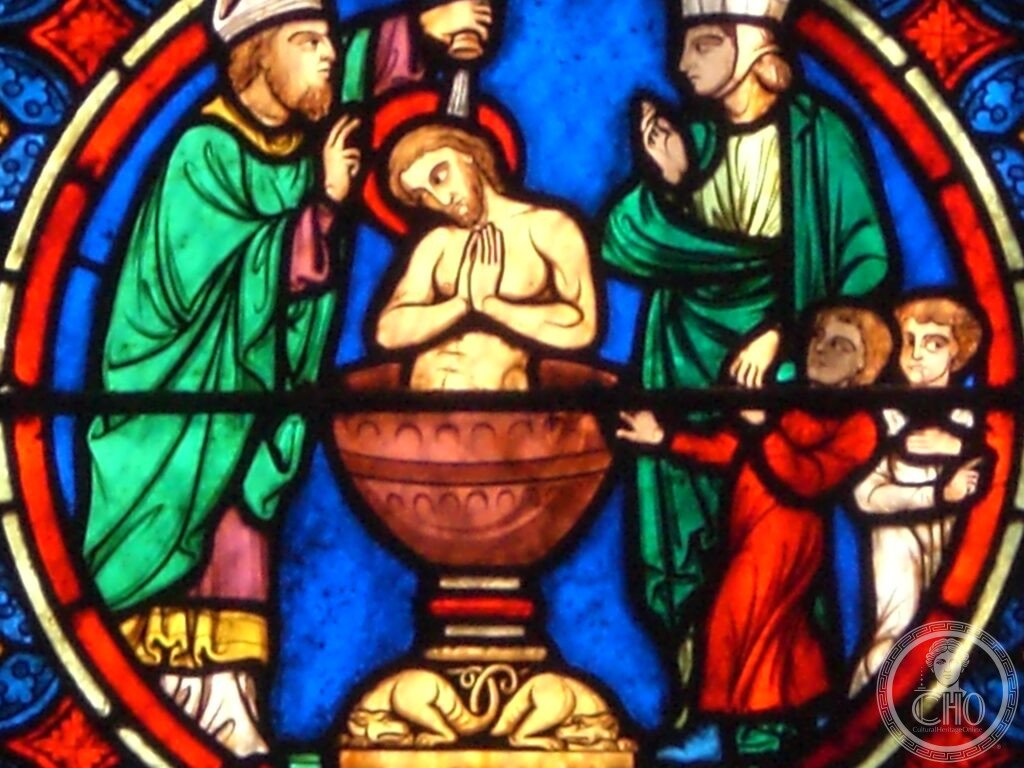
Notre-Dame de Paris
The first great French Gothic cathedral — Maurice de Sully began building Notre-Dame in 1163 to create a church larger and taller than any in France, its flying buttresses the first architectural solution to the structural problem that had set a ceiling on how tall a Gothic church could be built.
At a glance
Notre-Dame de Paris stands on the Île de la Cité, the island in the Seine that was the heart of the original Roman and Merovingian settlement that became Paris. The cathedral was begun under Bishop Maurice de Sully in 1163 on the site of a Romanesque church; construction proceeded in phases over nearly 200 years, the west facade being completed around 1250 and the entire building substantially complete by 1345. The cathedral is one of the earliest examples of High Gothic architecture, its technical advances — particularly the invention of the flying buttress, which transfers the lateral thrust of the stone vaults outside the building, allowing taller and thinner walls and larger windows — influencing the entire subsequent history of European architecture. On 15 April 2019, a fire destroyed the medieval spire (added in the 19th century by Viollet-le-Duc) and caused the collapse of the roof; an international restoration campaign began immediately and the cathedral is expected to reopen in December 2024. Notre-Dame is part of the UNESCO World Heritage Site “Paris, Banks of the Seine.”
Key facts
- Construction: begun 1163 under Bishop Maurice de Sully; east end completed c. 1200; nave and west facade c. 1200–1250; transept facades c. 1258–1267; substantially complete by 1345
- Architects: unknown for the medieval construction; Jean de Chelles (transept facades, c. 1250); Jean Ravy (choir chapels, 14th century); Eugène Viollet-le-Duc (19th-century restoration, 1844–1864, including the spire)
- Dimensions: 128 metres long; 48 metres wide; 35 metres to the vault of the nave; the twin west towers 69 metres tall; the 19th-century spire (now destroyed) 93 metres
- Flying buttresses: among the first in European architecture; the double flying buttresses of the choir (late 13th century) have a span of 15 metres; solved the structural problem that previously limited vault heights
- Rose windows: three: west (9.6 metres diameter, c. 1220, largely original medieval glass); north transept (13.1 metres, c. 1250, almost entirely original medieval glass); south transept (12.9 metres, c. 1260)
- Heritage: part of UNESCO World Heritage Site “Paris, Banks of the Seine,” inscribed 1991
- GPS: 48.8530° N, 2.3499° E
History
The site of Notre-Dame had been the location of two earlier Christian basilicas and, before those, of a Roman temple to Jupiter. Maurice de Sully, elected Bishop of Paris in 1160, decided that the existing Romanesque cathedral was too small and too low to express the dignity of the capital of the French kingdom; he began clearing the site for a new building in 1163 with the laying of the foundation stone, reportedly in the presence of Pope Alexander III. Construction proceeded from east to west in the standard Gothic sequence: the choir and apse were built first, allowing the liturgical life of the cathedral to continue in the west end while the east end was built, then the process reversed.
The cathedral was the architectural, ceremonial, and political centre of Paris throughout the medieval period. It was here that Henry VI of England was crowned King of France in 1431; here that Mary Queen of Scots married the Dauphin Francis in 1558; here that Napoleon I crowned himself Emperor in the presence of Pope Pius VII in 1804 (choosing to place the crown on his own head rather than receive it from the Pope, a gesture made famous by the David painting). During the Revolution, the cathedral was rededicated to the “Cult of Reason” in 1793 and seriously damaged: the 28 statues of the Kings of Judah on the west facade were decapitated by revolutionaries who mistook them for French kings (many of the decapitated heads were discovered under a Paris building in 1977 and are now in the Cluny Museum).
Viollet-le-Duc’s 19th-century restoration (1844–1864) was one of the most influential in European heritage history. He restored the sculptures, rebuilt the north tower spire, added the now-destroyed central spire (93 metres) with its famous copper figures of the apostles, and installed new gargoyles and chimères (including the famous “Le Stryge” gargoyle overlooking Paris from the tower gallery). The 2019 fire, watched live by a billion people worldwide, destroyed the spire and the oak framework of the roof vaults (the “forest,” planted in the 12th–13th century); the stone vaults themselves were damaged but not destroyed. The French government pledged to restore the cathedral in five years; remarkable fundraising (approximately EUR 1 billion from 340,000 donors in 72 hours) and extraordinary construction work have made this target broadly achievable.
What you see
The west facade — the canonical image of French Gothic — presents three portals and three horizontal registers: the portal level with the tympana and voussoirs carved with biblical scenes; the Gallery of Kings above; the two towers rising from a framework of bays and niches. The central rose window (9.6 metres diameter) sits between the towers at the triforium level, its medieval glass largely intact. The towers are not capped — the original plan for spires was apparently abandoned in the 14th century for structural reasons; the towers end in a flat platform with an open arcade, a decision that gives the facade its characteristic squareness.
The interior before the 2019 fire: the nave five bays wide with double side aisles; the triforium gallery above the arcade; the clerestory windows carrying both the natural light and the visual rhythm to the vault above; the crossing beneath the (now destroyed) spire. The north rose window — 13.1 metres of medieval glass, surviving essentially intact since the mid-13th century — is the supreme achievement of medieval stained glass in Paris. The restoration will return the cathedral to public access; the rebuilt spire is expected to follow Viollet-le-Duc’s 19th-century design.
Practical information
- Address: 6 Parvis Notre-Dame, Place Jean-Paul II, 75004 Paris, France
- Reopening: the cathedral is expected to reopen in December 2024 following the 2019 fire restoration; the exterior and forecourt remain accessible; check notredamedeparis.fr for current status
- Towers: when open, the north tower ascent (387 steps) is free for EU citizens under 26; charged for others; the view from the Gallery of Kings is among the best in Paris
- Crypt (Crypte Archéologique): below the square in front of the cathedral; Roman and medieval archaeological remains of the Île de la Cité; open independently of the cathedral restoration
Getting there
Metro 4 to Cité station, 5 minutes on foot. RER B or C to Saint-Michel–Notre-Dame station, 10 minutes on foot. The cathedral is on the Île de la Cité, surrounded by the Seine; the Pont Neuf to the west and Pont d’Arcole to the north are the closest bridges. GPS: 48.8530, 2.3499.
Nearby
- Sainte-Chapelle — within the Palais de la Justice on the Île de la Cité; the 13th-century royal chapel by Pierre de Montreuil; the upper chapel is entirely walls of medieval stained glass; among the finest Gothic spaces in Europe; 200 metres west
- Conciergerie — the royal palace turned prison; Marie Antoinette’s cell is preserved; adjacent to Sainte-Chapelle
- Musée de Cluny — the Cluny Museum of medieval art; includes the unicorn tapestries, the decapitated heads of the Notre-Dame Kings of Judah, and the Roman thermae; 10 minutes on foot south
- Île Saint-Louis — the adjacent island connected by a bridge; the best ice cream in Paris at Berthillon; beautiful 17th-century townhouses
Sources
- Wikipedia, Notre-Dame de Paris, accessed June 2026
- Official cathedral site: notredamedeparis.fr
- UNESCO, Paris, Banks of the Seine, WHS reference 600, inscribed 1991
- Andrew Tallon and Stephen Murray, Notre-Dame de Paris, Harvard University Press, 2023 — the definitive architectural survey, using laser scanning to document the pre-fire structure
Find it on the map
See this place and what’s around it →📷 Diventa un fotografo di Cultural Heritage Online
Condividi le tue foto dei luoghi: restano pubblicate con la tua firma come autore. Più vengono viste, più ti fai conoscere — e presto un concorso premierà le foto più apprezzate.
Accedi o registrati gratis per aggiungere una foto