
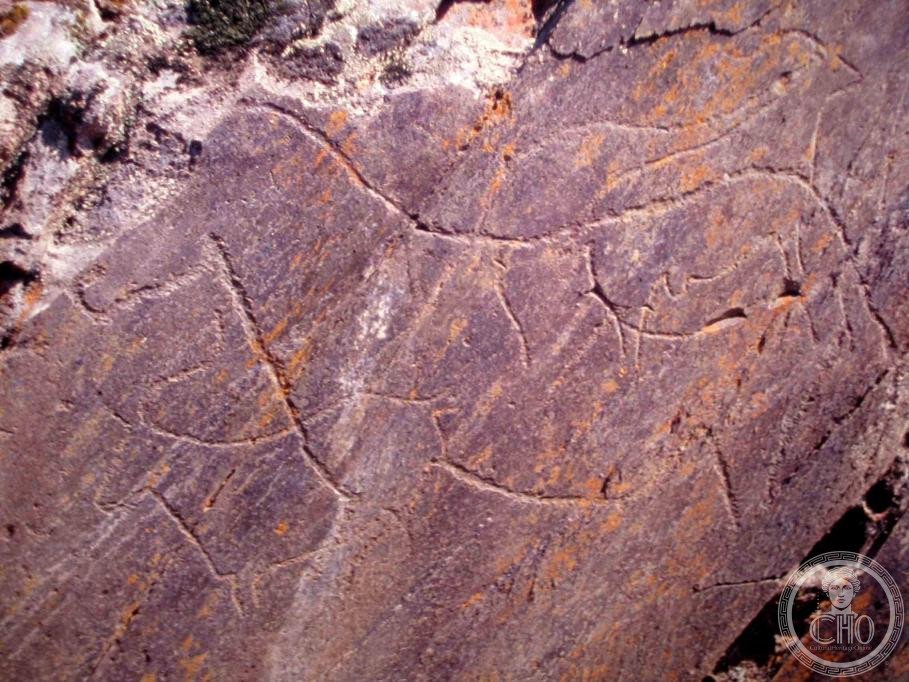
The most important open-air Palaeolithic rock art complex in the world, the Côa Valley engravings were nearly lost beneath a dam in the 1990s — their discovery in 1992–95 halted the dam and rewrote archaeologists’s understanding of Palaeolithic art. More than 5,000 individual figures of horses, aurochs and ibex are cut into the schist cliffs of a 30-km river gorge, dating from 22,000 to 10,000 BCE. UNESCO World Heritage Site 1998.
At a glance
For most of the 20th century, scholars believed Palaeolithic art was made exclusively in caves — sites like Lascaux and Altamira being the paradigm. The Côa Valley proved otherwise. Here, on the open schist cliff faces of a river gorge in northeastern Portugal, the largest concentration of open-air Palaeolithic engravings in the world was documented beginning in 1992. The discovery happened during survey work for a planned dam that would have flooded the valley; the ensuing controversy eventually stopped the dam, making Côa one of the rare cases where an archaeological site successfully halted major infrastructure. The valley today is a UNESCO World Heritage Site and an active archaeological park, with guided access to the main engraving sites.
Key facts
- UNESCO inscription: 1998 — Cultural Heritage (extended 2010 with Siega Verde, Spain)
- Date: c. 22,000–10,000 BCE (Gravettian and Magdalenian periods)
- Scale: over 1,000 engraved panels; more than 5,000 individual figures
- River: Côa River valley, northeastern Portugal, over approx. 30 km
- Subjects: horses, aurochs, ibex, deer, mammoths, fish, abstract signs
- Significance: fundamentally changed understanding of Palaeolithic art — proved it was not exclusively cave-based
- Discovery: 1992–95 during EDP dam survey; dam halted; one of the first cases where an archaeological site stopped major infrastructure
- Museum: Côa Valley Archaeological Park and Museum, opened 2010
History
In 1992, archaeologists João Zilhão and Nelson Rebanda were surveying the valley of the Côa River in northeastern Portugal on behalf of the national electricity company EDP, which was planning to build the Foz Côa dam. In the course of the survey, they found panels of engravings on the schist cliff faces beside the river. Further investigation revealed not dozens but hundreds of panels, then thousands — spread across approximately 30 kilometres of river valley at sites named Canada do Inferno, Penascosa and Ribeira de Piscos.
The dates obtained from associated sediments placed the engravings in the Palaeolithic — the same period as Lascaux and Altamira. This was extraordinary: all previously known Palaeolithic art of comparable scale and sophistication was in caves. Côa demonstrated that Palaeolithic people also made major art on open cliff faces, in landscapes visible to groups and potentially linked to seasonal movements of people and animals along the valley.
EDP pressed to proceed with the dam. A major scientific and public controversy followed, attracting the attention of international archaeologists and UNESCO. In 1995 the Portuguese government reversed the dam decision. The valley was designated a national monument, and in 1998 Côa was inscribed as a UNESCO World Heritage Site, becoming one of the fastest inscriptions on record for a newly discovered site.
In 2010, the site was extended transnationally to include Siega Verde in western Spain — another open-air Palaeolithic engraving site on the Agueda River (a tributary of the Douro), separated from Côa by 200 km but sharing the same graphic tradition. The Côa Valley Archaeological Park and Museum opened in 2010.
What you see
Visits to the engravings are by guided tour only — the sites are off-road and the schist panels require expert guidance to read. The principal sites are Canada do Inferno (the most accessible), Penascosa (the richest in figures), and Ribeira de Piscos. Tours typically run in 4WD vehicles to trailheads, then on foot to the cliff faces.
The engravings themselves are incised (not painted) into the dark schist rock, using a technique of multiple fine lines to build up the form of the animal. The most frequent subjects are horses — depicted with remarkable naturalism, including details of mane, nostrils and hooves — followed by aurochs (wild cattle), ibex, and deer. Some panels layer engravings from different periods, the older figures visible as ghost-images beneath younger ones.
The Côa Valley Archaeological Park Museum, designed by Camilo Rebelo and Tiago Pimentel, is an award-winning piece of architecture half-embedded in the hillside above the valley. Its permanent collection includes reproductions at scale and an excellent interpretive narrative of both the art and the discovery controversy.
Practical information
- Address: Parque Arqueólogico do Vale do Côa, Rua do Museu, 5150-610 Vila Nova de Foz Côa, Portugal
- Booking: Required; guided tours only; advance reservation strongly recommended (arte-coa.pt)
- Tour types: Morning, afternoon and sunset tours; each approx. 2.5–3 hours; groups max 8 persons
- Admission: Tours approx. €15–20; museum entry included with tour
- Hours: Museum open Tuesday–Sunday 09:30–17:30 (check seasonal variations)
- What to bring: sturdy shoes; sun protection; no facilities at engraving sites
- Photography: permitted; no flash
Getting there
Vila Nova de Foz Côa is in northeastern Portugal, approximately 150 km east of Porto and 300 km northeast of Lisbon. By car: from Porto, take the A4 east then IP2 south; approx. 2 hours. By train: Pocinho station (on the Douro line) is 12 km from Vila Nova de Foz Côa; taxi or pre-arranged transport needed for the final section. No direct bus service from major cities; the site is best visited by car.
Nearby
- Pocinho and Douro Valley (12 km west) — dramatic schist gorge, world-class vineyards, scenic Douro railway
- Almendra (20 km north) — Neolithic standing stones (menhirs)
- Numão (20 km south) — medieval castle village
- Torre de Moncorvo (30 km north) — historic almond-growing town
Sources
- UNESCO World Heritage List — Prehistoric Rock Art Sites in the Côa Valley and Siega Verde (whc.unesco.org/en/list/866)
- Wikipedia — Prehistoric Rock Art Sites in the Côa Valley and Siega Verde (en.wikipedia.org/wiki/Prehistoric_Rock_Art_Sites_in_the_C%C3%B4a_Valley_and_Siega_Verde)
- Côa Valley Archaeological Park (arte-coa.pt)
- Zilhão, J. (1995) — “The age of the Côa valley (Portugal) rock art: validation of archaeological dating to the Palaeolithic and refutation of geological claims for a Holocene age”, Antiquity
Find it on the map
See this place and what’s around it →📷 Become a Cultural Heritage Online photographer
Share your photos of places: they stay published under your name as the author. The more they're seen, the more you get noticed — and soon a contest will reward the most appreciated photos.
Log in or sign up free to add a photo