
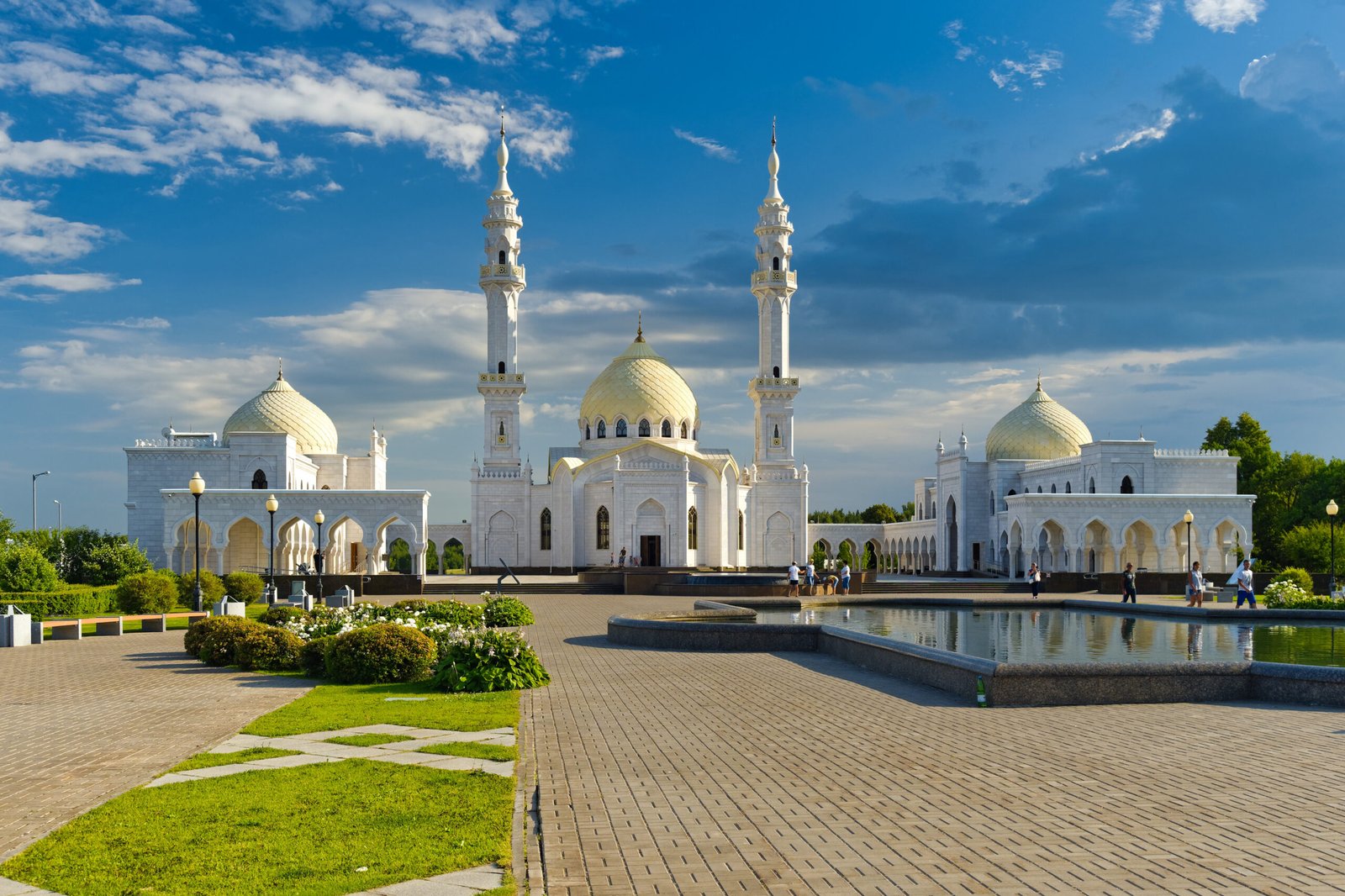
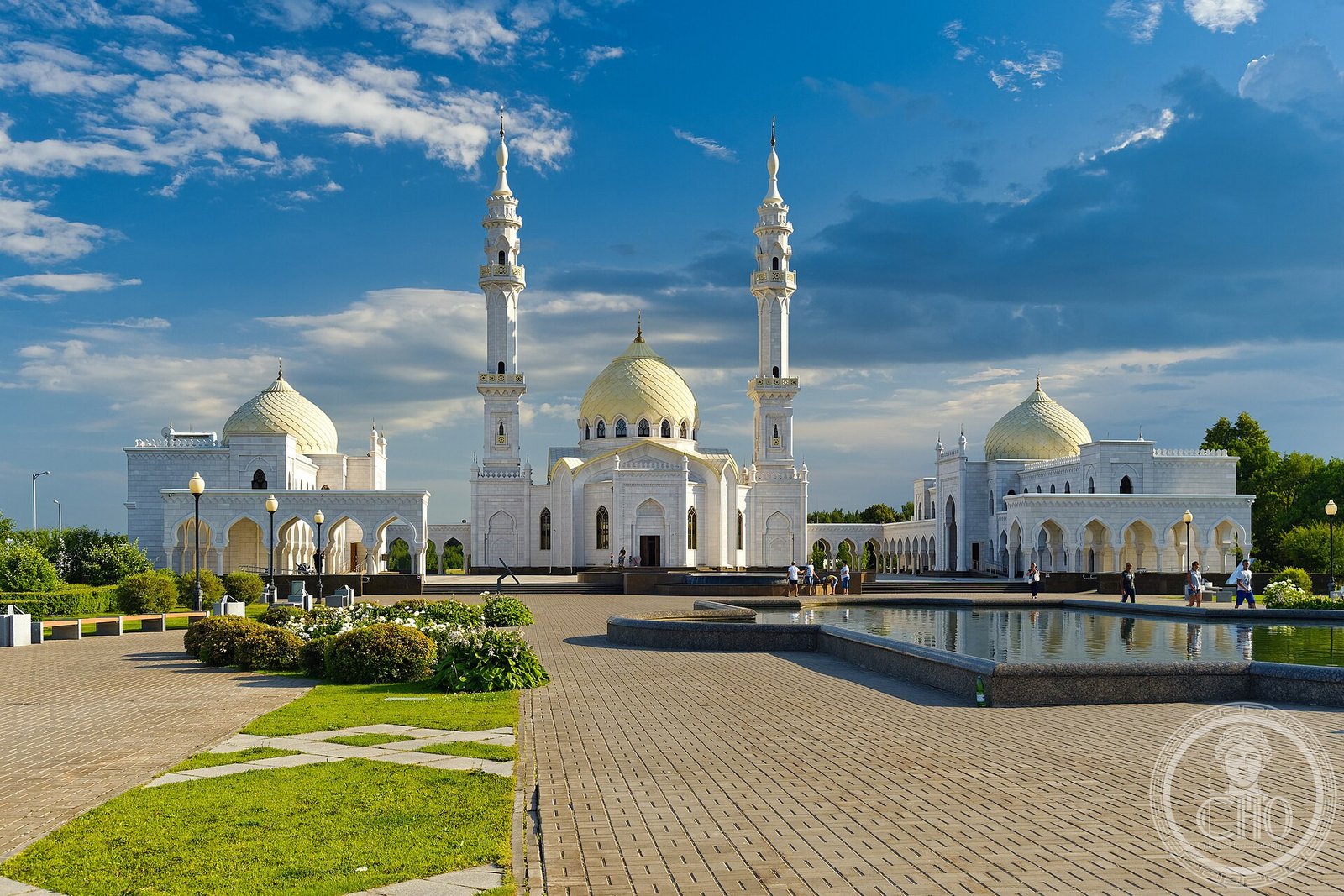
On the high bank of the Volga River, the ruined capital of Volga Bulgaria preserves the moment — in 922 AD — when Islam first entered Russia, witnessed by Ibn Fadlan on his way to meet the Vikings.
At a glance
The Bolgar Historical and Archaeological Complex, a UNESCO World Heritage Site inscribed in 2014, stands on a promontory above the Volga River 170 km south of Kazan in the Republic of Tatarstan. It was the capital of Volga Bulgaria (7th–13th century AD) — a powerful medieval state that controlled trade routes between the Baltic, Byzantium, and the Islamic world — and was later rebuilt as a major city of the Golden Horde (13th–14th century). Bolgar is the first place in Russia where Islam was formally adopted, making it a site of immense religious and historical significance for Russia's 20 million Muslims, particularly the Tatars and Bashkirs of the Volga-Ural region.
Key facts
- UNESCO: World Heritage Site (2014), ref. 981
- Period: 7th–13th century (Volga Bulgaria); 13th–14th century (Golden Horde)
- Key event: adoption of Islam, 922 AD — first formal Islamic conversion in Russia
- Key source: Risala of Ahmad ibn Fadlan (embassy secretary, Baghdad, 922 AD)
- Imperial heritage protection: decreed by Peter the Great, 1722 — first such order for a non-Orthodox site
- Modern addition: the world's largest printed Quran, housed near the ruins
- Location: 170 km south of Kazan on the Volga River
History
In May 922, an Abbasid embassy sent from Baghdad by Caliph Al-Muqtadir arrived at the court of the Bulgarian king Almish, responding to Almish's request to receive the Islamic faith. The embassy secretary was a young Baghdadi official named Ahmad ibn Fadlan, whose detailed account of the journey — the Risala — is one of the most important medieval travel documents in existence. Ibn Fadlan described the Volga River, the customs of the Bulgarians, the climate of the far north, and, most famously, his encounter with the Rus (Vikings) on the Volga: their appearance, hygiene, funerary customs (including the ship burial with a sacrificed slave girl), and trade in furs and amber. This passage is the most detailed contemporary description of the Varangian Rus in early medieval sources and the inspiration for Michael Crichton's novel The 13th Warrior.
The adoption of Islam in 922 was the first formal conversion of a northern European ruler to the Islamic faith, predating the Islamisation of the Volga-Ural region by a full century. Volga Bulgaria developed as a sophisticated Islamic state with its own coinage, caravanserai network, and literate bureaucracy. The city was destroyed in the Mongol invasion of 1236 but was rebuilt as a regional capital of the Golden Horde, when the distinctive white limestone architecture — Black Chamber, White Mosque, Khan's and Northern Mausolea — was erected. The city was abandoned after the Golden Horde's collapse in the early 15th century.
In 1722, Peter the Great issued an imperial decree ordering the preservation of Bolgar's monuments — the first heritage protection order in Russian history for a non-Orthodox site, and a surprisingly early instance of state-sponsored heritage protection anywhere in the world.
What you see
The surviving monuments are all of white ashlar limestone, a material that gives Bolgar its distinctive aesthetic and that influenced later Tatar architecture including the Kazan Kremlin. The main monuments are: the White Mosque (13th–14th century), a large congregational mosque whose columns and arched portico still stand; the Black Chamber, a large octagonal building probably used as a court or bath; the Khan's Mausoleum and the Northern Mausoleum, domed limestone tombs; and the foundations of the cathedral mosque. A purpose-built modern building near the ruins houses the Bolgar Quran, the world's largest printed Quran, a gift from the Government of Tatarstan. The site museum contains archaeological finds including jewellery, ceramics, and coins.
Practical information
Bolgar is an active pilgrimage site for Russian Muslims and sees significant visitor numbers, particularly in summer. There is a well-maintained visitor infrastructure including a museum complex, signage in Russian and Tatar, and guided tours available in Russian. The site is best visited in the warmer months (May–September); winters are very cold and the Volga can freeze. Entry to the monument area is free; the museum and some buildings charge a small fee.
Getting there
From Kazan (170 km north): the most scenic approach is by high-speed boat from Kazan River Terminal (seasonal, approximately 3 hours); alternatively, by bus from Kazan Bus Station to the town of Bolgar (approximately 2.5 hours), from which the archaeological complex is a short taxi ride. A direct road transfer from Kazan takes approximately 2.5 hours by car. The nearest airport is Kazan International (KZN), well connected to Moscow, St Petersburg, and other Russian cities.
Nearby
- Kazan Kremlin — UNESCO World Heritage Site, 170 km north; the walled citadel of the Tatar capital, blending Russian Orthodox and Islamic architecture including the Qolşärif Mosque
- Svizhask Island — UNESCO-listed monastic ensemble on a Volga island, 30 km west of Kazan, founded by Ivan the Terrible in 1551
- Bilyar — earlier capital of Volga Bulgaria, 100 km east; archaeological site under excavation
Sources
- Ibn Fadlan, Ahmad (922 AD / transl. Lunde & Stone 2012). Ibn Fadlan and the Land of Darkness. Penguin Classics.
- UNESCO World Heritage Centre — "Bolgar Historical and Archaeological Complex" (ref. 981), inscription dossier 2014.
- Khuzin, F.Sh. (2004). Bulgar City before the Mongol Conquest. Kazan: Master Line.
- Noonan, T.S. (1992). "Volga Bulgaria's Tenth-Century Trade with Samanid Central Asia." Archivum Eurasiae Medii Aevi 11.
- Wikipedia: "Bolgar, Tatarstan" — consulted June 2026.
Find it on the map
See this place and what’s around it →📷 Become a Cultural Heritage Online photographer
Share your photos of places: they stay published under your name as the author. The more they're seen, the more you get noticed — and soon a contest will reward the most appreciated photos.
Log in or sign up free to add a photo