
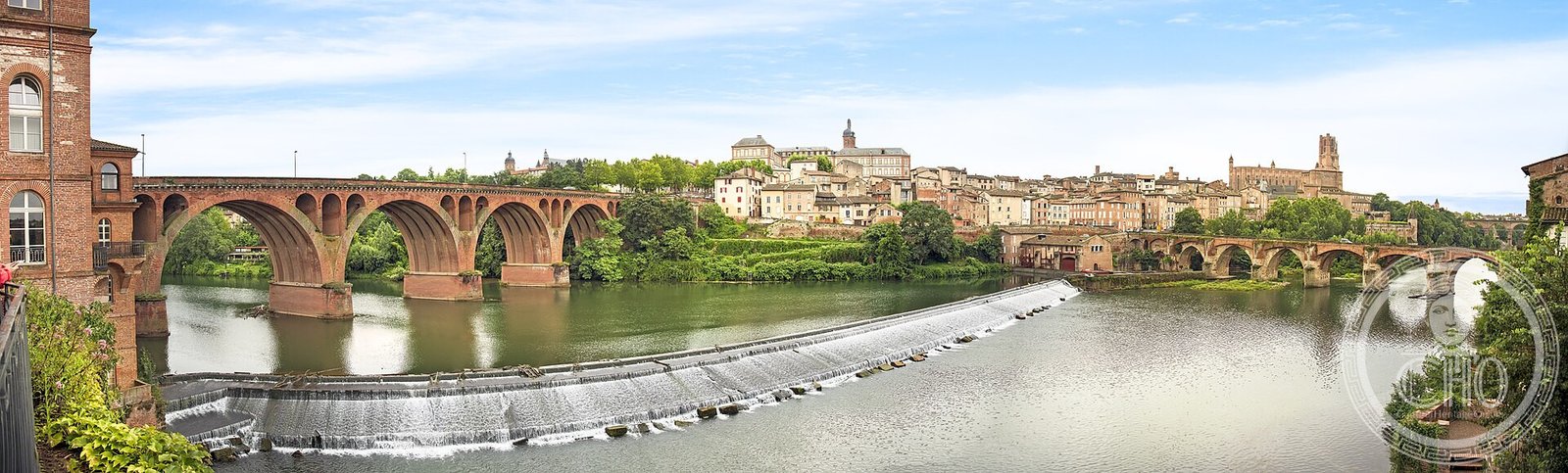
A fortified cathedral city in southern France whose striking red-brick architecture earned UNESCO recognition. This medieval episcopal seat remains the birthplace of post-impressionist painter Toulouse-Lautrec.
At a glance
Albi sits on the river Tarn, 85 km northeast of Toulouse, as the prefecture of the Tarn department. The Episcopal City clusters around the Cathedral Sainte-Cécile, a fortress-like structure that defines the skyline. The Musée Toulouse-Lautrec, located within the city, celebrates the famous artist born here.
History
Albi evolved as an episcopal seat with the Archbishop of Albi maintaining spiritual authority over the region. The cathedral and surrounding medieval quarter developed around religious administration and civic power, creating a distinct urban fabric that persisted through centuries of French history.
What you see
The Cathedral Sainte-Cécile dominates the Episcopal City with its massive brick construction and fortress-like appearance. This architectural approach—rare for French cathedrals—reflects the building’s defensive character. Red brick and distinctive masonry create visual harmony across the medieval quarter, distinguishing Albi’s aesthetic from stone-built cathedral cities elsewhere in France.
Cultural significance
UNESCO inscribed the Episcopal City in 2010, recognizing its unique architectural identity and urban composition. The site preserves a complete medieval episcopal settlement with exceptional material coherence. Toulouse-Lautrec’s connection to Albi deepens its cultural resonance for admirers of late-19th-century art and society.
Key facts
- Country: France
- City: Albi, Tarn department
- Coordinates: 43.9281°N, 2.1428°E
- UNESCO World Heritage Site (2010)
- Seat of the Archbishop of Albi
- Home to the Musée Toulouse-Lautrec
Practical information & getting there
Albi is accessible by road and rail from Toulouse, located 85 km to the southwest. The Episcopal City and cathedral are open to visitors. The Musée Toulouse-Lautrec is housed within the Archbishop’s palace. Check local tourism websites for current hours and admission fees before planning your visit.
Sources & resources
Find it on the map
See this place and what’s around it →📷 Become a Cultural Heritage Online photographer
Share your photos of places: they stay published under your name as the author. The more they're seen, the more you get noticed — and soon a contest will reward the most appreciated photos.
Log in or sign up free to add a photo