
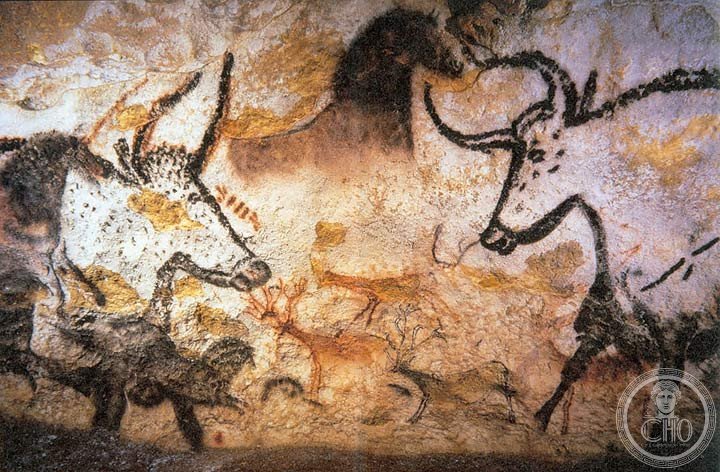
A vast network of caves decorated with over 600 parietal paintings, Lascaux preserves some of humanity’s oldest artistic expressions, created across many generations during the early Magdalenian period.
At a glance
Lascaux is a complex of caverns near the village of Montignac in the Dordogne, in southwestern France. The interior walls and ceilings bear more than 600 paintings of large animals—horses, bison, deer, mammoth—rendered in ochre, charcoal, and manganese oxide. These images record the fauna of the Upper Paleolithic world. The work of many hands across many generations, the paintings are now dated to between 17,000 and 22,000 years ago.
History
The caves were created through natural geological processes; humans later adorned them with imagery during the early Magdalenian culture. The paintings represent the combined artistic vision and labor of numerous generations of visitors. The exact chronology remains debated, but current scholarship places the work in the early Magdalenian period, spanning several millennia of active use and creation.
What you see
The cave network features extensive wall and ceiling paintings depicting primarily large herbivores and some carnivores native to the Upper Paleolithic landscape. The animals are rendered with remarkable naturalism and anatomical precision, using earth pigments and charcoal applied by hand and tool. The compositions vary in scale and technique, reflecting the diverse hands and approaches of those who created them across time.
Cultural significance
Lascaux stands as one of the most important repositories of prehistoric art in the world. The paintings provide invaluable insight into the spiritual, intellectual, and aesthetic life of Upper Paleolithic peoples. They demonstrate sophisticated understanding of animal anatomy and artistic composition tens of thousands of years before written civilization. Recognition of this importance led to UNESCO World Heritage inscription in 1979, as part of the Prehistoric Sites and Decorated Caves of the Vézère Valley.
Key facts
- Country: France
- City: Montignac, Dordogne
- Coordinates: 45.05°N, 1.17°E
- Dating: 17,000–22,000 years ago (early Magdalenian)
- Number of paintings: Over 600
- UNESCO World Heritage List: 1979
- Status: Original cave closed to public since 1963; replicas available
Practical information & getting there
The original Lascaux cave has been closed to the public since 1963 to prevent further deterioration of the paintings. However, visitors can experience the site through high-fidelity replicas, which convey the scale, arrangement, and artistry of the original chambers. Montignac is accessible by car and rail from Périgueux and other regional centers in the Dordogne.
Sources & resources
- Prehistoric Sites and Decorated Caves of the Vézère Valley — whc.unesco.org — Prehistoric Sites and Decorated Caves of the Vézère Valley — the property of which this site is part
- World Heritage List — reference 85 — UNESCO open data, dataset whc001
- UNESCO — official film on this property — on YouTube
- Lascaux cave. Prehistoric Sites and Decorated Caves of the Vézère Valley (France) — UNESCO official photograph — Francesco Bandarin — UNESCO
- Lascaux — Wikipedia — consulted as a secondary reference, not as confirmation
- culturalheritageonline.com — our archive and city guides
Find it on the map
See this place and what’s around it →📷 Become a Cultural Heritage Online photographer
Share your photos of places: they stay published under your name as the author. The more they're seen, the more you get noticed — and soon a contest will reward the most appreciated photos.
Log in or sign up free to add a photo