
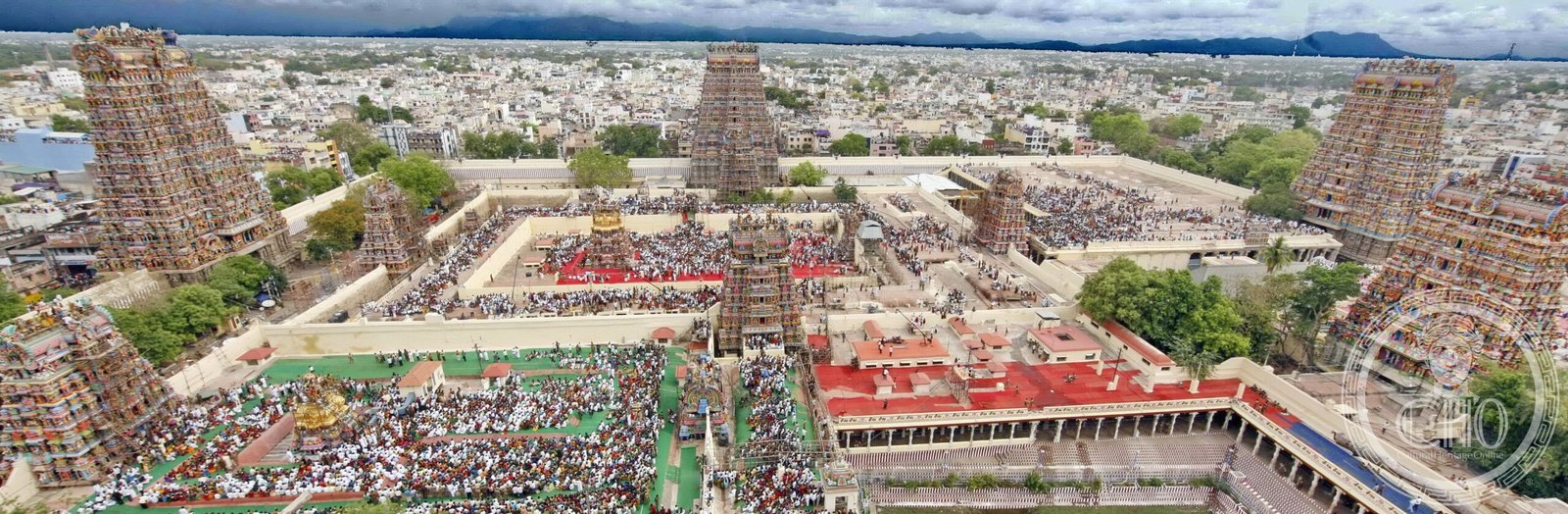
A sprawling Hindu temple complex on the Vaigai River, dedicated to the goddess Meenakshi and her consort Sundareswarar, representing centuries of Pandya, Vijayanagara, and Nayak architecture and devotion.
At a glance
Meenakshi Temple spans 5.7 hectares across concentric walled enclosures punctuated by fourteen gopurams—ornamental gateways that define the sacred geometry of the complex. The southern tower, built in the 16th century, soars 52 metres and anchors the skyline of Madurai. Within the innermost sanctum stand the twin shrines of Meenakshi and Sundareswarar, the theological and physical heart of the temple. Thousands of pilgrims and visitors arrive daily to circumambulate the golden lotus pond and experience the confluence of Shaivism, Shaktism, and Vaishnavism that this sanctuary embodies.
History
Tamil texts first reference the temple in the 6th century CE, and the site is revered as one of the Paadal Petra Sthalams—Shiva temples eulogized in Tevaram verses by the Nayanars between the 6th and 11th centuries. The Pandyas built the earliest substantial structures during the 12th and 13th centuries. After the Delhi Sultanate’s armies destroyed the temple, the Vijayanagara Empire rebuilt it in the 14th century, initiating a period of renewal. The Madurai Nayaks undertook extensive expansion in the 16th and 17th centuries, establishing much of the present complex. Structural neglect during British rule was reversed after independence; major restoration campaigns and consecrations occurred in 1974, 1995, and 2009.
What you see
The temple’s design radiates outward through successive prakara (walled enclosures), each layer fortified with high masonry walls. Four cardinal gopurams mark the cardinal directions, with ten smaller towers supplementing the ensemble. The southern gopuram, a 16th-century masterpiece reaching 52 metres, dominates the landscape and inspired the motif on Tamil Nadu’s state emblem. The thousand-pillared mandapa exemplifies the temple’s monumental scale and ornamental richness. Golden sculpture, intricate carvings, and processional spaces enliven the courtyards, while the potramarai kulam—the golden lotus pond—provides spiritual and architectural balance within the innermost sanctum.
Cultural significance
Meenakshi Temple stands as one of India’s most vital pilgrimage destinations and a symbol of Tamil cultural identity. The temple’s theological inclusivity—welcoming devotees of Shiva, the Divine Mother, and Vishnu—reflects Hindu philosophy’s syncretic reach. As the state emblem of Tamil Nadu, the west gopuram is etched into official consciousness. In 2017, the temple received national recognition as India’s best ‘Swachh Iconic Place’ under the Swachh Bharat Abhiyan. The complex anchors Madurai’s economy, with goods and services tied to temple rituals and festivals forming a crucial sector of the city’s livelihood.
Key facts
- Location: Madurai, Tamil Nadu, India (9.9197°N, 78.1194°E)
- Dedicated to: Meenakshi (form of Parvati) and Sundareswarar (Shiva)
- Area: 5.7 hectares (14 acres)
- Tallest gopuram: Southern tower, 52 metres, built 16th century
- Governing body: Hindu Religious and Charitable Endowments Department, Tamil Nadu
- Consecrations: 1974, 1995, 2009
Practical information & getting there
The temple is open to visitors daily and managed by the Government of Tamil Nadu’s endowments department. Madurai is well connected by rail, road, and air to major Indian cities. The temple complex is centrally located on the southern bank of the Vaigai River. Visitors should dress respectfully; religious etiquette is observed within the sanctum. Check current opening hours and any access restrictions before your visit.
Sources & resources
Find it on the map
See this place and what’s around it →📷 Become a Cultural Heritage Online photographer
Share your photos of places: they stay published under your name as the author. The more they're seen, the more you get noticed — and soon a contest will reward the most appreciated photos.
Log in or sign up free to add a photoDo you manage this place?
This page is read by travellers and heritage enthusiasts who find it on Google. Keep it accurate — and make it work for you. Free for non-profit heritage institutions.