
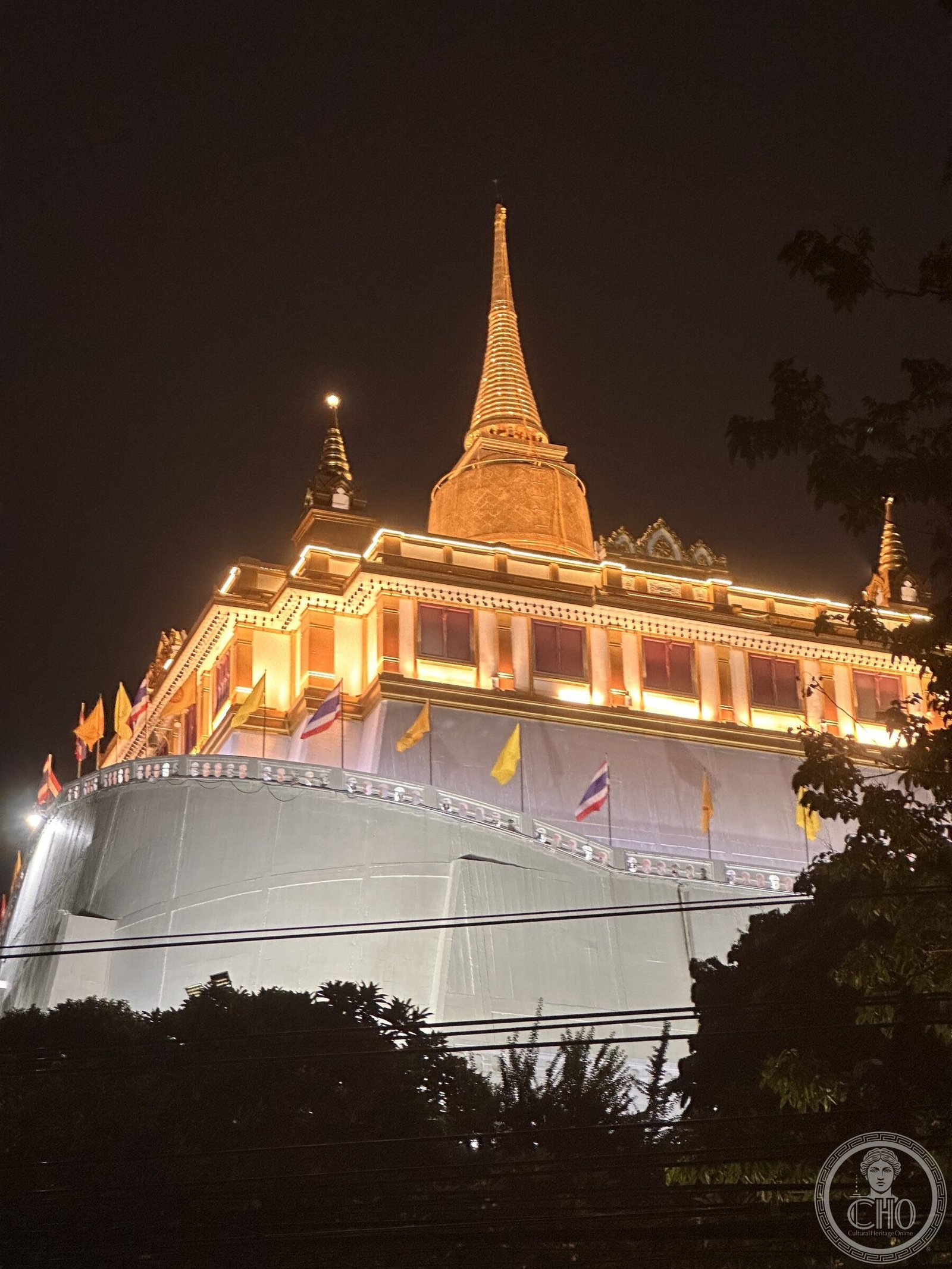
Wat Saket — Temple of the Golden Mountain
Wat Saket Ratchawora Mahawihan, universally known as Wat Saket or the Temple of the Golden Mountain, is a Buddhist temple in the Pom Prap Sattru Phai district of Bangkok. Its landmark feature is a gilded artificial hill crowned by a chedi rising approximately 80 metres above street level, offering panoramic views across the old city. The temple was a major cremation site during the early Rattanakosin period and remains an active place of worship, pilgrimage, and one of Bangkok’s most distinctive skyline features.
- Address
- 344 Thanon Chakkraphatdi Phong, Ban Bat, Pom Prap Sattru Phai, Bangkok 10100, Thailand
- Coordinates
- 13.7535° N, 100.5067° E
- Period
- Temple: Ayutthaya period (pre-1782); Golden Mount chedi completed mid-19th century under Rama IV
- Style
- Traditional Thai Buddhist (Rattanakosin)
- Function
- Active Buddhist temple and pilgrimage site; royal temple of the third class
- Current use
- Open to visitors daily; annual Wat Saket Fair held in November around the temple hill
At a glance
- Type
- Buddhist temple (wat) with artificial hill and chedi
- Period
- Ayutthaya origins; major construction under Rama III and Rama IV
- Style
- Traditional Thai Rattanakosin
- Location
- Pom Prap Sattru Phai district, Bangkok
- Patron
- Chakri kings, particularly Rama III and Rama IV
Overview
Wat Saket is one of Bangkok’s oldest temples, occupying a site that predates the founding of the current capital. Its artificial hill — the Phu Khao Thong or Golden Mountain — was begun under Rama III but repeatedly collapsed during construction due to the soft ground; it was finally completed and capped with a golden chedi under Rama IV in the 1860s. The temple complex also houses important relics believed to be genuine bone fragments of the Buddha, brought from India and Sri Lanka.
History
The temple stood during the Ayutthaya period before Bangkok became the capital in 1782. During the early Rattanakosin era it served as a major cremation ground, where bodies of plague victims and those without means for private cremations were brought. Construction of the artificial hill started under Rama III (1824–1851), but the soft clay soil caused repeated collapses. Rama IV finally stabilised and completed the structure; his successor Rama V encased it in brick and added the gilded chedi visible today.
What you see
A winding staircase of 344 steps winds around the wooded hillside to the summit, where the golden chedi contains relics and offers 360-degree views of the old city and the Chao Phraya River. The hilltop terrace is decorated with bronze bells that visitors ring for merit. At the base of the hill, the main ordination hall (ubosot) contains an important image of the Buddha and traditional Thai mural paintings. The grounds are shaded by mature trees and enlivened by small shrines and merit-making stations.
Cultural significance
Wat Saket is a working temple that has anchored community religious life in this part of Bangkok for centuries. Its annual fair — one of the oldest in the city — draws hundreds of thousands of devotees in November. The relics enshrined in the chedi give the temple particular prestige as a pilgrimage destination throughout mainland Southeast Asia.
Practical information
The temple is open daily from early morning until early evening. A modest admission fee is charged to climb the Golden Mount. Modest dress is required; remove footwear when entering the temple buildings. Check official sources for current opening hours and fair dates.
Getting there
Wat Saket is situated near the Democracy Monument on Ratchadamnoen Avenue. Take the MRT Blue Line to Sam Yot station and walk approximately 15 minutes east, or take a taxi or tuk-tuk from Khao San Road (approximately 10 minutes). River taxis from Banglamphu pier are also an option.
Sources & resources
Gallery
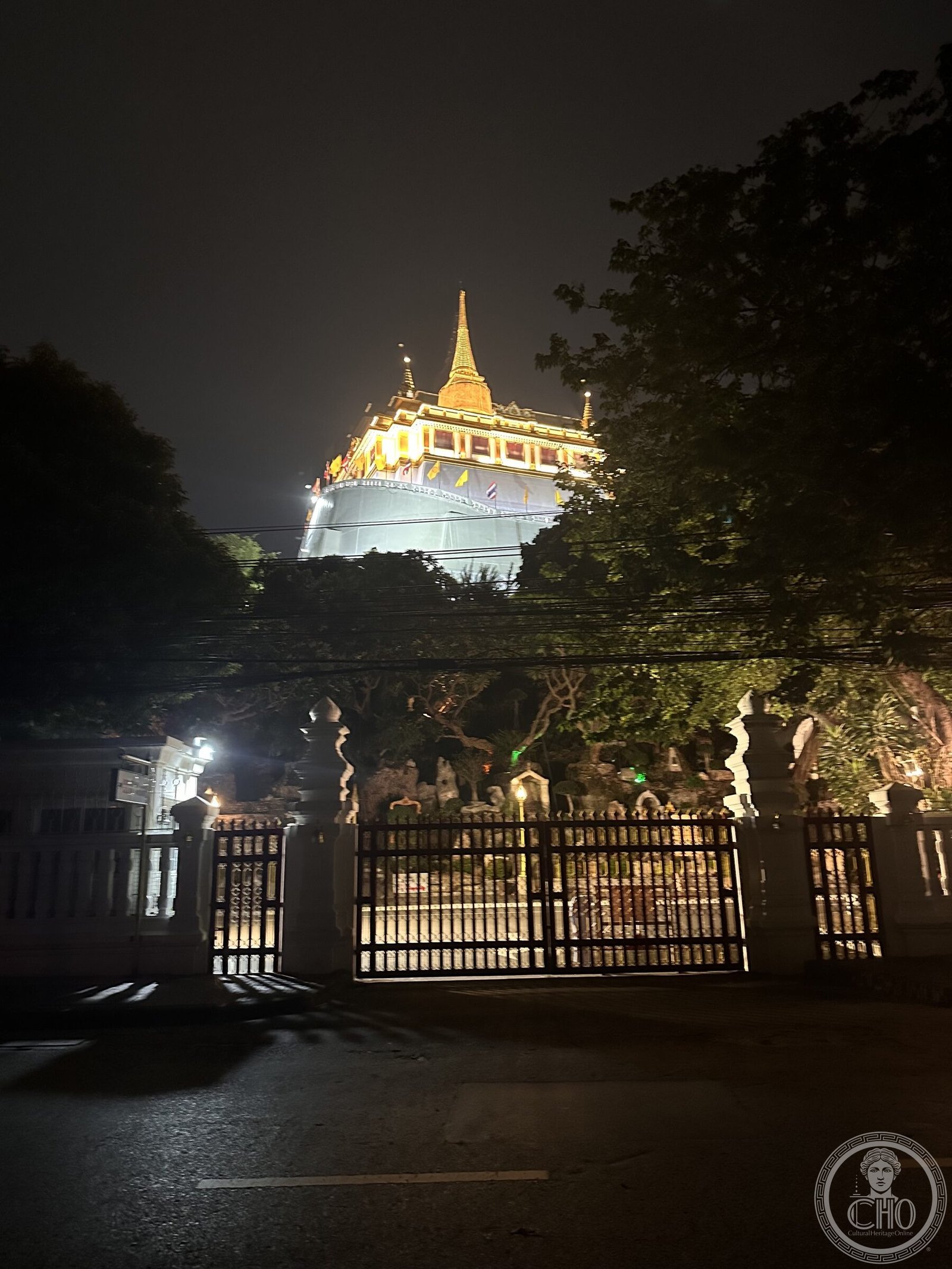
Photographs by Luigi De Marchi.
Find it on the map
See this place and what’s around it →
📷 Diventa un fotografo di Cultural Heritage Online
Condividi le tue foto dei luoghi: restano pubblicate con la tua firma come autore. Più vengono viste, più ti fai conoscere — e presto un concorso premierà le foto più apprezzate.
Accedi o registrati gratis per aggiungere una foto