

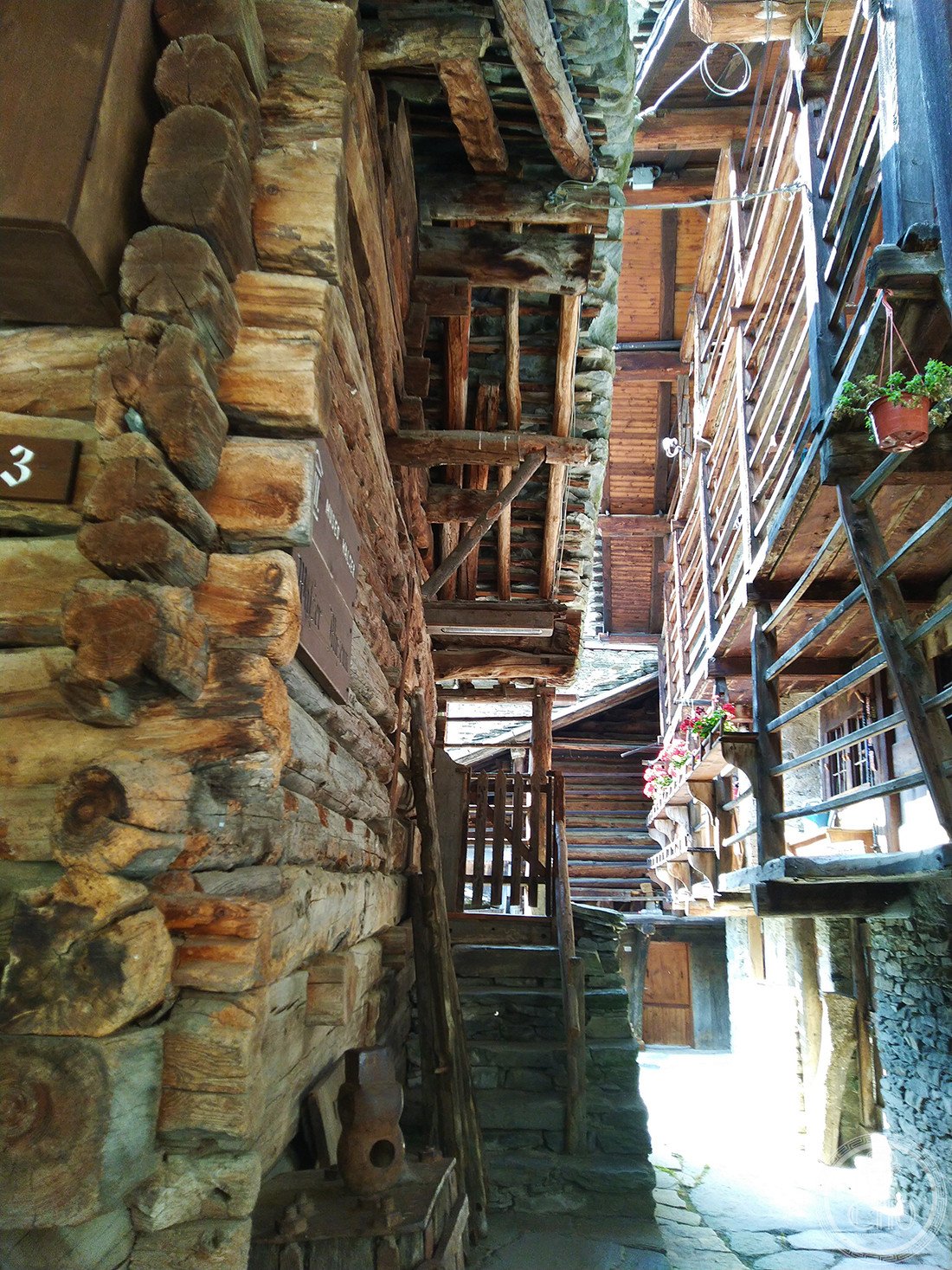
A seventeenth-century house at Pedemonte, above Alagna Valsesia, furnished as a Walser home: part of the Valsesia ecomuseum established by the Region of Piedmont in 1999.
At a glance
- Type
- Ethnographic museum, Walser culture
- Where
- Frazione Pedemonte, Alagna Valsesia, Province of Vercelli, Piedmont, Italy
- Coordinates
- 45.8607047° N, 7.9381961° E
- Building
- Seventeenth century
- Ecomuseum founded
- 1999, by the Region of Piedmont
Overview
The Museo Walser is at Pedemonte, an outlying hamlet of Alagna Valsesia, in the Province of Vercelli — in Piedmont, at the head of the Valsesia under Monte Rosa.
It belongs to the Ecomuseo della Valsesia — Grande Sentiero Walser, a group of museum sites devoted to the Walser culture of the valley.
History
The ecomuseum was established in 1999 by the Region of Piedmont. It was coordinated first by the Comunità Montana Valsesia and then by the Unione Montana dei Comuni della Valsesia.
The Walser were German-speaking settlers who crossed from the Valais in the Middle Ages and founded communities on the high slopes around Monte Rosa; Alagna is one of them, on the Piedmontese side.
What you see
The museum occupies a seventeenth-century building and reproduces inside it the rooms of a Walser house, with original furniture, objects and the tools of daily life and of the working and keeping of food.
Practical information
- Address: Frazione Pedemonte 1, 13021 Alagna Valsesia (VC), Piedmont.
- Opening times are seasonal, as for most of the high Valsesia; it is advisable to check before travelling.
Sources
- Cultural Heritage Online historical archive — original Italian entry (beniculturalionline.it), transposed and corrected 2026.
Find it on the map
See this place and what’s around it →📷 Become a Cultural Heritage Online photographer
Share your photos of places: they stay published under your name as the author. The more they're seen, the more you get noticed — and soon a contest will reward the most appreciated photos.
Log in or sign up free to add a photoIs this page about you?
This page is read by travellers and heritage enthusiasts who find it on Google. Tell us how you are connected to this place and we will take it from there.