
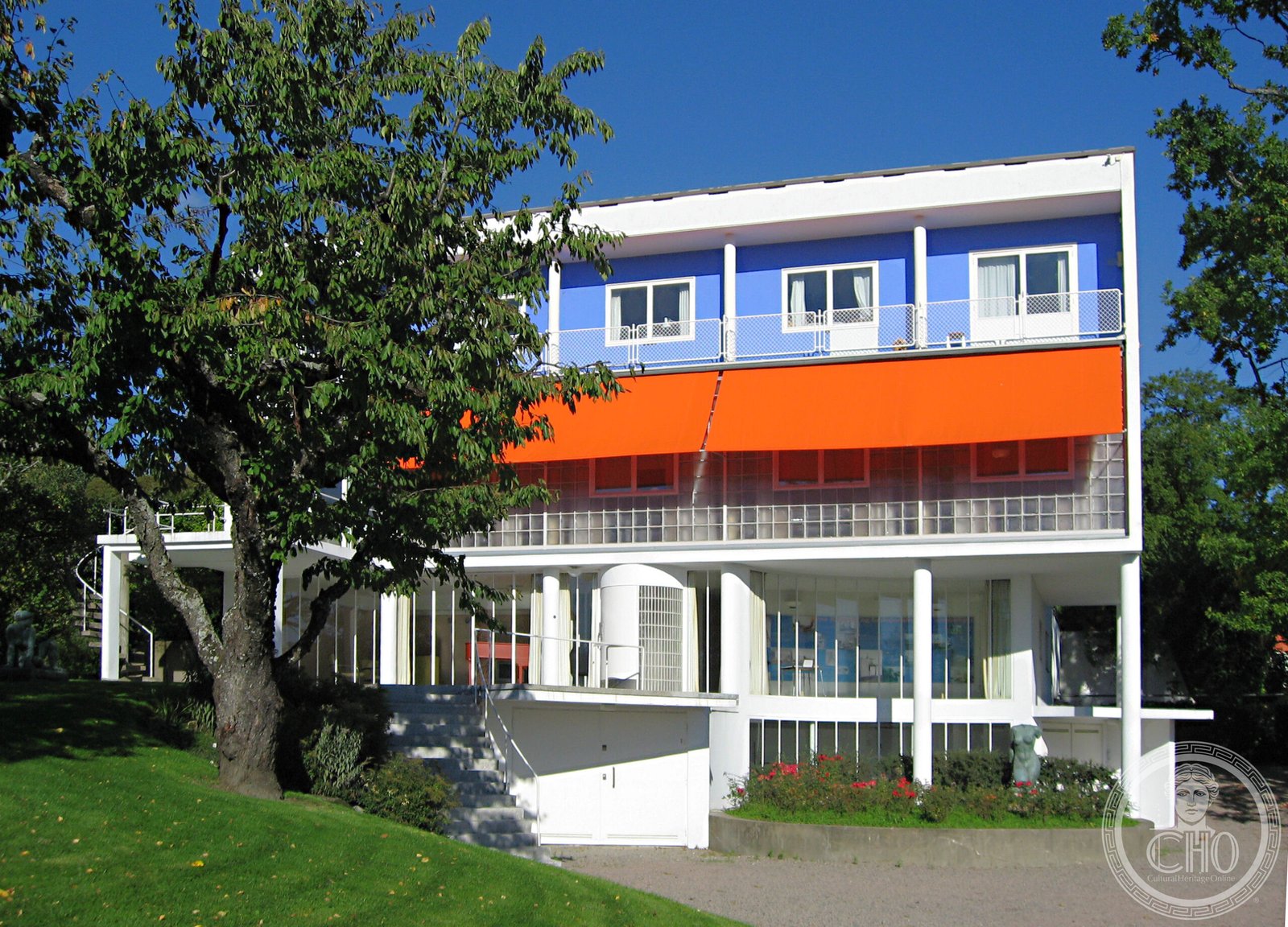
Villa Stenersen
Villa Stenersen is a landmark modernist house in Oslo designed in 1939 by architect Arne Korsmo for financier, art collector, and author Rolf Stenersen and his family. Built to serve simultaneously as a private residence and as a purpose-designed gallery for Stenersen’s extensive art collection, the villa is considered one of the principal achievements of Norwegian functionalist architecture and is the country’s sole member of the Iconic Houses network. The building is operated by the National Gallery of Norway and is open to the public on Sundays during the summer months.
At a glance
- Type
- Modernist private villa and art gallery
- Period
- Designed and built 1939
- Style
- Norwegian functionalism (Funkis)
- Location
- Oslo, Norway · 59.9392° N, 10.6986° E
- Architect
- Arne Korsmo
- Client
- Rolf Stenersen, financier and art collector
- Current use
- Public museum; operated by the National Gallery of Norway
- Status
- Undergoing restoration by Statsbygg in collaboration with the National Gallery and the Stenersen family
Overview
Villa Stenersen stands as one of the finest examples of Norwegian functionalist domestic architecture, combining the twin demands of comfortable family living and professional art display under a single roof. Arne Korsmo, one of Norway’s leading modernist architects, designed the house as an integral work in which structure, interior layout, and natural light all serve the presentation of art. The villa’s membership in the international Iconic Houses network reflects its significance as a surviving, largely intact example of pre-war European residential modernism.
History
Rolf Stenersen commissioned the villa in the late 1930s, having amassed a major collection that included works by Edvard Munch, whom Stenersen had known personally. Korsmo completed the design in 1939, drawing on continental functionalist principles then reshaping Scandinavian domestic architecture. After Stenersen’s death, ownership and stewardship of the house passed through several hands before being entrusted to the National Gallery, which assumed public management of the site. An ongoing restoration programme led by Statsbygg aims to return the structure and interiors to their original condition.
What you see
The villa presents a clean, horizontal composition characteristic of interwar functionalism, with large windows designed to flood the gallery spaces with controlled natural light. Interior spaces flow between living areas and purpose-built display walls, illustrating the architect’s belief that art and daily life should coexist without formal separation. Original fittings and Korsmo-designed furniture complement the architectural integrity of the building, offering visitors an unusually coherent view of the modernist domestic ideal as envisioned in 1939.
Cultural significance
As Norway’s only Iconic Houses member, Villa Stenersen occupies a singular position in the national architectural canon. The building demonstrates how Scandinavian architects adapted the modernist programme to northern conditions and local patronage, producing a domestic monument that retains its power decades after construction. Its association with Edvard Munch’s circle adds a further layer of cultural depth that extends well beyond architectural history.
Practical information
Villa Stenersen is managed by the National Gallery of Norway and is open to the public on Sundays during the summer season. Visitors should check the National Gallery’s official website for current opening times, admission fees, and access arrangements during the ongoing restoration works.
Getting there
The villa is located in Oslo’s west side. It is reachable by public transport from Oslo city centre; tram and bus connections serve the surrounding neighbourhood. Check Ruter (the Oslo public transport authority) for current routes and timetables. By car, limited on-street parking may be available nearby.
Sources & resources
Find it on the map
See this place and what’s around it →📷 Diventa un fotografo di Cultural Heritage Online
Condividi le tue foto dei luoghi: restano pubblicate con la tua firma come autore. Più vengono viste, più ti fai conoscere — e presto un concorso premierà le foto più apprezzate.
Accedi o registrati gratis per aggiungere una foto