
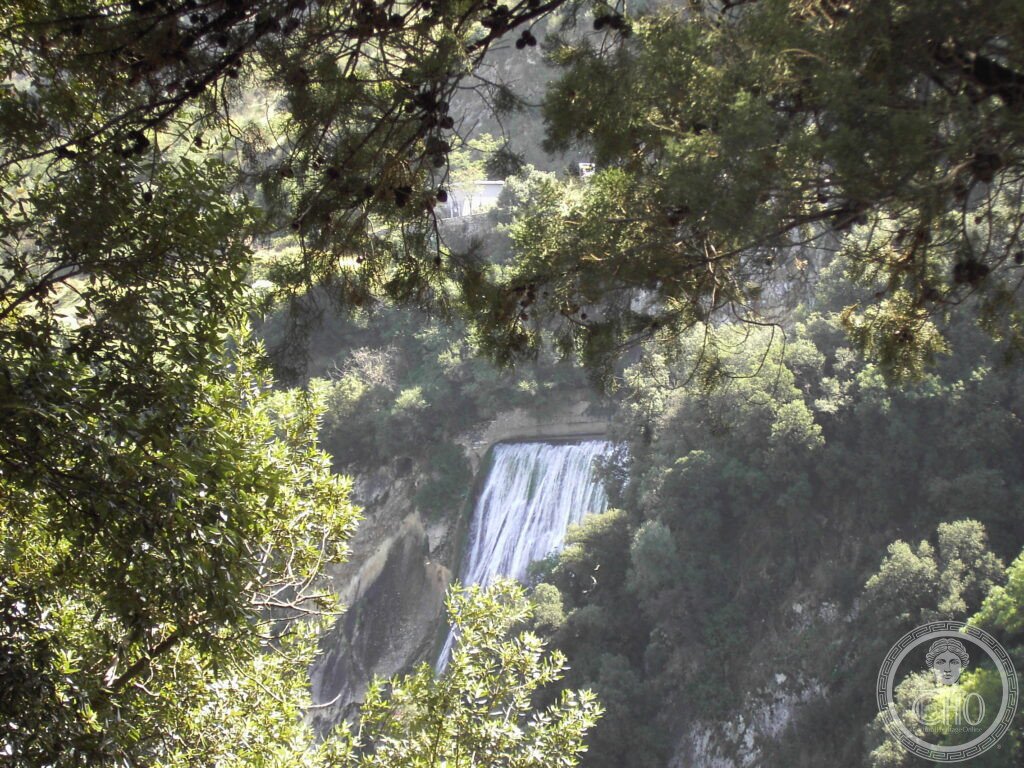
Villa Gregoriana Park
Villa Gregoriana is a landscaped park in Tivoli, Lazio, situated at the foot of the city’s ancient acropolis where the Aniene River plunges through a dramatic gorge. Created in the 1830s by Pope Gregory XVI — whose name it bears — the park combines thick woodland, Romantic-era viewpoints, and some of the most spectacular water scenery in central Italy, including the roaring Grande Cascata (Great Waterfall) and a series of grottos associated with Neptune and the Sirens. Since 2002 it has been managed by the FAI — Fondo Ambiente Italiano.
At a glance
- Type
- Historic landscaped park with archaeological elements
- Period
- Ancient Roman origins; park created 1835 by Pope Gregory XVI
- Style
- Romantic landscape garden; ancient Roman ruins integrated
- Location
- Tivoli, Metropolitan City of Rome, Lazio, Italy
- Coordinates
- 41.9654° N, 12.8019° E
Overview
Villa Gregoriana Park consists mainly of thick woodland traversed by paths descending into the gorge of the Aniene, leading to the caves of Neptune and the Sirens, a series of cascades, and the circular Roman Temple of Vesta perched on the acropolis above. The park’s dramatic topography — a deep ravine carved by the river through travertine rock — creates an atmosphere unlike any other historic garden in Italy, blending natural spectacle with layers of human history reaching back to Republican Rome. Since its restoration and reopening under FAI management, the park has attracted visitors seeking an alternative to the better-known Villa d’Este gardens nearby.
History
The gorge was already a notable feature of Roman Tivoli — ancient Tibur — where it served as the setting for temples, sacred grottos, and the upper reaches of the town’s water infrastructure. In 1826 a catastrophic flood caused by the diversion of the Aniene through new tunnels created the Grande Cascata, which replaces the original course of the river; Pope Gregory XVI subsequently had the banks landscaped as a public park, officially inaugurated around 1835. The park fell into decline in the 20th century and was effectively closed to visitors for decades before FAI undertook a major restoration beginning in the late 1990s, reopening the site in 2002.
What you see
The centrepiece is the Grande Cascata, where the Aniene drops roughly 120 metres into the gorge in a thunderous plume of mist. Pathways wind down through beech and holm oak forest to the cave of the Sirens, a naturally carved chamber at water level, and the grotto of Neptune, a dramatic concavity etched by millennia of river action. Above the gorge on the ancient acropolis stands the small circular Roman Temple of Vesta — wrongly called the Sibyl’s Temple in Romantic-era literature — one of the best-preserved Republican-era temples in Italy. The view from the acropolis terrace across the gorge and the Campagna Romana is one of the most celebrated prospects in the Roman hinterland.
Cultural significance
Villa Gregoriana inspired generations of Grand Tour painters and writers, from 18th-century landscape artists to Romantic poets who saw in its turbulent waters and ruined temples a perfect embodiment of the sublime. The park preserves two Republican-era Roman temples in their original elevated setting, contextualising them within a living landscape in a way that urban archaeological parks cannot replicate. Its management by FAI demonstrates the Italian model of heritage conservation through private foundation stewardship, which has increasingly supplemented state preservation efforts.
Practical information
- Address
- Largo Sant’Angelo, 00019 Tivoli RM, Italy
- Manager
- FAI — Fondo Ambiente Italiano
- Hours
- Seasonal opening hours; check the official FAI website (fondoambiente.it) for current schedule and admission prices
- Admission
- Paid entry; FAI members free
Getting there
Tivoli is approximately 30 km east of Rome. By public transport take the COTRAL bus from Ponte Mammolo (Line B metro station in Rome) or the Rome–Tivoli regional train from Roma Tiburtina station (approx. 60 minutes). The park entrance is in the historic centre of Tivoli near Largo Sant’Angelo; from the Tivoli bus terminal it is about 10 minutes on foot. By car take the A24 motorway eastward from Rome and exit at Tivoli; parking in the historic centre is limited.
Sources & resources
Find it on the map
See this place and what’s around it →Historical events at this place (1)
📷 Diventa un fotografo di Cultural Heritage Online
Condividi le tue foto dei luoghi: restano pubblicate con la tua firma come autore. Più vengono viste, più ti fai conoscere — e presto un concorso premierà le foto più apprezzate.
Accedi o registrati gratis per aggiungere una foto