
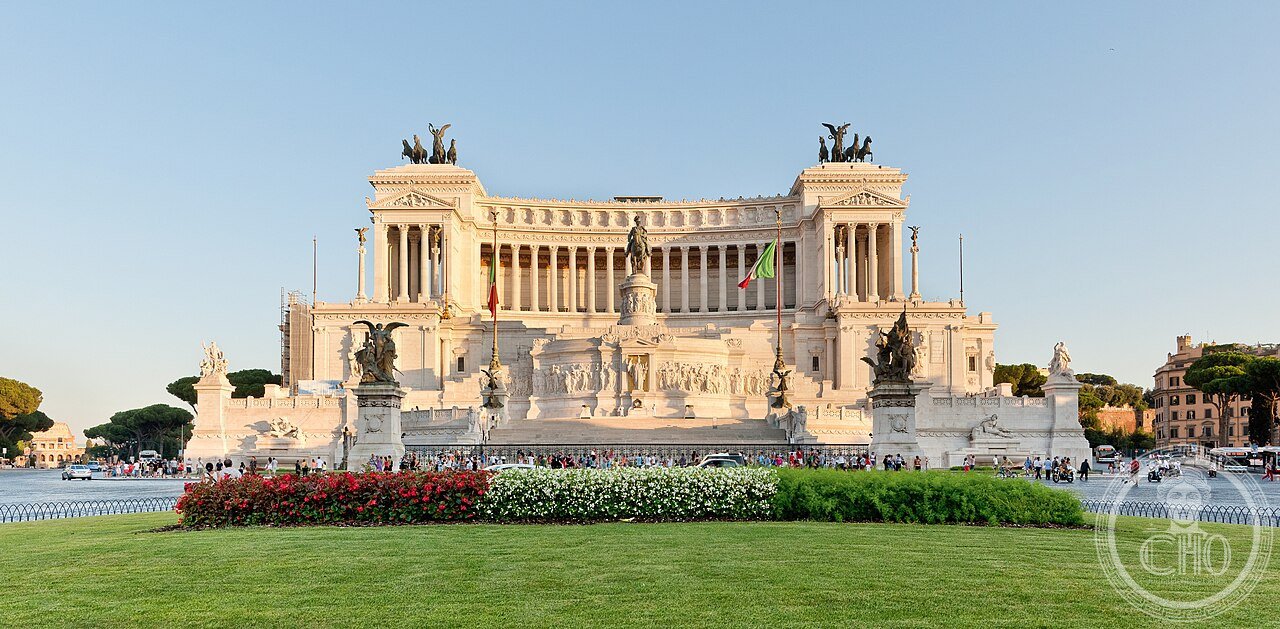
Venice Plaza
One of Rome’s most significant urban spaces, Venice Plaza commands the foot of the Campidoglio where five major streets converge, anchored by the Renaissance Palazzo Venezia and shaped by centuries of papal, diplomatic, and political history.
At a glance
Venice Plaza sits at a vital intersection of Rome’s urban geography, where via dei Fori Imperiali, via del Corso, the via C. Battisti–via Nazionale axis, the via del Plebiscito–corso Vittorio axis, and the via of the Theater of Marcellus meet. The square has served as papal seat, diplomatic center, and political stage across five centuries.
History
Palazzo Venezia on the west side began as a papal residence; Pope Julius II watched Barbary horse races from its balcony, events that continued along via del Corso until 1883. From 1564 to 1797, the palazzo housed the Venetian representative to the Papal State.
In 1929, Benito Mussolini made the square his government seat. He delivered speeches to massive fascist gatherings from the palazzo’s balcony, and the square was proclaimed the “Forum of Italy.”
Palazzo Bonaparte, on the north side, hosted Letizia Ramolino, Napoleon’s mother, from 1818 until her death. Behind the covered balcony called “mignano” at the corner with via del Corso, she spent her days observing the square. Even in advanced age and blindness, she maintained this habit—having her housekeeper describe the street life below.
What you see
Palazzo Venezia dominates the western facade with Renaissance character. Its balcony—the site of historic speeches and ceremonies—remains a focal point. The mignano, a distinctive covered balcony on Palazzo Bonaparte, projects prominently at the via del Corso corner, offering a sheltered vantage point over the piazza.
Cultural significance
Venice Plaza embodies Rome’s shifting centers of power and identity. It evolved from a papal and diplomatic hub into the symbolic heart of fascist Italy, a transformation visible in its architecture and urban role. The square’s layout and monuments document the intersection of Renaissance patronage, European diplomacy, and twentieth-century history.
Key facts
- Address: Piazza Venezia, 00186 Roma
- Coordinates: 41.8957663, 12.4825739
- Official website: http://www.turismoroma.it/cosa-fare/piazza-venezia
- Information phone: 06 0608
Practical information
Venice Plaza is a public square open at all times. Palazzo Venezia houses the Museum of the Palazzo Venezia; check the official website for current museum hours and admission details.
Getting there
The square is at the base of Capitoline Hill, easily reached by metro or on foot from central Rome’s major monuments and streets. Public transport and walking directions are available on the official Rome tourism website.
Sources & resources
Find it on the map
See this place and what’s around it →📷 Diventa un fotografo di Cultural Heritage Online
Condividi le tue foto dei luoghi: restano pubblicate con la tua firma come autore. Più vengono viste, più ti fai conoscere — e presto un concorso premierà le foto più apprezzate.
Accedi o registrati gratis per aggiungere una foto