
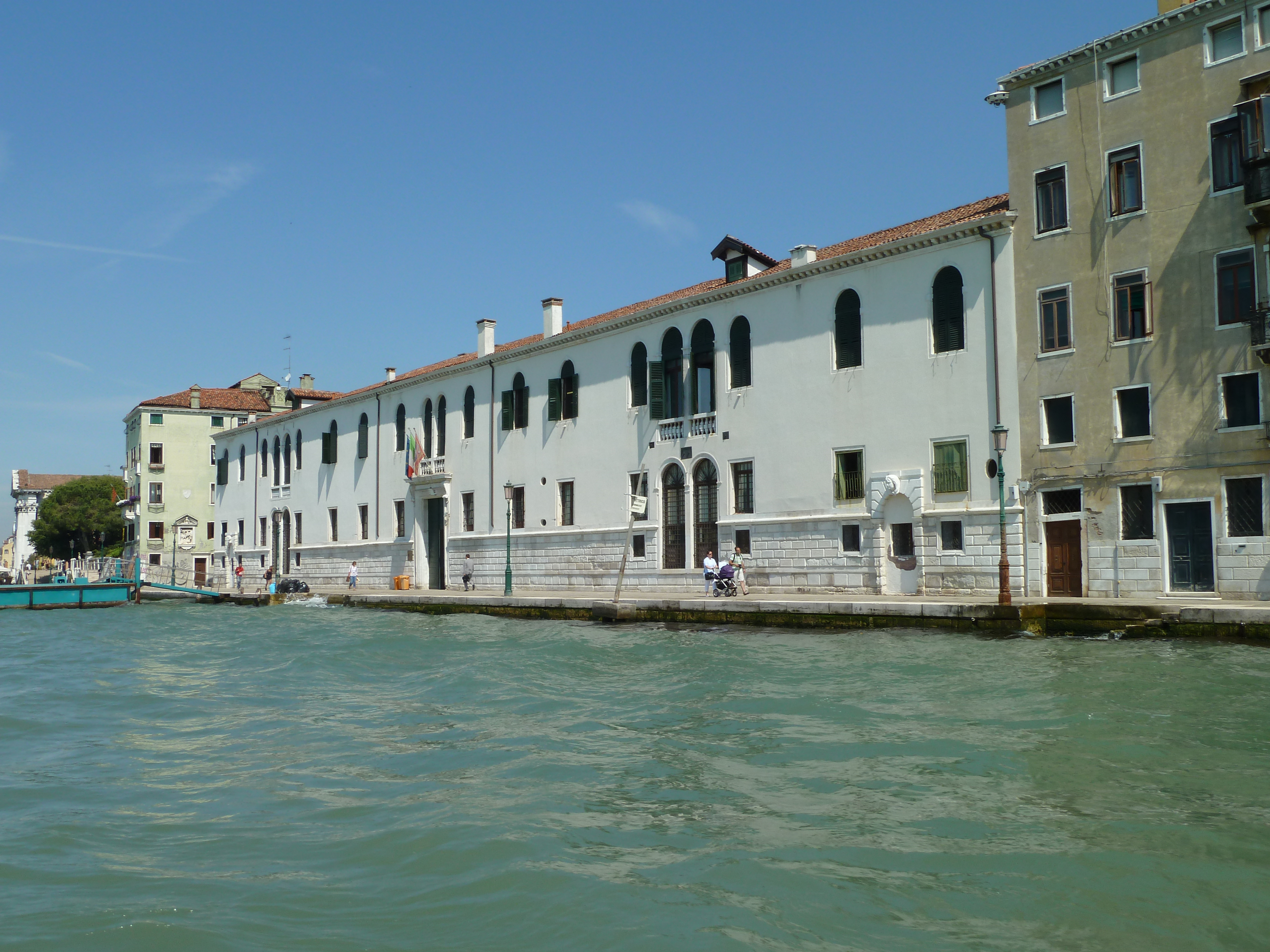
Venice Academy of Fine Arts
Founded in 1750 by decree of the Venetian Senate, this prestigious institution shaped generations of artists through rigorous training in painting, sculpture, and architecture.
At a glance
The Academy of Fine Arts in Venice remains one of Italy’s leading art schools. Its main headquarters occupies the former Hospital of the Incurables; a branch on the Island of San Servolo focuses on new technologies for art. The institution’s collection formed the nucleus of the Gallerie dell’Accademia, now open to the public.
History
Established on September 24, 1750, as the “Venetian academy of painting, sculpture and architecture,” the institution was born from Venetian Senate initiative. Gianbattista Piazzetta served as first director, with Giovanni Battista Tiepolo as president, supported by advisors Gianbattista Pittoni and Giovanni Maria Morlaiter.
In 1758, Pittoni assumed the presidency and taught at the Academy until his death in 1767, profoundly influencing Venetian painting for decades. The teaching curriculum expanded in 1768 to include Perspective and Architecture. In 1807, following political reorganization, the Academy was reformed into the “Royal Academy of Fine Arts” and relocated to the former convent and School of Santa Maria della Carità.
Pietro Edwards pioneered restoration practices here: in 1777 he developed an early restoration methodology, and in 1819 established a formal public school for the restoration of damaged paintings. By 1798, masterworks assembled for educational purposes had begun forming the collection that would become the Gallerie dell’Accademia, publicly accessible since 1817.
What you see
The Academy occupies a historically significant building complex. The main seat, housed in the former Hospital of the Incurables, retains architectural characteristics of its institutional past. The collection galleries preserve works collected since the Academy’s early years, spanning paintings, sculptures, and architectural drawings essential to Venetian artistic pedagogy.
Cultural significance
The Academy educated virtually every significant Venetian and many Italian artists from the late eighteenth century onward. Its faculty included masters like Tiepolo, Hayez, Titian’s successors, and twentieth-century innovators such as Emilio Vedova and Carlo Scarpa. The institution standardized art education in Venice and influenced practice across Europe through its rigorous curriculum and restoration methodologies.
Key facts
- Founded: September 24, 1750
- Address: Fondamenta Zattere Allo Spirito Santo, 423, 30123 Venice
- Coordinates: 45.42865496711543, 12.330484986305237
- Phone: 041 241 3752
- Website: http://www.accademiavenezia.it/
- Branch: Island of San Servolo (New Technologies for Art)
Practical information
Opening hours and admission fees are available on the official website. Contact the Academy directly for current exhibition schedules, educational programs, and visiting arrangements.
Getting there
The Academy is located on Fondamenta Zattere Allo Spirito Santo in Venice’s Dorsoduro district. Access by vaporetto (water bus) is recommended; check ACTV for current routes and schedules serving the Zattere waterfront.
Sources & resources
Find it on the map
See this place and what’s around it →📷 Diventa un fotografo di Cultural Heritage Online
Condividi le tue foto dei luoghi: restano pubblicate con la tua firma come autore. Più vengono viste, più ti fai conoscere — e presto un concorso premierà le foto più apprezzate.
Accedi o registrati gratis per aggiungere una foto