

Sacro Monte di Varallo
Il Sacro Monte di Varallo (UNESCO 2003, rif. 1068) è il più antico e il più grande dei 9 Sacri Monti piemontesi e lombardi e il modello da cui tutti gli altri derivano — fondato nel 1486 CE come “Nuova Gerusalemme” alpina da Fra Bernardino Caimi, con 45 cappelle che ripercorrono la vita di Gesù con 900 statue in terracotta policroma e 4.000 m² di affreschi, di cui i capolavori di Gaudenzio Ferrari.
At a glance
Sacro Monte Varallo Valsesia (the most precisely Varallo zone Varallo Vercelli Piemonte Italy 45.8147 N 8.2644 E UNESCO WHS 2003 reference 1068: the site (the Sacro Monte di Varallo: the founding site of the entire Sacri Monti typology; all other Sacri Monti are described as “in the tradition of Varallo” in UNESCO documentation; Varallo is the “New Jerusalem of the Alps”: the concept (Fra Bernardino Caimi (c.1420–1499 CE): a Franciscan friar who served as Guardian of the Holy Sepulchre in Jerusalem (1479-1481 CE) and proposed the creation of an “Italian Jerusalem” for pilgrims who could not travel to the Holy Land; the concept: replicate the topography of Jerusalem in the Valsesia hills (the specific idea: each location in Jesus’ life would have a corresponding chapel at Varallo at the same relative distance and orientation as the real Jerusalem location; the idea was unique in 1486 CE — no other sacred mountain existed); the site (the Sacro Monte hill: 600 m altitude, 120 m above Varallo (480 m altitude); the hill is a schist rock formation (the local geology: the Valsesia schist (gneiss + micaschist; the same stone used to build the 45 chapel walls); the size of the complex (the largest religious open-air museum in Europe: 20 hectares; 45 chapels; 2 churches; 15,000 m² of covered floor space); the artists (the most important artist of the Sacro Monte: Gaudenzio Ferrari (c.1470–1546 CE): the greatest north Italian painter and sculptor of the early 16th century; his works at Varallo: (1) the Crucifixion chapel (Cappella 38, 1520 CE): 400+ terracotta figures mixed with painted figures on the walls and vault creating the most complex visual illusion in Italian Renaissance art; (2) the Nailing to the Cross (Cappella 37, 1515 CE): 13 terracotta figures + painted soldiers on the walls).
Key facts
- Gaudenzio Ferrari: perché la sua Cappella della Crocifissione di Varallo è un capolavoro di illusionismo visivo senza precedenti nell’arte rinascimentale italiana: the Ferrari Crucifixion chapel (Cappella 38 “Crocifissione di Gesù”; 1520 CE; Gaudenzio Ferrari (c.1470–1546 CE): the specific illusionistic technique: the chapel is a rectangular room (12 m × 8 m) with 3 real terracotta figures (the 3 crosses with Jesus + the 2 thieves: 3D, painted, life-size) surrounded by a crowd of 400+ painted figures on the curved wall fresco (the painted crowd continues at eye level from the real figures into the painted wall, creating the illusion that the real and painted figures occupy the same space); the specific effect (the viewer enters the chapel through a low doorway and is immediately confronted with the 3 real crucified figures at close range, surrounded by a crowd of painted onlookers who appear to be standing at the same distance; the perspective of the painted crowd is calibrated to match the eye level of the real figures (Gaudenzio calculated that real figures of 1.65 m height standing 2 m from the viewer need the painted bystanders at 15 m distance to appear at the same scale — and he applied exactly this calculation to the fresco composition)); the influence (the Ferrari illusionism influenced: Tanzio da Varallo (the next generation; his dark-chiaroscuro Caravaggismo absorbed through the Ferrari example at Varallo); the Sacri Monti movement itself (every subsequent Sacro Monte used the real-figure + painted-backdrop illusionism pioneered by Ferrari at Varallo))
- GPS (Sacro Monte di Varallo, ingresso principale): 45.8147° N, 8.2644° E
History
Da Bernardino Caimi 1486 CE al Tanzio al UNESCO 2003 (the most precisely Varallo zone history: the 1486 CE foundation (Fra Bernardino Caimi arrived in Varallo in March 1486 CE; the documentary evidence: the original 1486 CE contract at the Archivio Capitolare di Vercelli (the contract between Caimi and the “Fabbrica del Sacro Monte” (the lay committee that funded construction); the first chapel built: the “Cappella della Deposizione” (1487 CE; now Cappella 40): a single room with 7 terracotta figures (the Deposition from the Cross); the choice of the Deposition as the first chapel was deliberate: the pilgrims would arrive at Varallo and immediately confront the dead Christ being lowered from the Cross — the most emotionally direct scene of the Via Crucis); the 16th century expansion (Gaudenzio Ferrari at Varallo: 1517–1528 CE period (Ferrari was in Varallo for 11 years, creating his masterpieces; the specific works: Cappella 38 (Crucifixion; 1520 CE), Cappella 37 (Nailing to the Cross; 1515 CE), Cappella 34 (Ecce Homo; 1523 CE; the 400+ figure crowd scene in the largest chapel of the Sacro Monte; 18 m × 12 m)); the 17th century (Tanzio da Varallo (Giovanni Antonio d’Enrico; 1575–1635 CE): the master of the Sacro Monte after Ferrari; his principal works: the vault fresco of Cappella 1 (Adamo ed Eva; 1603 CE; 80 m²)); the UNESCO inscription (2003 CE: reference 1068).
What you see
Le 45 cappelle, la Cappella 38 Crocifissione, la funicolare, e la Valsesia (the most precisely Varallo zone visit (3–4 hours): the access (funicolare: the Varallo–Sacro Monte funicolare (1912 CE; the only cable car that directly connects a Sacro Monte to its town; departure from Via Sacro Monte 2, Varallo; €3 one-way; every 30 min; 4 minutes)); the Cappella 1 (Adamo ed Eva: the first chapel of the itinerary; at the funicolare upper station; the vault fresco by Tanzio da Varallo (1603 CE): the 80 m² Paradise landscape; the terracotta figures of Adam (1.75 m, right hand raised) and Eve (1.70 m, left arm extended) by Giovanni d’Enrico (1594 CE)); the Cappella 34 (Ecce Homo: the largest chapel; 18 m × 12 m; Ferrari’s crowd of 400+ painted figures including 3 real terracotta figures (Pilate, Jesus, a soldier) in the foreground; the crowd density increases toward the center of the composition creating a sense of claustrophobia matching the Ecce Homo text (Gospel of John 19:5)); the Cappella 38 (Crocifissione: the masterpiece; see Key Facts above); the Piazzale della Basilica (the large piazza at the center of the Sacro Monte: the open-air space (80 m × 50 m) between the Basilica dell’Assunta (1614 CE) and the Cappella 34; benches; the best view of the Valsesia from this piazza (the valley visible 35 km south to the Po plain; to the north: the Monte Rosa massif (4634 m, 50 km)).
Practical information
- Come raggiungere Varallo e pianificare la visita al Sacro Monte con la funicolare e la Pinacoteca di Varallo: il trasporto (Novara → Varallo: Trenitalia + FS Varallo (1h45; €7.50; cambio a Romagnano Sesia); Milano → Novara (30 min Frecciarossa) → Varallo; la funicolare Varallo–Sacro Monte (€3 andata; ogni 30 min; 4 min; prima corsa 8:00; ultima 18:30); la visita consigliata (la sequenza delle cappelle: il percorso numerato va da Cappella 1 (Adamo ed Eva) a Cappella 45 (Sepolcro di Cristo); tempo medio per tutte e 45: 3.5–4 ore; la visita minima (le 8 cappelle imperdibili: 1, 34, 37, 38, 43, 44, 45, + Piazzale): 1.5 ore); la Pinacoteca di Varallo (il museo civico: aperto dal mercoledì alla domenica 9:30–12:30 e 14:00–17:30; €5; le opere di Gaudenzio Ferrari in permanenza: 3 tavole originali (la “Madonna con Bambino e i santi Gioacchino e Anna” (1508 CE); la “Crocifissione” (1510 CE); i “Santi Bernardino e Antonio da Padova” (1512 CE)))
Getting there
Treno Novara–Varallo (1h45, €7.50) poi funicolare (€3, 4 min). Auto: A26 uscita Romagnano Sesia poi SP299 (35 km, 45 min). GPS: 45.8147, 8.2644.
Nearby
- Sacro Monte di Orta San Giulio (UNESCO 2003 rif. 1068) — 30 km (bus Varallo–Omegna poi battello o taxi al Sacro Monte di Orta; le 20 cappelle di San Francesco; il Lago d’Orta)
- Monte Rosa (4634 m) — 50 km nord (base da Alagna Valsesia: Trenitalia Varallo–Alagna bus 40 min; funivia Alagna–Passo dei Salati 2971 m)
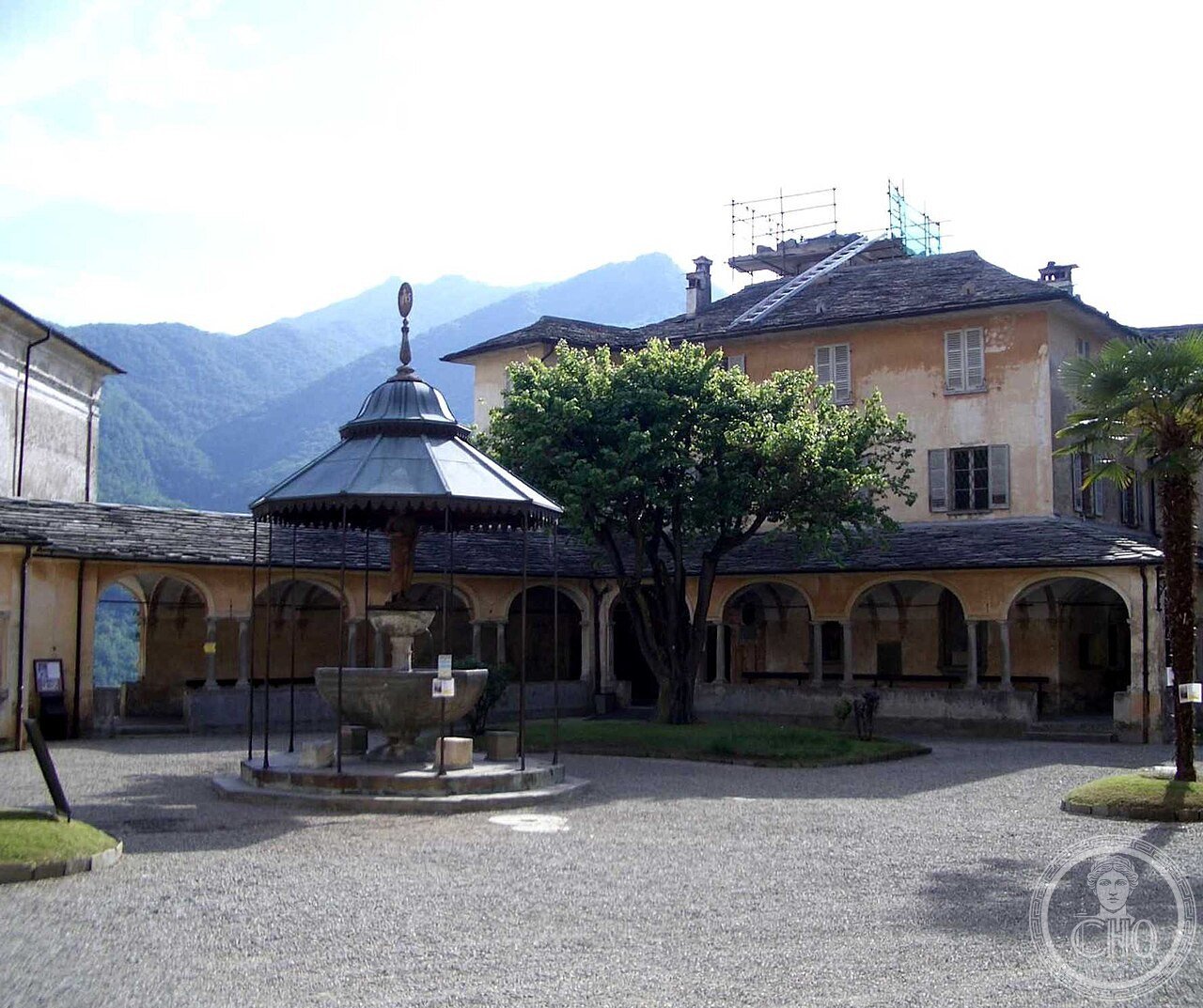
Gallery



Sources
- Wikipedia, Sacro Monte di Varallo; Gaudenzio Ferrari; Tanzio da Varallo, accessed June 2026
- UNESCO, Sacri Monti of Piedmont and Lombardy, WHS reference 1068, inscribed 2003
- Langé, Santino. I Sacri Monti piemontesi. Milano: Touring Club Italiano, 1967
- Nova, Alessandro. Gaudenzio Ferrari e la cappella della Crocifissione al Sacro Monte di Varallo. Torino: Einaudi, 1994
Find it on the map
See this place and what’s around it →📷 Diventa un fotografo di Cultural Heritage Online
Condividi le tue foto dei luoghi: restano pubblicate con la tua firma come autore. Più vengono viste, più ti fai conoscere — e presto un concorso premierà le foto più apprezzate.
Accedi o registrati gratis per aggiungere una foto