
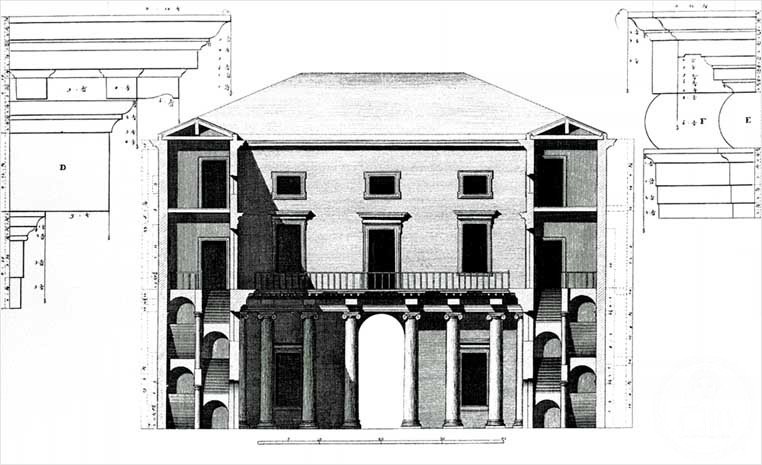
Valmarana Braga Palace
Palazzo Valmarana Braga is a Renaissance palace in Vicenza designed by Andrea Palladio in 1565 for the noblewoman Isabella Nogarola Valmarana. Located on Corso Fogazzaro, it is one of the 23 Palladian monuments included in the UNESCO World Heritage Site “City of Vicenza and the Palladian Villas of the Veneto,” inscribed in 1994. The palace is celebrated for the colossal pilasters that dominate its facade — a bold compositional experiment that influenced Baroque architecture across Europe.
At a glance
- Type
- Urban Renaissance palace
- Period
- Designed 1565; construction began shortly after
- Style
- Palladian Renaissance
- Location
- Corso Antonio Fogazzaro 16, Vicenza, Veneto, Italy
- Coordinates
- 45.5477° N, 11.5415° E
- Designation
- UNESCO World Heritage Site (1994) — part of “City of Vicenza and the Palladian Villas of the Veneto”
Overview
Palazzo Valmarana Braga stands as one of Palladio’s most inventive urban commissions, occupying a prominent position on what is now Corso Fogazzaro. The palace’s facade introduces colossal pilasters that span the full height of the main floor, a device Palladio used here more boldly than in any earlier project. Its integration into the cityscape of Vicenza contributed directly to the city’s recognition as a UNESCO World Heritage Site.
History
The commission was awarded by Isabella Nogarola Valmarana, whose family was among the most powerful noble houses of Vicenza. Palladio produced the designs in 1565 as part of his intensive period of urban palace design that also yielded Palazzo Chiericati and Palazzo Thiene. The palace later passed to the Braga family, whose name was appended to the original designation. Over the centuries the building underwent interior modifications while its celebrated facade was substantially preserved.
What you see
The principal facade is organised around six colossal Composite pilasters that rise from the ground floor to the cornice, framing bays of arched windows on the piano nobile and smaller rectangular openings below. A central portal with a triangular pediment marks the main entrance. The lateral bays feature atlas figures at ground level — an unusual sculptural accent that breaks from Palladio’s typically restrained ornamental vocabulary. Interior rooms retain painted ceilings from the 17th and 18th centuries.
Cultural significance
Valmarana Braga Palace is one of only a handful of Palladian urban palaces in Vicenza to survive largely intact, making it essential to understanding Palladio’s development of the monumental facade within the constraints of a medieval street grid. The colossal-order solution pioneered here reappears in Inigo Jones’s work in England and in countless Baroque civic buildings across Europe, marking the palace as a turning point in Western architectural history.
Practical information
- Address
- Corso Antonio Fogazzaro 16, 36100 Vicenza VI, Italy
- Access
- Private property; exterior freely visible from the street. Interior visits by appointment only — check current arrangements with the Vicenza tourist office.
- Hours
- Exterior: always accessible. Interior: check official sources.
Getting there
Vicenza railway station is approximately 1 km from the palace; follow Viale Roma and then Corso Fogazzaro on foot (about 12 minutes). By car, use the city centre parking areas on the ring road — Corso Fogazzaro is a limited-traffic zone. Several local bus lines stop on Viale Roma near the city centre.
Sources & resources
- Palazzo Valmarana — Wikipedia
- City of Vicenza and the Palladian Villas of the Veneto — UNESCO World Heritage
- Cultural Heritage Online
Find it on the map
See this place and what’s around it →📷 Diventa un fotografo di Cultural Heritage Online
Condividi le tue foto dei luoghi: restano pubblicate con la tua firma come autore. Più vengono viste, più ti fai conoscere — e presto un concorso premierà le foto più apprezzate.
Accedi o registrati gratis per aggiungere una foto