
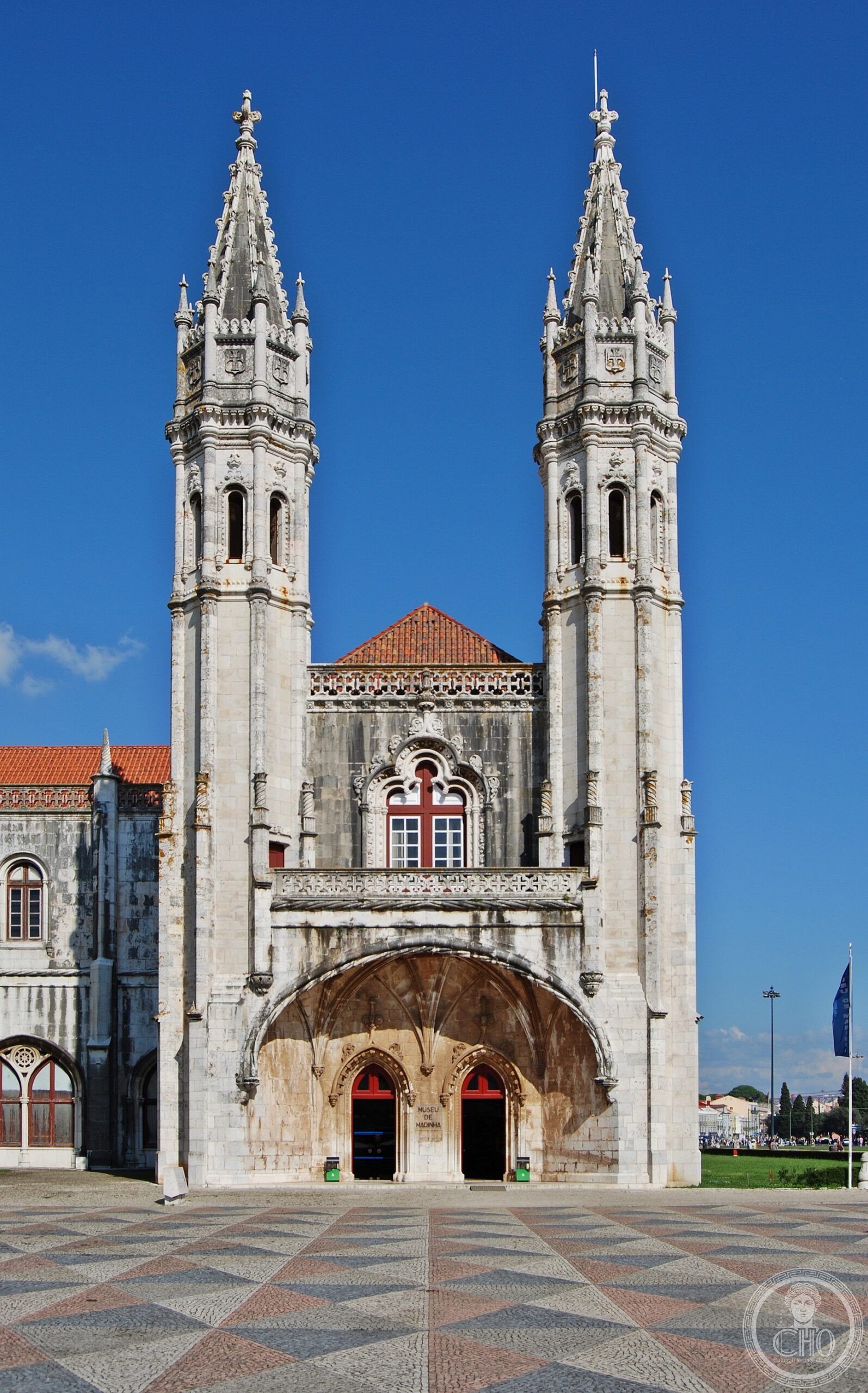
The Navy Museum
The Museu de Marinha (Navy Museum) in Belém, Lisbon, is one of the most important maritime museums in the world, housed in the west wing of the Jerónimos Monastery. Founded by King Luís I in 1863, its collections trace Portugal’s extraordinary seafaring history from the 15th-century Age of Discoveries through to the 20th century, encompassing navigation instruments, royal galleys, model ships, uniforms, cartography, and the original quarters of the first transatlantic air crossing of 1922.
At a glance
- Type
- National maritime and naval museum
- Period
- Founded 1863 by King Luís I; current building opened 1962
- Style
- Manueline-adjacent west wing of Jerónimos Monastery complex
- Location
- Praça do Império, 1400-206 Belém, Lisbon, Portugal
- Coordinates
- 38.6972° N, 9.2085° W
Overview
The Museu de Marinha holds approximately 17,000 objects spanning five centuries of Portuguese seafaring, making it the largest maritime museum in the Iberian Peninsula and one of the richest in the world. Its collections range from delicate 16th-century navigational astrolabes used on voyages to India and Brazil, to full-scale royal barges and war galleys. The museum occupies a purpose-built pavilion adjacent to the Jerónimos Monastery, in the historic riverside district of Belém where Portugal’s great explorers departed.
History
Portugal’s maritime heritage has been displayed in various forms since the 17th century, but the museum as an institution was formally established by Royal Decree of King Luís I on 22 July 1863, initially housed within the Jerónimos Monastery. As the collection grew, a dedicated pavilion was constructed in the style of Exposição do Mundo Português (1940) and fully inaugurated in 1962. The museum is administered by the Portuguese Navy and has continued to expand its holdings, including objects repatriated from former Portuguese territories and acquisitions from private collections.
What you see
The collection is organised thematically across multiple galleries. The highlight for many visitors is the galley pavilion, a vast hall housing the ceremonial barge built for King Dom João VI in 1778, adorned with gilded carvings, and the royal brigantine of King Dom Fernando II and Queen Dona Maria II. Navigation instruments including astrolabes, compasses and armillary spheres from the Age of Discovery are displayed alongside original maps and charts. A dedicated gallery commemorates the first South Atlantic crossing by air in 1922, displaying the Fairey IIID seaplane used by Sacadura Cabral and Gago Coutinho.
Cultural significance
Portugal’s identity as a seafaring nation is deeply embedded in national culture, and the Navy Museum is the principal repository of that tradition. Its location in Belém — where Vasco da Gama departed for India in 1497 — gives it a profound symbolic weight, adjacent to the UNESCO-listed Jerónimos Monastery and the Tower of Belém. The museum is also a living institution of the Portuguese Navy, maintaining traditions of seamanship and naval education alongside its curatorial mission.
Practical information
- Address
- Praça do Império, 1400-206 Belém, Lisbon, Portugal
- Hours
- Check official website for current opening hours; generally Tuesday–Sunday
- Admission
- Ticketed; reduced rates for students and seniors; check official website for current prices
- Website
- museu.marinha.pt
Getting there
From central Lisbon, take tram line 15E from Praça da Figueira or bus 714/727/751 to Belém. The museum is a 5-minute walk from Belém train station (Cascais line from Cais do Sodré). The Museu de Marinha is next to the Jerónimos Monastery, making a combined visit straightforward.
Sources & resources
Find it on the map
See this place and what’s around it →📷 Diventa un fotografo di Cultural Heritage Online
Condividi le tue foto dei luoghi: restano pubblicate con la tua firma come autore. Più vengono viste, più ti fai conoscere — e presto un concorso premierà le foto più apprezzate.
Accedi o registrati gratis per aggiungere una foto