
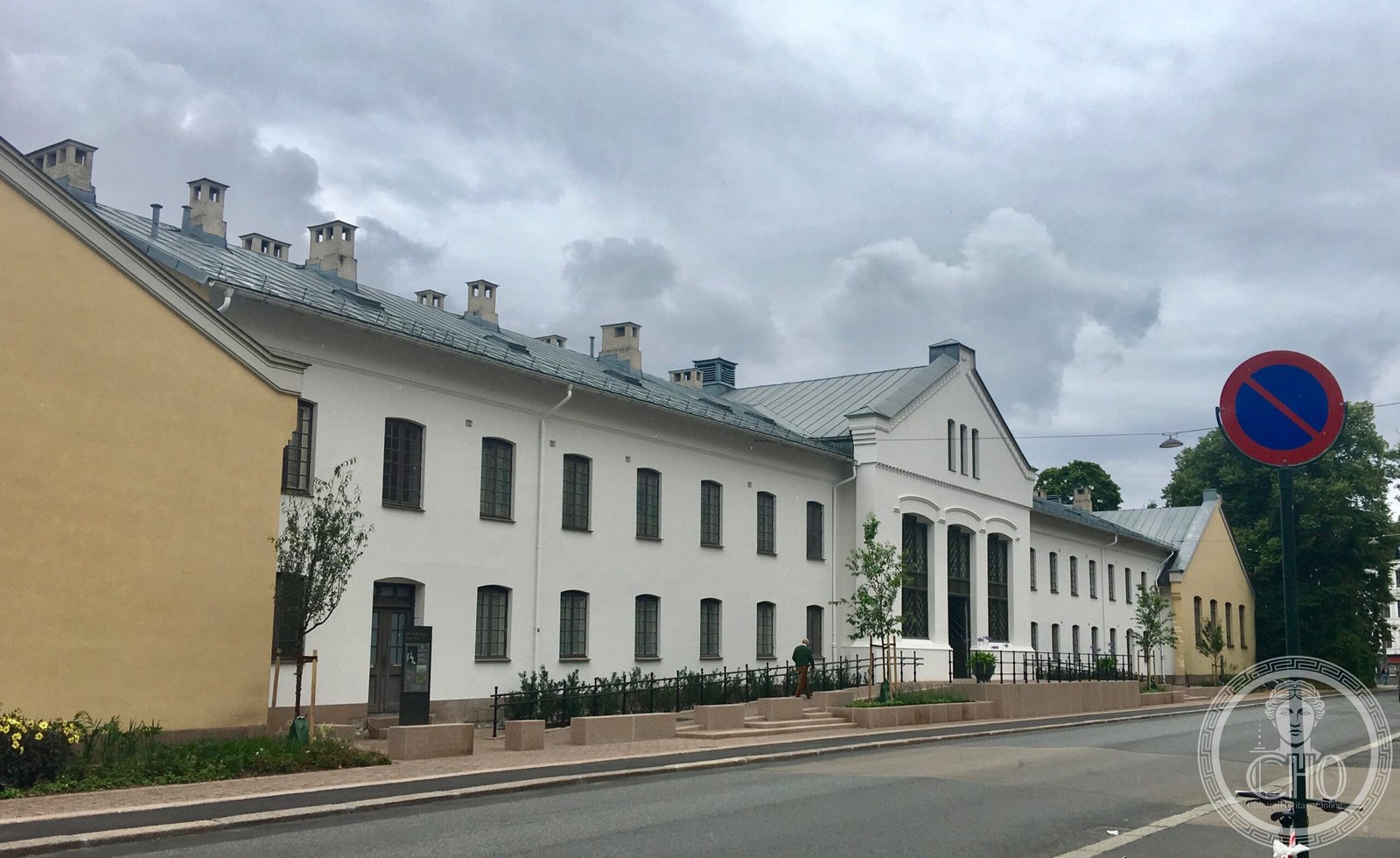
The Queen Sonja Art Stable Gallery
The Queen Sonja Art Stable Gallery (Norwegian: Dronning Sonjas Kunststall) is a contemporary art gallery housed in the historic royal stable buildings at Brynjulf Bulls plass in Oslo, adjacent to the Royal Palace. Established under the patronage of Queen Sonja of Norway, an accomplished artist in her own right, the gallery uses the beautifully converted nineteenth-century stable interiors to present a changing programme of exhibitions with a particular emphasis on Norwegian and international contemporary art. The venue combines royal heritage architecture with a lively contemporary cultural programme, making it one of Oslo’s most distinctive gallery spaces.
At a glance
- Type
- Contemporary art gallery in a heritage building
- Period
- Stable building: 19th century; gallery use: established in the 21st century
- Style
- Historic royal stable architecture converted for gallery use
- Location
- Brynjulf Bulls plass, Oslo, Norway · 59.9162° N, 10.7230° E
- Patron
- Queen Sonja of Norway
- Current use
- Active contemporary art gallery with rotating exhibitions
- Admission
- Check official website for current programme and admission
Overview
The Queen Sonja Art Stable Gallery occupies one of the most atmospherically charged settings in Oslo: the restored royal stables that once served the Norwegian royal household. Queen Sonja, whose own watercolours and graphic works have been exhibited internationally, conceived the gallery as a way of animating this heritage space with contemporary art while creating a welcoming, non-institutional environment for both established artists and new audiences. The result is a venue that is at once architecturally significant and culturally dynamic.
History
The stable building dates to the nineteenth century and was constructed as part of the infrastructure serving the Royal Palace on Slottsplassen. After horses were no longer kept in central Oslo, the building was repurposed for various uses before Queen Sonja championed its conversion into a dedicated gallery space. The transformation preserved the essential character of the original structure — exposed brick, timber, and the spatial rhythms of the old stable boxes — while adapting it sensitively for the display of contemporary works. The gallery opened to acclaim as a model for adaptive reuse of royal heritage buildings.
What you see
Visitors enter a series of warm, brick-vaulted spaces in which the original stable architecture — iron fittings, cobbled floors, the scale and rhythm of the stalls — creates an intimate backdrop for contemporary art that few purpose-built white-cube galleries can match. The programme rotates regularly and spans painting, sculpture, photography, and new media. Works by Norwegian artists are frequently featured alongside international voices selected to resonate with the domestic context.
Cultural significance
The gallery represents Queen Sonja’s sustained personal commitment to the arts, which has given Norwegian contemporary art a royal advocate willing to lend royal buildings and prestige to cultural programming outside the main state museum network. It also stands as a successful example of how heritage buildings can be sensitively repurposed to serve living cultural functions without sacrificing their historic character. The combination of royal provenance and contemporary ambition gives the venue a profile unlike any other gallery in Norway.
Practical information
Check the gallery’s official website for current exhibitions, opening hours, and admission details, as the programme changes throughout the year. The gallery is free to enter during some exhibitions; others may charge admission. Educational events and guided tours are available on selected dates.
Getting there
The gallery is centrally located near the Royal Palace in Oslo, within walking distance of the city’s main tram and bus stops. Trams serving Aker Brygge and Karl Johans gate stop nearby. The area is well served by all major public transport routes. From Oslo Central Station the walk takes approximately fifteen minutes along Karl Johans gate.
Sources & resources
- The Royal Court of Norway — official information
- Cultural Heritage Online — more heritage sites in Norway
Find it on the map
See this place and what’s around it →📷 Diventa un fotografo di Cultural Heritage Online
Condividi le tue foto dei luoghi: restano pubblicate con la tua firma come autore. Più vengono viste, più ti fai conoscere — e presto un concorso premierà le foto più apprezzate.
Accedi o registrati gratis per aggiungere una foto