
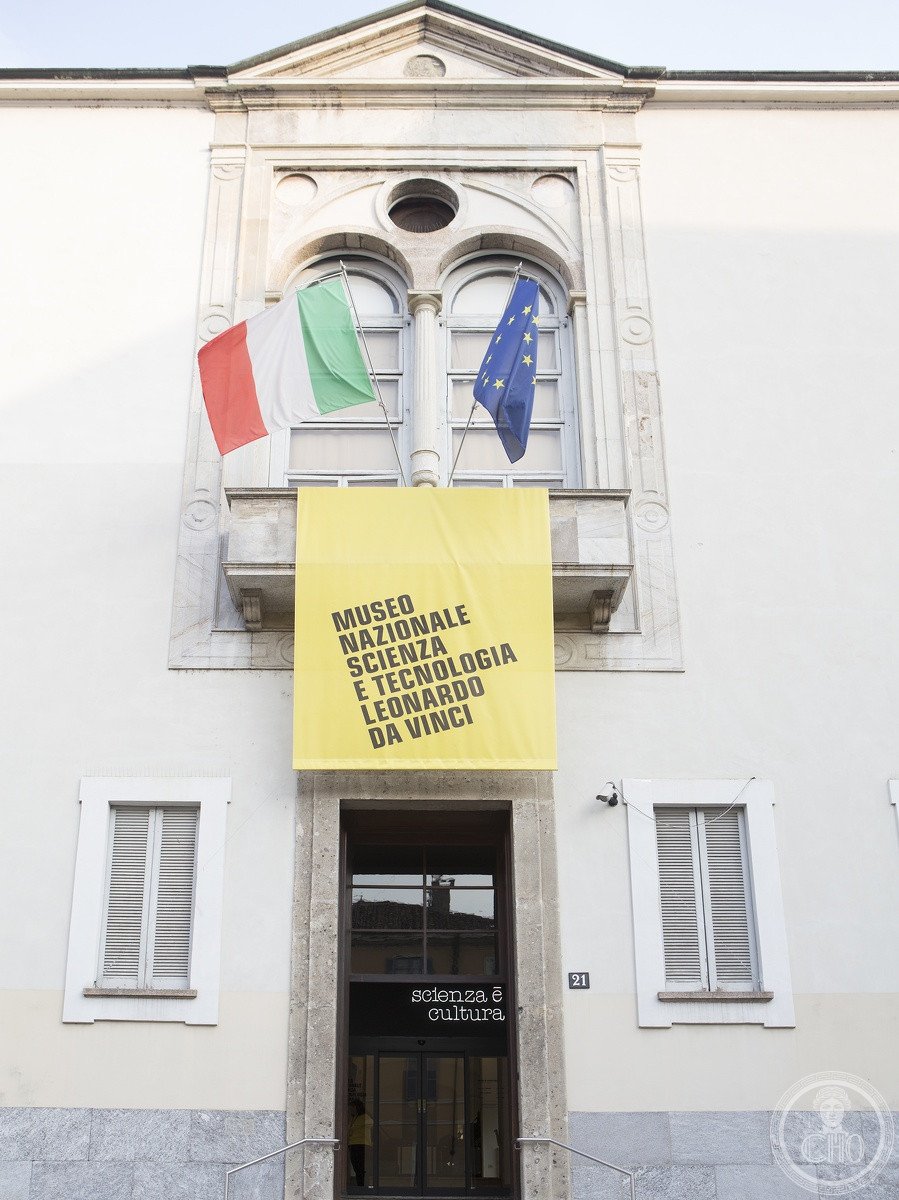
National Museum of Science and Technology Leonardo da Vinci
The National Museum of Science and Technology Leonardo da Vinci (Museo Nazionale della Scienza e della Tecnologia) is Italy’s largest science and technology museum, located in the former Olivetan monastery of San Vittore al Corpo in Milan. Opened in 1953 and named in honour of Leonardo da Vinci, the museum spans over 50,000 square metres and houses around 10,000 objects covering transport, energy, communications, materials science, and the history of technology. Its galleries include full-scale interactive railway locomotives, the Enrico Toti submarine — an Italian Navy vessel permanently exhibited in a dedicated pavilion — and a celebrated collection of models reconstructed from Leonardo’s drawings.
At a glance
- Type
- National science and technology museum
- Period
- Opened 1953; housed in a monastery founded 1561
- Style
- 16th-century Olivetan monastery (historic shell); modern exhibition interiors
- Location
- Via San Vittore 21, 20123 Milano MI, Lombardy, Italy
- Coordinates
- 45.4619° N, 9.1702° E
Overview
The Museo Nazionale della Scienza e della Tecnologia Leonardo da Vinci is the largest science museum in Italy and one of the most important in Europe. It occupies the sprawling 16th-century monastery complex of San Vittore al Corpo, a building of considerable architectural merit in its own right. The museum’s collections range from Renaissance-era scientific instruments to 20th-century industrial technology, with particular emphasis on transport, computing, and energy.
History
The Olivetan monastery of San Vittore al Corpo was founded in 1561 and suppressed during the Napoleonic period, after which it served various civil functions including use as a barracks. The idea for a science museum in Milan dedicated to Leonardo da Vinci was proposed in the late 19th century, but the museum formally opened on 15 February 1953 as Italy’s contribution to the postwar reconstruction of national cultural identity. Over subsequent decades the collection grew through donations from industry, the Italian Navy, and private collectors, and a major renovation and extension programme was completed in the 2000s.
What you see
The Leonardo da Vinci Gallery presents dozens of three-dimensional models built from Leonardo’s codex drawings, spanning hydraulics, optics, mechanics, and military engineering. The Transport Pavilion houses full-size steam locomotives, early automobiles, and historic aircraft including a Caproni Ca.1 biplane. The Toti Submarine Pavilion — purpose-built around the 155-metre-long Enrico Toti vessel — allows visitors to tour the interior of a Cold War-era Italian submarine. Additional galleries cover metallurgy, chemistry, printing, and telecommunications.
Cultural significance
As the only Italian national museum dedicated to science and technology, this institution plays a central role in public science education and industrial heritage conservation. The Leonardo models collection is internationally recognised as the most comprehensive physical reconstruction of his mechanical inventions and represents a unique scholarly and didactic resource. The museum’s preservation of the Enrico Toti submarine has been cited as a model for naval heritage practice.
Practical information
- Address
- Via San Vittore 21, 20123 Milano MI
- Hours
- Check official website for current opening times; closed Mondays
- Admission
- Ticketed; concessions available; submarine requires additional timed entry
- Website
- museoscienza.org
Getting there
Metro Line 2 (Green Line), stop Sant’Ambrogio — a 5-minute walk. Tram lines 2 and 14 stop on Via Carducci nearby. By car, the museum is near the inner ring road (Cerchia dei Navigli); limited street parking available, with paid parking nearby. The neighbourhood is also accessible by bicycle on Milan’s cycling network.
Sources & resources
- National Museum of Science and Technology Leonardo da Vinci — Wikipedia
- Cultural Heritage Online — Italy guides and place cards
Find it on the map
See this place and what’s around it →📷 Diventa un fotografo di Cultural Heritage Online
Condividi le tue foto dei luoghi: restano pubblicate con la tua firma come autore. Più vengono viste, più ti fai conoscere — e presto un concorso premierà le foto più apprezzate.
Accedi o registrati gratis per aggiungere una foto