
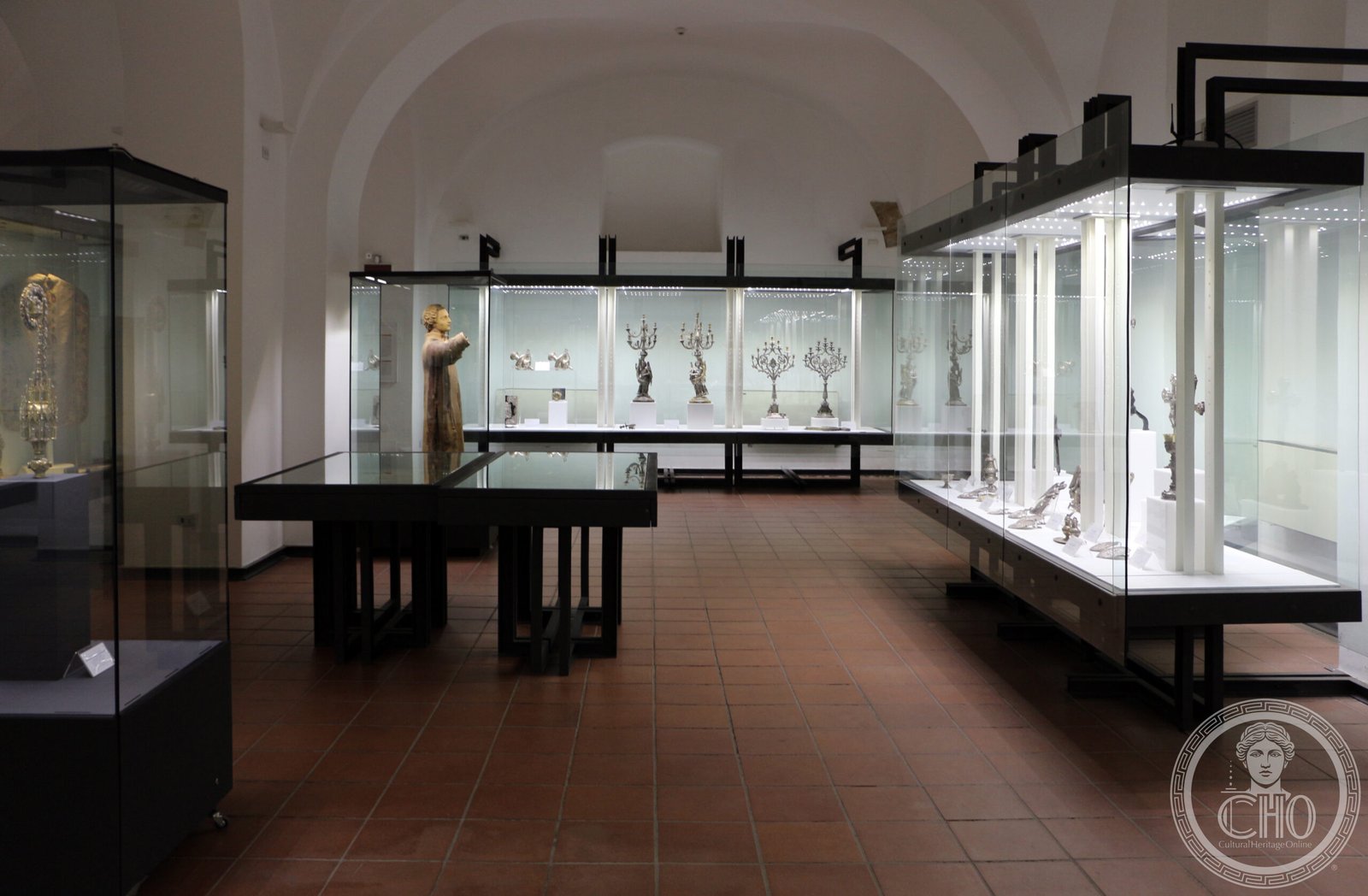
The Diocesan Museum of Reggio Calabria
The Diocesan Museum of Reggio Calabria preserves sacred art and religious objects from the Archdiocese of Reggio Calabria–Bova, one of the oldest ecclesiastical seats in Magna Graecia. Positioned at the tip of the Italian peninsula, the collection documents the crossroads character of a city shaped by Greek, Byzantine, Norman, and Baroque traditions over two and a half millennia.
At a glance
- Type
- Diocesan museum of sacred art
- Period
- Collections spanning the Byzantine period to the 18th century
- Style
- Ecclesiastical heritage; Byzantine, Norman, and southern Baroque
- Location
- Reggio Calabria, Calabria, Italy
- Coordinates
- 38.1058° N, 15.6423° E
Overview
The museum is associated with the Archdiocese of Reggio Calabria–Bova, an ancient see whose origins are traditionally traced to the apostolic era and whose territory includes the Bovesia, the last enclave of Griko-speaking communities in mainland Italy. The collection consolidates works rescued from earthquake damage — Reggio Calabria suffered catastrophic destruction in 1908 — as well as objects gathered from suppressed monasteries and rural chapels across the archdiocese. It stands as a complement to the Museo Nazionale della Magna Grecia, which focuses on the pre-Christian heritage of the same region.
History
Reggio was a major city of Magna Graecia, later a Byzantine stronghold, and subsequently passed through Norman, Hohenstaufen, and Aragonese rule, each layer leaving traces in its ecclesiastical art. The 1908 Messina–Reggio earthquake, one of the deadliest in European history, destroyed much of the city and its churches; the diocesan museum’s role in consolidating what survived is therefore inseparable from the story of post-disaster cultural recovery. The archdiocese’s absorption of the ancient diocese of Bova, which served the Griko-speaking Greek-rite communities of the Aspromonte, adds a distinctive Byzantine strand to the holdings.
What you see
Highlights include Byzantine-style icons and liturgical objects reflecting the Greek rite practised in Calabria’s Griko communities, painted canvases from the Neapolitan and Calabrian Baroque, and silverwork ranging from medieval reliquaries to 18th-century processional pieces. Embroidered vestments in silk and gold thread document the artisanal tradition of the region’s convents. Architectural fragments rescued from churches destroyed in 1908 provide tangible evidence of the pre-earthquake urban fabric.
Cultural significance
The museum’s dual role — preserving both Latin-rite Baroque and Byzantine Greek-rite material — makes it unique among southern Italian diocesan collections. The Bova heritage component, documenting a linguistic and cultural minority whose Griko language is now nearly extinct, gives the collection particular ethnographic importance beyond its strictly art-historical value.
Practical information
- Address
- Reggio Calabria, Calabria, Italy
- Hours
- Check official website or contact the Archdiocese of Reggio Calabria–Bova for current opening times
- Admission
- Check official website
Getting there
Reggio Calabria is served by Reggio Calabria Centrale railway station with direct connections to Naples, Rome, and northern Italy. The city is also accessible via the A2 motorway. The ferry terminal connects Reggio to Messina, Sicily, in approximately 20 minutes. Local buses serve the historic centre.
Sources & resources
Find it on the map
See this place and what’s around it →📷 Diventa un fotografo di Cultural Heritage Online
Condividi le tue foto dei luoghi: restano pubblicate con la tua firma come autore. Più vengono viste, più ti fai conoscere — e presto un concorso premierà le foto più apprezzate.
Accedi o registrati gratis per aggiungere una foto