
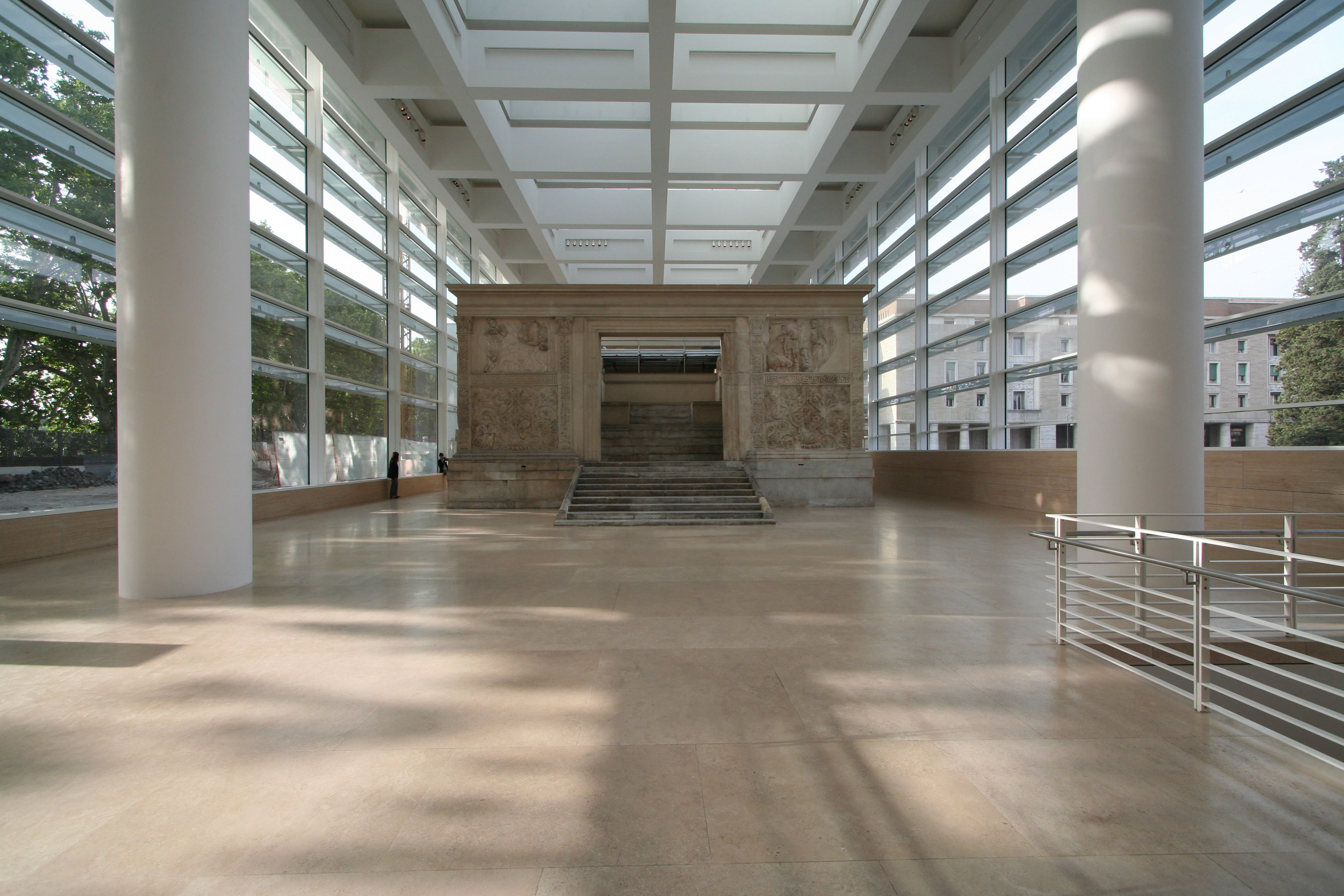
The Ara Pacis Museum
The Ara Pacis Augustae is an altar in Rome dedicated to the Pax Romana, commissioned by the Roman Senate in 13 BC to honour the return of Augustus to Rome and consecrated in 9 BC. Now sheltered within a modern museum on the bank of the Tiber, it is one of the finest surviving monuments of Augustan art.
At a glance
- Type
- Ancient Roman altar and museum
- Period
- Commissioned 13 BC, consecrated 9 BC
- Style
- Augustan Roman; museum building Modern
- Location
- Lungotevere in Augusta, Campus Martius, Rome, Italy
Overview
The Ara Pacis Augustae is an altar in Rome dedicated to the Pax Romana. It was commissioned by the Roman Senate on 4 July 13 BC to honour the return of Augustus to Rome after three years in Hispania and Gaul, and was consecrated on 30 January 9 BC. It stood in the northeastern corner of the Campus Martius.
History
Originally located on the northern outskirts of Rome, a Roman mile from the boundary of the pomerium on the west side of the Via Flaminia, the altar gradually became buried under about four metres of silt deposits from the Tiber’s former flood plain. It was reassembled in its current location in 1938, turned 90 degrees counterclockwise from its original orientation, so that the original western side now faces south.
What you see
The monument is a marble altar enclosed within sculpted walls carved in low relief. Its decoration combines processional scenes, mythological panels and vegetal ornament characteristic of Augustan art. The reassembled altar is displayed inside a purpose-built modern museum on the bank of the Tiber.
Cultural significance
The Ara Pacis is among the most celebrated monuments of the Augustan age and a key symbol of the peace and prosperity proclaimed by the first Roman emperor. Its reliefs are a primary source for the study of Roman state art and imperial ideology.
Practical information
The Museum of the Ara Pacis stands on the Lungotevere in Augusta in central Rome. For opening hours, tickets and exhibitions, check the official website.
Getting there
The museum is in the Campus Martius area near the Tiber, within walking distance of Piazza del Popolo and the Mausoleum of Augustus. It is served by Rome city buses; the nearest metro stations are on Line A.
Sources & resources
Find it on the map
See this place and what’s around it →Historical events at this place (1)
📷 Diventa un fotografo di Cultural Heritage Online
Condividi le tue foto dei luoghi: restano pubblicate con la tua firma come autore. Più vengono viste, più ti fai conoscere — e presto un concorso premierà le foto più apprezzate.
Accedi o registrati gratis per aggiungere una foto