
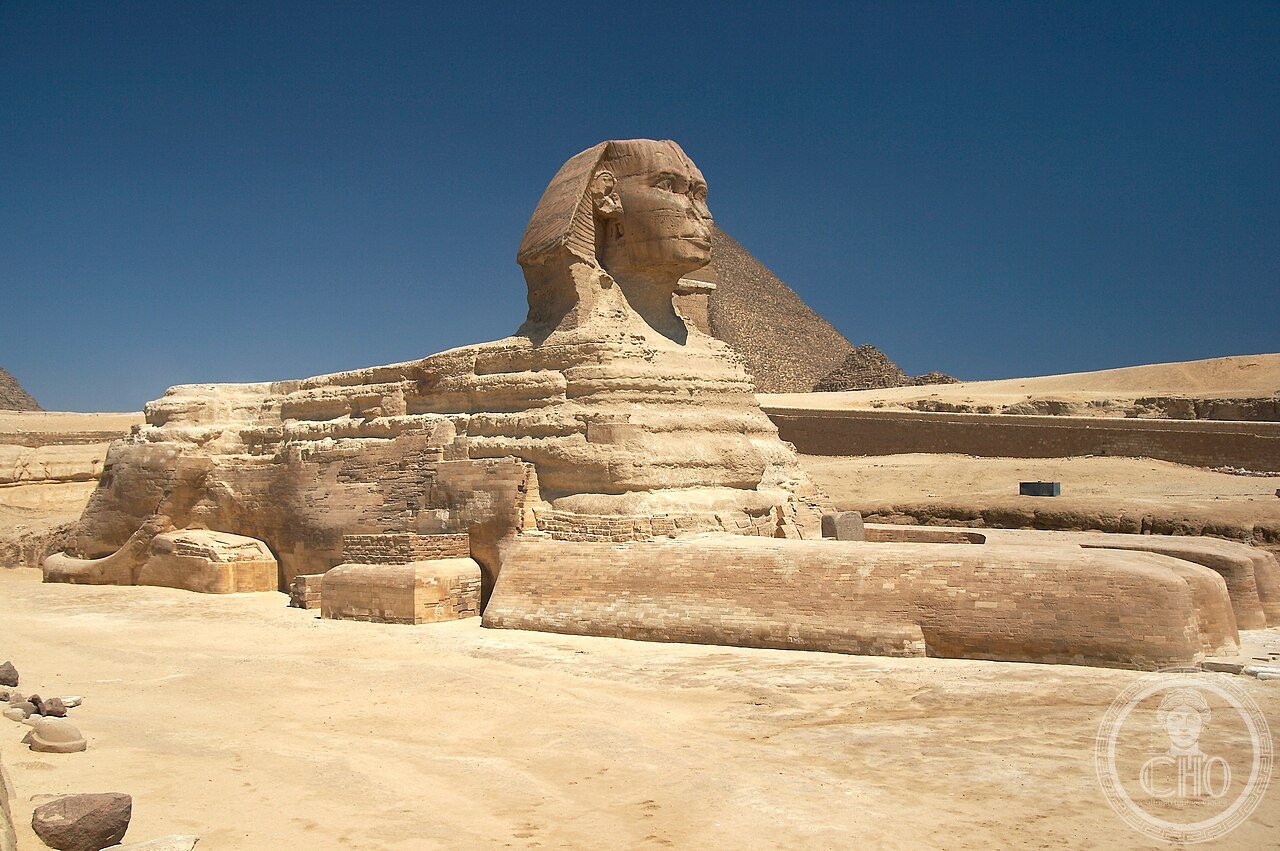
Sphinx of Giza
The world’s largest monolithic sphinx stands guard on the Giza Plateau, its colossal limestone form carved from a single rock outcrop during the age of the pharaohs.
At a glance
This monumental statue measures 73.5 metres long, 20.22 metres high, and 19.3 metres wide, with a head alone standing 4 metres tall. Located on the west bank of the Nile River within the Giza Necropolis, the Sphinx remains one of Egypt’s most iconic monuments and a focal point of archaeological inquiry.
History
The Great Sphinx was probably carved around 2500 BC during the reign of Pharaoh Khafre (2520–2494 BC), fashioned from a rock outcrop during the construction of the Pyramids of Giza. Unlike later sphinxes, which typically stood in pairs to guard building entrances, this monument stands alone. Ancient builders may have considered carving a companion sphinx from another rock formation on the plateau to the south, but the distance proved impractical.
The nineteenth-century excavators John Shae Perring and Howard Vyse uncovered a short dead-end passage behind the monument’s head while searching for hidden chambers within the structure.
What you see
The statue depicts a mythical sphinx, carved entirely from limestone bedrock. Its monumental scale and isolated position on the plateau distinguish it from later Egyptian sphinxes found at temple entrances. The colossal head commands particular attention, proportion that reveals the artistry of ancient quarrying and sculptural technique.
Cultural significance
The Sphinx represents one of humanity’s greatest feats of monolithic sculpture and endures as a symbol of ancient Egypt’s architectural ambition. Its creation coincided with the construction of the Giza pyramid complex, linking it to the pyramid age and the power of the pharaonic state. The monument has inspired centuries of speculation, from theories about hidden chambers to the legendary Hall of Records supposedly containing ancient Egyptian wisdom.
Key facts
- Dimensions: 73.5 m long, 20.22 m high, 19.3 m wide; head 4 m tall
- Address: Nazlet El-Semman, Al Haram, Governorate of Giza, Egypt
- Coordinates: 29.975269, 31.137567
- Official website: sis.gov.eg
Practical information
The Sphinx is accessible as part of the Giza Plateau archaeological complex. Visitors should consult the official Egyptian government website for current opening hours, entry fees, and any access restrictions. The site operates year-round, though desert heat and occasional sandstorms affect visiting conditions.
Getting there
The monument lies on the Giza Plateau, on the west bank of the Nile River opposite Cairo. Public and private transport options connect the capital to the archaeological site; organised tours are widely available. The nearest major city is Cairo, approximately 20 kilometres to the southeast.
Sources & resources
Find it on the map
See this place and what’s around it →📷 Diventa un fotografo di Cultural Heritage Online
Condividi le tue foto dei luoghi: restano pubblicate con la tua firma come autore. Più vengono viste, più ti fai conoscere — e presto un concorso premierà le foto più apprezzate.
Accedi o registrati gratis per aggiungere una foto