
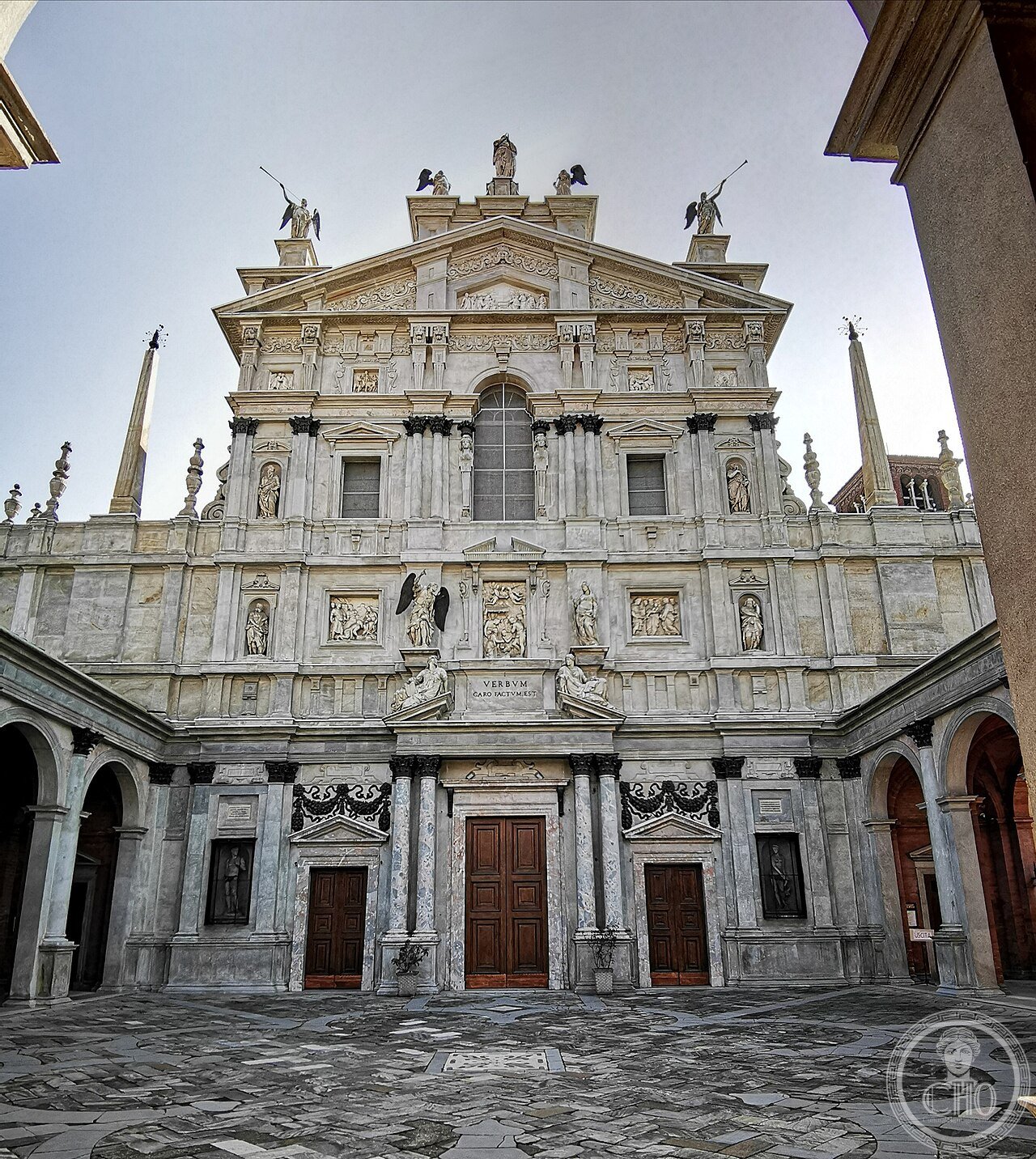
Sanctuary of Santa Maria dei Miracoli presso San Celso
Santa Maria dei Miracoli presso San Celso is a Roman Catholic sanctuary church in the Corso Italia district of Milan, built from 1493 to house a miraculous image of the Virgin that had drawn pilgrims since a reported apparition during the plague of 1485. Designed by Gian Giacomo Dolcebuono and Giovanni Battagio, expanded with an octagonal dome by Giovanni Antonio Amadeo, and given its celebrated façade by Galeazzo Alessi, the church is one of the finest examples of Renaissance and Mannerist architecture in Milan and preserves an exceptional interior cycle of paintings and sculpture by the leading masters of sixteenth-century Lombardy.
At a glance
- Type
- Roman Catholic sanctuary church
- Period
- Construction began 1493; façade completed late 16th century
- Style
- Renaissance and Mannerist; central octagonal plan with barrel vault
- Location
- Corso Italia 37, Milan, Lombardy, Italy
- Coordinates
- 45.4551° N, 9.1851° E
Overview
The sanctuary stands adjacent to the older church of San Celso, from which it takes its extended name, and together the two buildings form a remarkable religious and architectural ensemble just south of the historic city centre. Construction was driven by popular devotion to a fresco of the Virgin whose miraculous powers were believed to have been demonstrated during the plague of 1485, when — according to tradition — a curtain parted of its own accord to reveal the image. The sanctuary became one of the principal pilgrimage destinations in sixteenth-century Lombardy and attracted patronage from the city’s most powerful families.
History
The decision to build a new, larger sanctuary was taken in 1493, eight years after the initial miraculous events. Gian Giacomo Dolcebuono and Giovanni Battagio drew up the first design, featuring a central plan that would distinguish the building from standard longitudinal churches. Giovanni Antonio Amadeo, the leading architect-sculptor of the Lombard Renaissance, added the octagonal dome and the monumental barrel vault that define the interior space. The imposing façade was designed by Galeazzo Alessi and realised by Martino Bassi in the final decades of the sixteenth century, completing an architectural campaign that spanned nearly a century.
What you see
The interior is renowned for its density of high-quality sixteenth-century art. The left transept altar holds a marble statue of the Assumption by Annibale Fontana (1586), widely considered one of the masterpieces of Lombard Mannerist sculpture. Paintings by Giovan Battista Crespi (il Cerano), Carlo Francesco Nuvolone, and Gaudenzio Ferrari cover the walls and altars, offering a concentrated survey of the Milanese school from the High Renaissance to the early Seicento. The miraculous fresco that prompted the sanctuary’s construction is preserved and venerated at the high altar. The façade’s sculptural programme and the harmonious proportions of the Renaissance exterior reward close attention before entering.
Cultural significance
Santa Maria presso San Celso is one of Milan’s most important Renaissance monuments and one of the richest single interiors in a city better known for its Gothic cathedral and Bramante’s early works. The sanctuary demonstrates the capacity of popular Marian devotion to generate architectural and artistic ambition of the highest order, and it remains a living place of worship as well as a monument of art history. It is listed among the protected heritage buildings of Lombardy.
Practical information
- Address
- Corso Italia 37, 20122 Milan MI, Italy
- Hours
- Check official website or contact the sanctuary directly for current visiting hours; the church is active and schedules vary around liturgical services
- Admission
- Free entry as an active place of worship; donations welcome
Getting there
The sanctuary is located on Corso Italia, one of the main arteries leading south from the Duomo. From Piazza Duomo, walk south along Corso Italia for approximately ten minutes; the sanctuary is on the right-hand side. The nearest metro stop is Missori (Line 3, yellow line), a two-minute walk away. Trams 3 and 15 also stop on Corso Italia directly in front of the church.
Sources & resources
Find it on the map
See this place and what’s around it →📷 Diventa un fotografo di Cultural Heritage Online
Condividi le tue foto dei luoghi: restano pubblicate con la tua firma come autore. Più vengono viste, più ti fai conoscere — e presto un concorso premierà le foto più apprezzate.
Accedi o registrati gratis per aggiungere una foto