
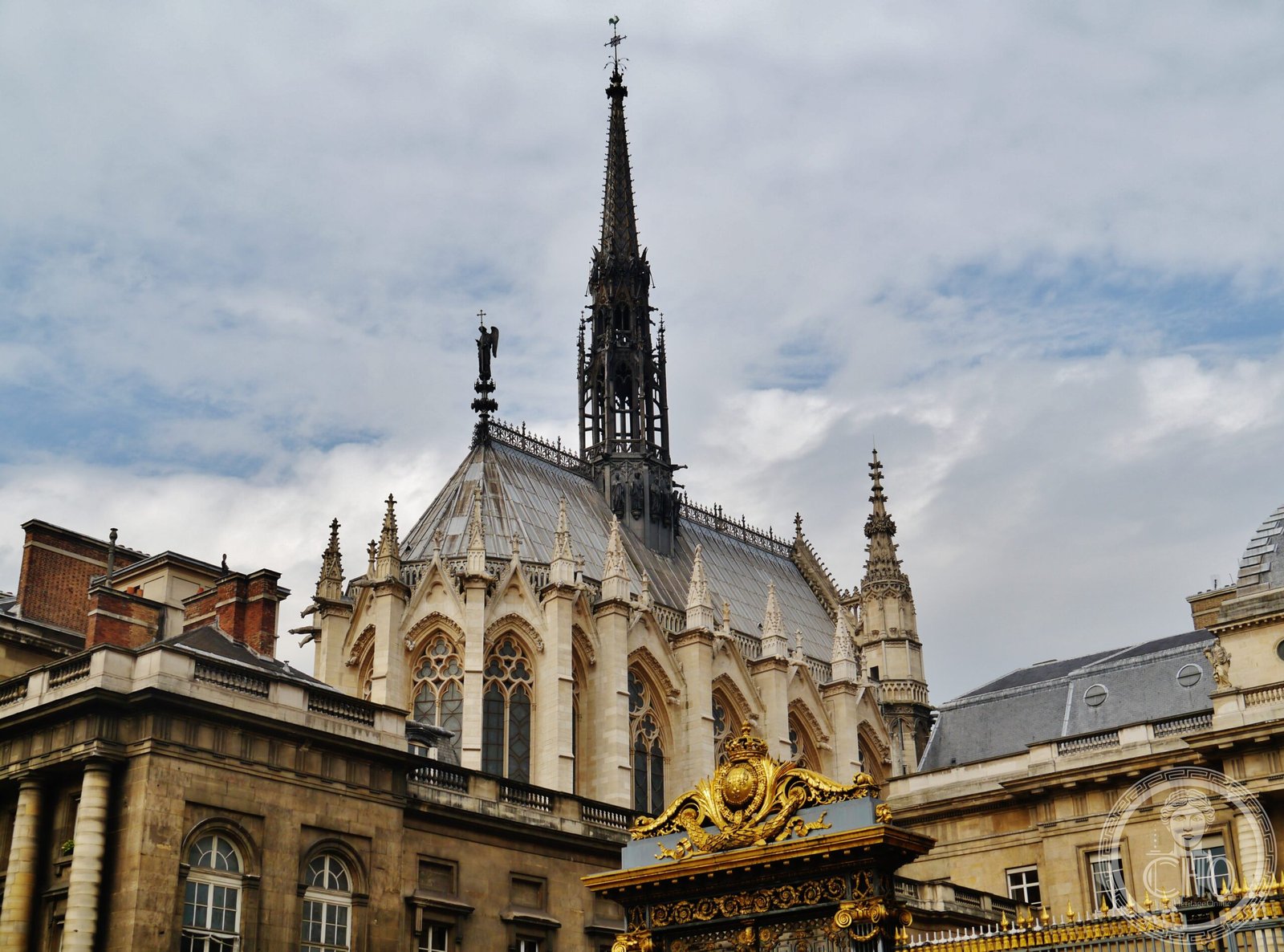
Sainte-Chapelle
Sainte-Chapelle is a royal Gothic chapel located within the medieval Palais de la Cité on the Île de la Cité in Paris, commissioned by King Louis IX to house his collection of Passion relics. Consecrated in 1248, it stands as one of the supreme achievements of the Rayonnant Gothic style, famous above all for its upper chapel where fifteen monumental stained-glass windows rising 15 metres high and comprising 1,113 scenes transform the masonry into a luminous cage of light. Together with the Conciergerie, it forms a UNESCO World Heritage Site.
At a glance
- Type
- Royal palatine chapel
- Period
- Consecrated 1248; construction c. 1242-1248
- Style
- Rayonnant Gothic
- Location
- 8 boulevard du Palais, Ile de la Cite, 75001 Paris, France
- Coordinates
- 48.8554 N, 2.3428 E
- Current use
- National monument open to visitors; occasional classical concerts
- Designation
- Monument historique (listed 1862); UNESCO World Heritage Site (with Palais de la Cite)
Overview
Sainte-Chapelle is a royal chapel in the Gothic style, built within the medieval Palais de la Cite on the Ile de la Cite in the River Seine in Paris. Commissioned by King Louis IX (Saint Louis) and completed around 1248, it was designed to enshrine the Crown of Thorns and a fragment of the True Cross, relics the king had purchased from the Latin Emperor of Constantinople. The chapel is widely considered the finest surviving example of Rayonnant Gothic architecture in France.
History
Construction of Sainte-Chapelle began around 1242, likely under master builder Thomas de Cormont or Pierre de Montreuil, and was completed with exceptional speed by 1248. Louis IX had acquired the Crown of Thorns in 1239 for a sum far exceeding the cost of the chapel itself, making the building essentially a monumental reliquary. After the Revolution the chapel was deconsecrated and suffered damage, serving variously as an archive and court records store. Major restoration works were carried out from 1840 onward under Felix Duban, Jean-Baptiste-Antoine Lassus, and Eugene Viollet-le-Duc, restoring much of its medieval character.
What you see
The chapel is divided into two levels: a lower chapel used by palace staff, with painted decoration imitating masonry, and the soaring upper chapel reserved for the royal family and their court. The upper chapel walls are almost entirely dissolved into fifteen enormous stained-glass windows containing over 1,000 narrative scenes from the Old and New Testaments, covering some 600 square metres of glass. The central western rose window, redesigned in the 15th century, depicts the Book of Revelation in deep blues and crimsons. Slim stone columns and delicate tracery support the vaulted ceiling, painted with golden fleurs-de-lys on an azure ground.
Cultural significance
Sainte-Chapelle represents the apex of the Rayonnant Gothic ideal: the progressive dematerialisation of the wall into pure light and colour. It profoundly influenced Gothic architecture across northern Europe, and its stained-glass programme remains one of the most complete medieval iconographic cycles in existence. The chapel survival, despite centuries of neglect and Revolution-era damage, is largely owed to the 19th-century restoration campaign that set a template for French monument conservation.
Practical information
Open daily (closed on public holidays); hours vary by season. Admission tickets can be booked online and are also valid for the nearby Conciergerie. Photography is permitted without flash. The upper chapel is accessed via an internal staircase; the space can be crowded at midday, so early-morning or late-afternoon visits are recommended for the best light on the windows. Check the official Centre des monuments nationaux website before visiting.
Getting there
The nearest Metro station is Cite (line 4), a five-minute walk across the Ile de la Cite. RER B and C stop at Saint-Michel-Notre-Dame, also within easy walking distance. Bus routes 21, 38, 85, and 96 serve the Palais de Justice stop on the island. The chapel sits inside the Palais de Justice complex; enter via the main gate on boulevard du Palais.
Sources & resources
Find it on the map
See this place and what’s around it →📷 Diventa un fotografo di Cultural Heritage Online
Condividi le tue foto dei luoghi: restano pubblicate con la tua firma come autore. Più vengono viste, più ti fai conoscere — e presto un concorso premierà le foto più apprezzate.
Accedi o registrati gratis per aggiungere una foto