
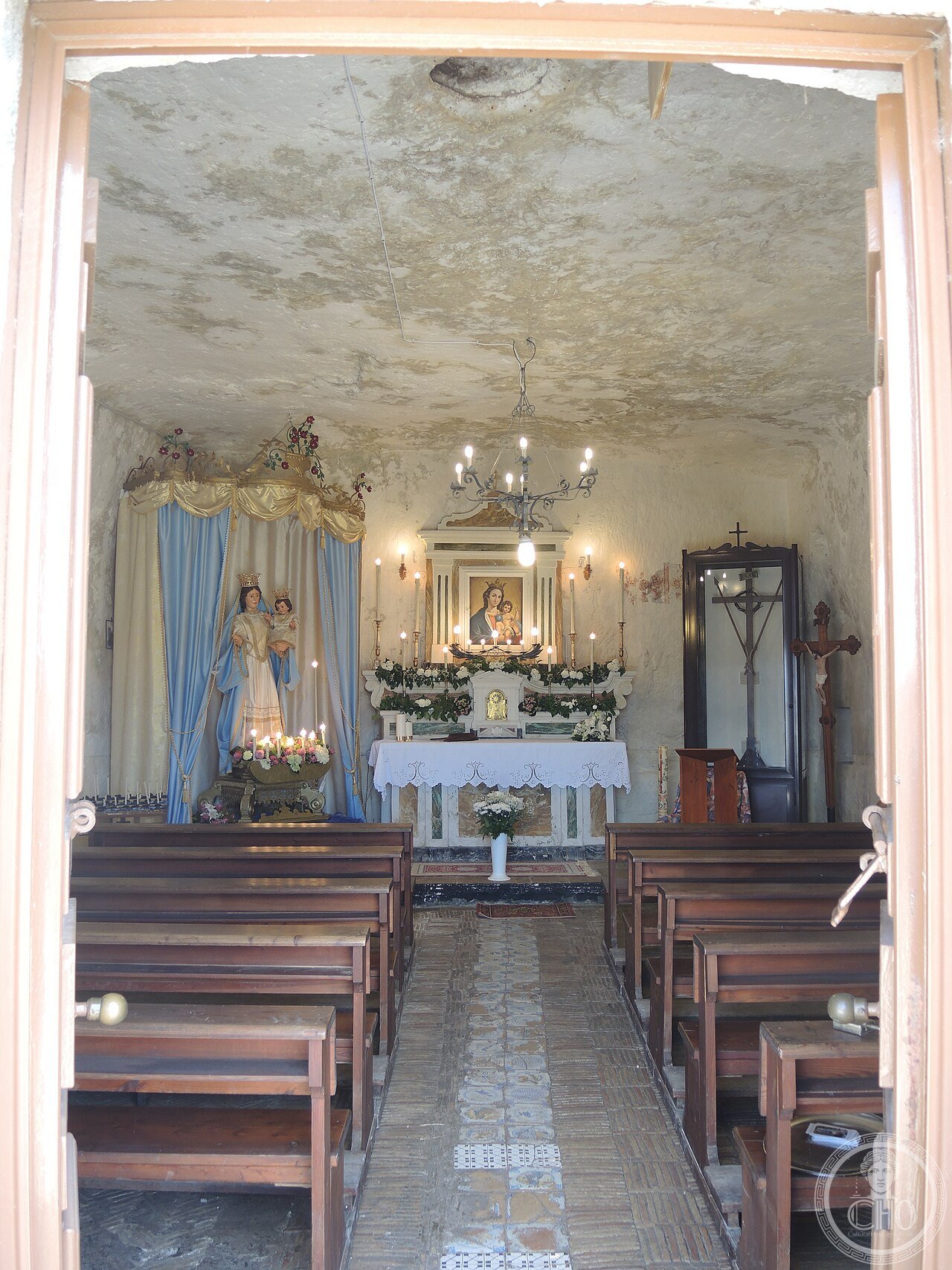
Rock Church of the Madonna delle Vergini
The Rock Church of the Madonna delle Vergini is a rupestrian (cave) church carved into the limestone ravines of the Gravina di Matera, forming part of the extraordinary complex of rock-cut sacred spaces that have made Matera’s sassi district a UNESCO World Heritage Site since 1993. Associated with an ancient Marian cult, the church preserves fragmentary Byzantine-influenced frescoes and belongs to the tradition of troglodyte monasticism that flourished in the Murgia Materana from the early medieval period through the Middle Ages, when Greek-rite monks from the eastern Mediterranean settled in the caves around Matera.
At a glance
- Type
- Rupestrian (cave) church
- Period
- Early medieval, with frescoes from the 9th–13th centuries
- Style
- Rupestrian architecture; Byzantine fresco tradition
- Location
- Gravina di Matera, Matera, Basilicata, Italy
Overview
Matera’s ravines contain over 150 documented rupestrian churches, making the city one of the most significant concentrations of cave sacred architecture in the world. The Madonna delle Vergini church is among those that preserve iconographic programmes in a Italo-Byzantine manner, reflecting the presence of Greek-rite monastic communities in the region from at least the ninth century. The dedication to the Virgin — specifically to the Vergini (Virgins) — connects the site to a broader pattern of Marian veneration embedded in the rocky landscape of the Murgia.
History
The rupestrian churches of Matera were excavated and frescoed over a span of many centuries, beginning with the settlement of Greek monks fleeing iconoclasm in the Byzantine Empire during the eighth and ninth centuries. These monks, practising a form of contemplative monasticism, found in the limestone caves of the Murgia an ideal environment for their way of life, and they established an extensive network of cave oratories, hermitages, and small community churches. The Madonna delle Vergini site continued in devotional use beyond the period of Greek monasticism, with the Marian cult maintaining local continuity through the medieval and early modern periods.
What you see
The church occupies a cavity in the ravine walls, its interior carved to create nave and altar areas in imitation of built church architecture. The walls retain areas of fresco painting in the Italo-Byzantine manner, with figures of the Virgin and saints rendered in a stylised tradition combining Eastern iconographic conventions with local Lombard and Benedictine influences. The physical setting in the Gravina gorge — accessible by paths descending from the sassi — is itself remarkable, with the play of light across the tufo walls and the views back toward the townscape forming part of the experiential character of the site.
Cultural significance
As part of the UNESCO-inscribed sassi and rupestrian churches of Matera, this site contributes to what the World Heritage Committee described as “an outstanding example of a troglodyte settlement in the Mediterranean region, perfectly adapted to its terrain and ecosystem.” The rupestrian churches specifically were cited for their significance as evidence of Byzantine artistic traditions transmitted through monastic networks in southern Italy.
Practical information
- Address
- Gravina di Matera, Matera, Basilicata, 75100, Italy
- Coordinates
- 40.6707° N, 16.6181° E
- Opening hours
- Access to ravine paths varies by season; check with Matera tourist office or local guides
- Admission
- Some rupestrian churches require a small fee or are managed by local associations; check locally
Getting there
Matera is served by the FAL railway line from Bari (approximately 1.5 hours). By road, it lies on the SS7 from Taranto. The sassi district and the ravine paths are reached on foot from the town centre; guided tours of the rupestrian churches are available and recommended for access to cave interiors.
Sources & resources
- Sassi di Matera — Wikipedia
- Rupestrian churches of Matera — Wikipedia
- Cultural Heritage Online — more Italian heritage places
Find it on the map
See this place and what’s around it →📷 Diventa un fotografo di Cultural Heritage Online
Condividi le tue foto dei luoghi: restano pubblicate con la tua firma come autore. Più vengono viste, più ti fai conoscere — e presto un concorso premierà le foto più apprezzate.
Accedi o registrati gratis per aggiungere una foto