
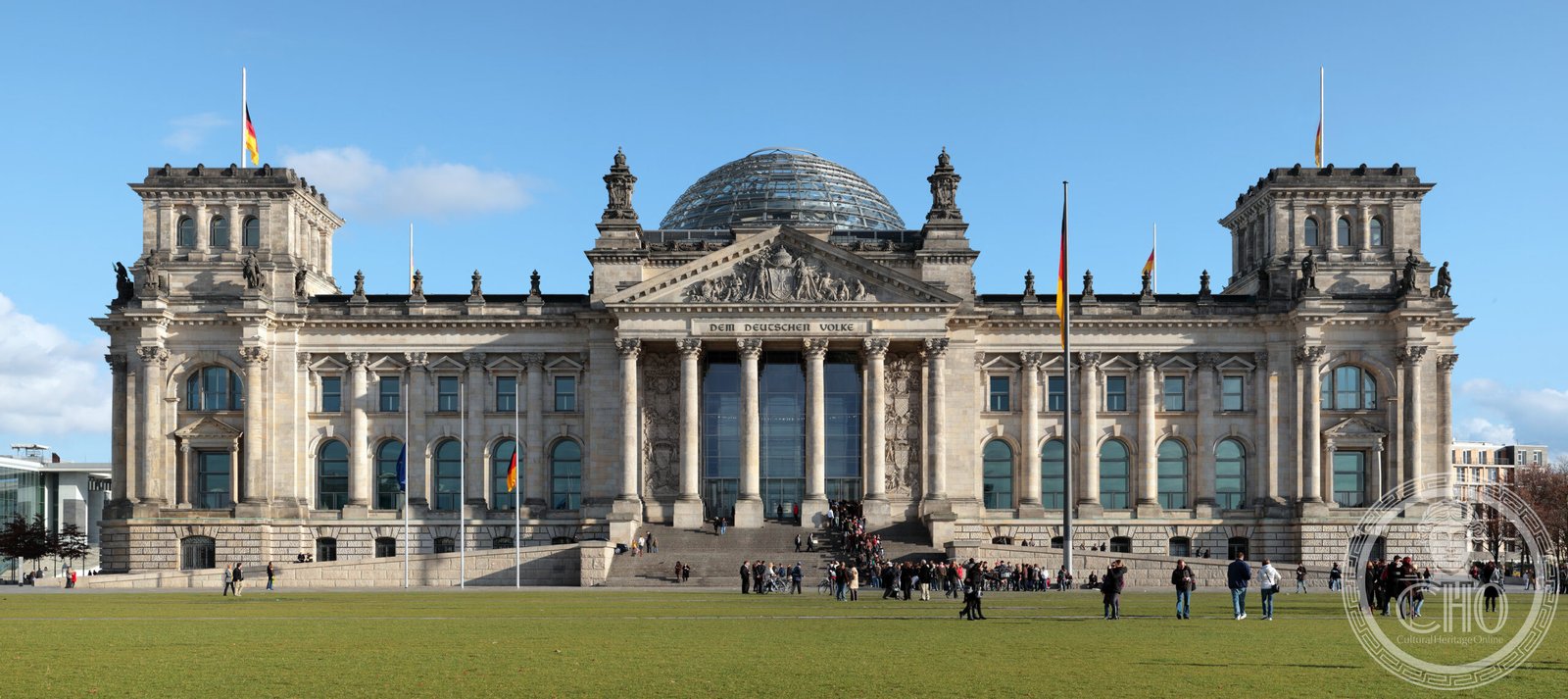
Reichstag
The Reichstag is a historic legislative building on Platz der Republik in Berlin that serves as the seat of the German Bundestag. Completed in 1894 in the Neo-Renaissance style, it has survived arson, wartime destruction, and Cold War division to become one of Germany’s most visited landmarks, crowned since 1999 by Norman Foster’s celebrated glass dome.
- Type
- Parliamentary building
- Period
- 1884–1894; reconstructed 1995–1999
- Style
- Neo-Renaissance; glass dome addition by Norman Foster (1999)
- Location
- Platz der Republik 1, 11011 Berlin, Germany
- Coordinates
- 52.5187° N, 13.3761° E
At a glance
- Type
- Parliamentary building (seat of the Bundestag)
- Period
- 1884–1894; major reconstruction 1995–1999
- Style
- Neo-Renaissance · contemporary glass dome
- Location
- Platz der Republik, Mitte district, Berlin, Germany
Overview
The Reichstag building has been Germany’s parliamentary home since the founding of the German Empire and, after reunification in 1990, became once again the permanent seat of the Bundestag following extensive reconstruction. It also serves as the meeting place of the Federal Convention, which elects the President of Germany. Today it ranks as one of Berlin’s most visited buildings, with the public glass dome accessible free of charge.
History
Construction began in 1884 to designs by architect Paul Wallot, who won a competitive selection. The Neo-Renaissance building was completed in 1894 and housed successive German parliaments. On 27 February 1933 an arson attack severely damaged the chamber; the event was used as a pretext to suspend civil liberties under the Nazi regime. The building was heavily damaged in World War II and stood partly derelict through the Cold War. After German reunification, British architect Norman Foster oversaw a full renovation between 1995 and 1999, adding the iconic glass dome.
What you see
The building stands 47 metres tall over six floors, its Neo-Renaissance facade punctuated by grand porticos and the inscription “Dem Deutschen Volke” (To the German People) added in 1916. Foster’s glass dome above the debating chamber offers a 360-degree view of the Berlin skyline and channels natural light into the parliament below via a central cone of mirrors. Preserved Soviet graffiti and bullet holes from 1945 remain visible in certain areas as deliberate memorials.
Cultural significance
The Reichstag embodies the turbulent arc of modern German history — imperial ambition, democratic struggle, totalitarianism, wartime destruction, and post-war renewal. The 1995 wrapping of the building by artists Christo and Jeanne-Claude, viewed by five million people, is among the most celebrated temporary art works of the twentieth century. The building is now Germany’s second most visited attraction.
Practical information
Address: Platz der Republik 1, 11011 Berlin. The roof terrace and glass dome are free to visit but require advance online registration. The building is open daily; check the official Bundestag website for current hours and booking. Guided tours of the parliamentary chambers are also available.
Getting there
S-Bahn: S3, S5, S7, S9 to Hauptbahnhof (10 minutes on foot). U-Bahn: U55 to Bundestag station (direct, one stop from Hauptbahnhof). Bus lines 100 and 248 stop at Reichstag/Bundestag. The building is also easily reached by bicycle along the Spree riverside path.
Sources & resources
Find it on the map
See this place and what’s around it →📷 Diventa un fotografo di Cultural Heritage Online
Condividi le tue foto dei luoghi: restano pubblicate con la tua firma come autore. Più vengono viste, più ti fai conoscere — e presto un concorso premierà le foto più apprezzate.
Accedi o registrati gratis per aggiungere una foto