
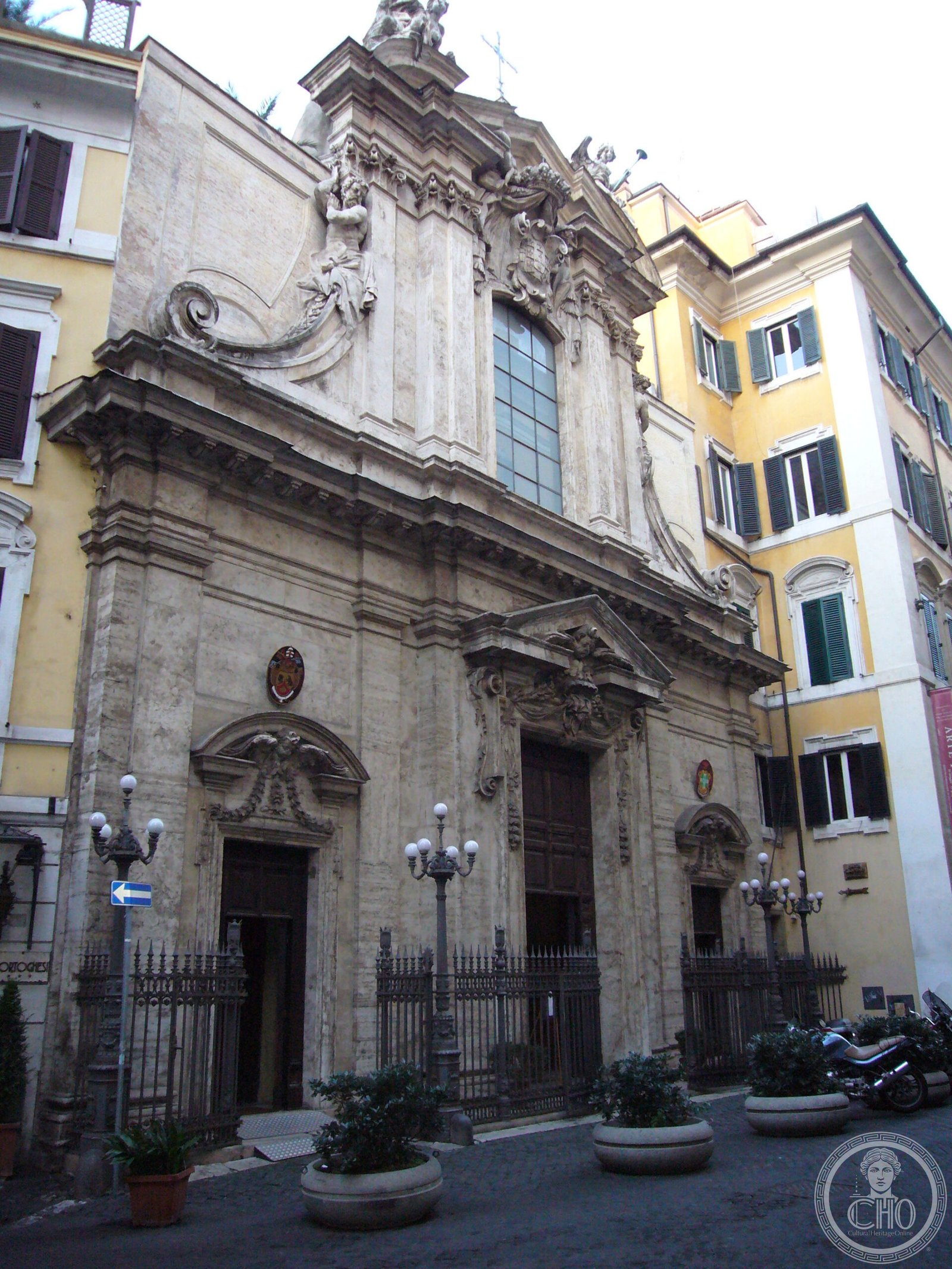
Portuguese Institute of Sant’Antonio
The Portuguese Institute of Sant’Antonio in Rome (Instituto Português de Santo António em Roma) is Portugal’s national religious and cultural institute in the Eternal City, centred on the church of Sant’Antonio dei Portoghesi, one of the oldest Portuguese ecclesiastical foundations in Rome. Located in the historic Ponte district near Piazza Navona, the complex has served the Portuguese community in Rome since the fifteenth century and was rebuilt in Baroque form in the seventeenth century. The complex today functions as a church, a national institute providing support to Portuguese citizens and scholars, and a centre for Portuguese-Italian cultural exchange.
At a glance
- Type
- National religious and cultural institute; titular church
- Period
- Founded 15th century; rebuilt in Baroque form 17th century
- Style
- Roman Baroque
- Location
- Via dei Portoghesi 2, Ponte district, Rome, Italy
- Coordinates
- 41.9017° N, 12.4745° E
Overview
The church of Sant’Antonio dei Portoghesi is one of Rome’s national churches — foundations maintained by foreign nations to serve their communities in the city — and is the spiritual centre of the Portuguese presence in Rome. The adjoining institute provides administrative support to Portuguese nationals in Italy and hosts cultural events, exhibitions, and academic programmes related to Portuguese history and culture. The complex occupies a position in the dense medieval street grid between the Tiber and Piazza Navona, in a quarter that has been populated by Portuguese merchants, pilgrims, and clergy since the late medieval period.
History
The Portuguese community in Rome established its national church in the fifteenth century, at the height of Portugal’s Age of Discovery, when Lisbon was among the most powerful courts in Europe and maintained an active diplomatic and ecclesiastical presence in Rome. The original foundation was dedicated to Saint Anthony of Lisbon (Anthony of Padua), Portugal’s most beloved saint, reflecting the deep Franciscan piety of the Portuguese crown. The church was rebuilt in its present Baroque form during the seventeenth century, with a single-nave interior decorated by leading Roman artists of the period. The campanile that crowns the building is one of the landmarks of the Ponte neighbourhood’s skyline.
What you see
The church facade on Via dei Portoghesi presents a restrained Baroque front typical of Rome’s national church tradition. The interior features a single nave with side chapels, stucco decoration, and paintings commissioned by the Portuguese crown and noble families in the seventeenth and eighteenth centuries. The adjoining palace of the national institute shares the block and contains administrative offices, reception rooms, and a small library. The street outside — named Via dei Portoghesi after the community that settled there — preserves medieval tower-house remnants alongside later Baroque and nineteenth-century urban fabric.
Cultural significance
Sant’Antonio dei Portoghesi is one of the tangible expressions of Portugal’s historic engagement with Rome at the height of its imperial and missionary power, and a surviving monument to the community of merchants, diplomats, and churchmen who shaped the Portuguese quarter of Renaissance and Baroque Rome. As a functioning national institute it continues to represent Portuguese culture and support Portuguese citizens in Italy, maintaining an unbroken institutional presence of more than five centuries. The church is an active parish and a site of devotion for the international Portuguese-speaking Catholic community in Rome.
Practical information
- Address
- Via dei Portoghesi 2, 00186 Roma RM
- Access
- Church open for visits and religious services; institute events by invitation or advance registration
- Hours
- Check official website or contact the institute for current visiting hours
Getting there
The church is located in the Ponte neighbourhood between Piazza Navona and the Tiber embankment. The closest bus stops are on Corso del Rinascimento or Lungotevere dei Tebaldi; buses 40, 46, and 62 run along the riverside. On foot from Piazza Navona, walk north on Via della Scrofa and turn left onto Via dei Portoghesi (5 minutes). From Campo de’ Fiori, cross Via dei Banchi Nuovi and continue north (10 minutes).
Sources & resources
Find it on the map
See this place and what’s around it →📷 Diventa un fotografo di Cultural Heritage Online
Condividi le tue foto dei luoghi: restano pubblicate con la tua firma come autore. Più vengono viste, più ti fai conoscere — e presto un concorso premierà le foto più apprezzate.
Accedi o registrati gratis per aggiungere una foto