
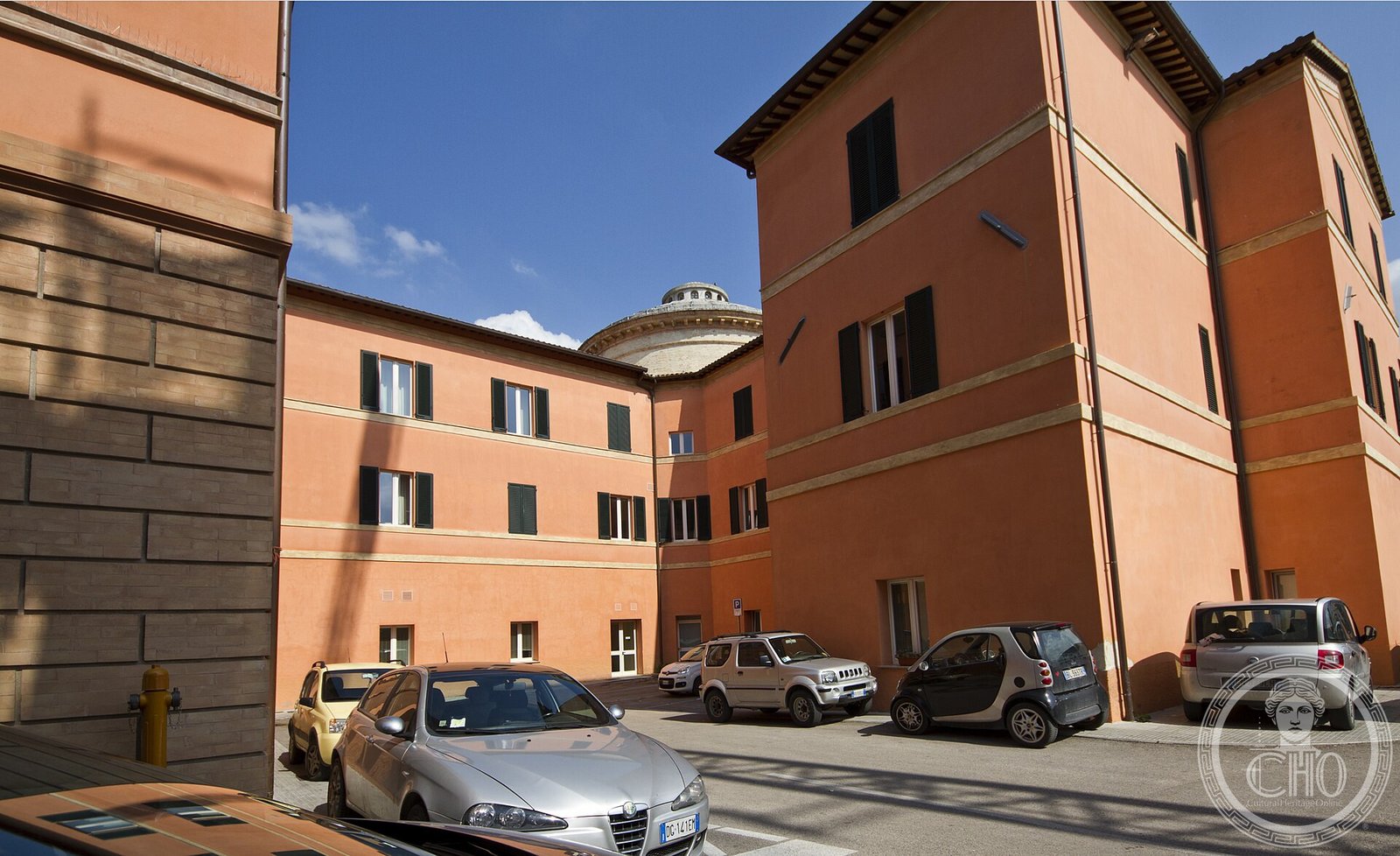
Pierantoni Palace — Foligno Hostel
Pierantoni Palace is a historic aristocratic residence in Foligno, a city on the Topino river in the province of Perugia, central Umbria, now operating as a hostel within the UNESCO-recognised heritage fabric of the town’s medieval and early-modern centre. Foligno occupies a position of considerable importance in the art history of central Italy: it was one of the first cities outside Rome to publish a printed edition of Dante’s Commedia (1472), and its historic centre preserves a remarkable density of medieval churches, Renaissance palaces, and baroque civic buildings belonging to noble families who shaped the cultural and economic life of the Umbrian plain for centuries.
At a glance
- Type
- Aristocratic urban palace, now hostel
- Period
- 17th–18th century
- Style
- Umbrian Renaissance and baroque
- Location
- Historic centre, Foligno, Province of Perugia, Umbria, Italy
- Coordinates
- 42.9580° N, 12.7050° E
Overview
Foligno was a prosperous trading city in the medieval and Renaissance periods, strategically placed where the Via Flaminia — the ancient Roman road connecting Rome to Rimini — crosses the Topino valley. This commercial position generated wealth that local families invested in civic and religious architecture from the thirteenth century onward. The Pierantoni family was among the notable Folignate noble clans who built urban palaces as expressions of social standing and economic success during the seventeenth and eighteenth centuries, contributing to the distinctive architectural character of the city’s historic centre. Foligno today is best known for its annual Giostra della Quintana, a medieval jousting tournament, and as the gateway to Assisi (12 km) and Spello (6 km).
History
The Topino valley around Foligno was intensely settled from Roman times, and the city maintained its position as a regional commercial and administrative centre through the medieval communal period, the signorial period under the Trinci lords (1305–1439), and the subsequent incorporation into the Papal States. Noble families like the Pierantoni emerged or consolidated during the seventeenth century, when the Papal States experienced a period of architectural patronage that transformed many Umbrian and Latian cities with new palaces and churches. The conversion of aristocratic palaces to hospitality use — hostels, agriturismos, small hotels — has been a common adaptive strategy across Umbria since the 1970s, enabling the conservation of historic buildings while serving the region’s substantial pilgrim and cultural tourism traffic.
What you see
Pierantoni Palace presents the sober, well-proportioned facade typical of central Italian urban aristocratic architecture: dressed stone at the base, stuccoed or dressed upper floors, piano nobile windows with simple but elegant surrounds, and a portal of some elaboration bearing the family coat of arms or a carved lintel. Interior spaces have been adapted for hostel use but typically preserve vaulted ground-floor rooms, broad stone staircases, and at least partial traces of original fresco or decorative work on upper ceilings. The surrounding streets of Foligno’s historic centre — many of which preserve their medieval street plan — are lined with churches, including the Cathedral of San Feliciano facing the main piazza, and further palaces of the Trinci and other families.
Cultural significance
Foligno’s historic centre and its palaces represent the standard of civic architectural culture achieved by the prosperous cities of the Papal States in the early-modern period — less celebrated than Perugia or Spoleto, but equally authentic in the completeness of its preserved urban fabric. The adaptive reuse of Pierantoni Palace as an accessible hostel makes this heritage available to a broader public than luxury conversions typically allow, supporting heritage-based sustainable tourism in a city that lies at the heart of the Franciscan pilgrimage circuit linking Assisi, Spoleto, and the Cammino di Francesco.
Practical information
- Address
- Historic centre, Foligno, Province of Perugia, Umbria 06034, Italy
- Opening hours
- Hostel reception: check official website for availability and booking
- Admission
- Hostel guests; check official website for rates
Getting there
Foligno is served by Foligno railway station on the Terontola–Foligno line (connections from Perugia, journey approximately 40 minutes) and on the Rome–Ancona line (Intercity from Roma Termini, journey approximately 1 hour 40 minutes). The historic centre is a 10-minute walk from the station. By car, take the E45 superstrada (Perugia–Foligno) or the SS75 from the A1 motorway at Orte. The nearest airports are Perugia Sant’Egidio (35 km) and Rome Fiumicino (170 km).
Sources & resources
Find it on the map
See this place and what’s around it →📷 Diventa un fotografo di Cultural Heritage Online
Condividi le tue foto dei luoghi: restano pubblicate con la tua firma come autore. Più vengono viste, più ti fai conoscere — e presto un concorso premierà le foto più apprezzate.
Accedi o registrati gratis per aggiungere una foto