
Pedona Abbey Museum
The Pedona Abbey Museum is the heritage and archaeological complex associated with the Benedictine Abbey of Santa Maria di Pedona, located in Borgo San Dalmazzo near Cuneo in the Piedmontese Alps. The abbey, whose origins are traced to the early medieval period, preserves Romanesque architectural fabric and a collection of epigraphic, sculptural and liturgical finds recovered from the site and its surroundings. The museum presents the layered history of a monastic foundation that served the important Roman road through the Colle di Tenda pass.
At a glance
- Type
- Benedictine abbey with associated museum
- Period
- Early medieval origins; Romanesque reconstruction 11th–12th century
- Style
- Romanesque
- Location
- Borgo San Dalmazzo, Province of Cuneo, Piedmont, Italy
- Coordinates
- 44.3300° N, 7.4901° E
Overview
Santa Maria di Pedona stands at the foot of the Maritime Alps, near the confluence of the Gesso and Stura rivers, on a site inhabited since Roman times. The abbey was a key stopping point on the Via Marenca, the ancient route linking the Po plain to the Ligurian coast via the Colle di Tenda. Its museum gathers finds from the abbey church excavations, including early Christian inscriptions, carved stone fragments and medieval ceramics that document continuity of religious use from late antiquity through the Middle Ages.
History
The foundation of a religious community at Pedona is traditionally dated to the early medieval centuries, possibly as early as the 5th or 6th century AD, building on an earlier Roman settlement. The Benedictine community consolidated around the 10th and 11th centuries, constructing the Romanesque church whose apse and crypt survive. The abbey declined after the 14th century, passing through various ecclesiastical hands. Modern archaeological investigations from the 20th century uncovered the stratified remains now displayed in the museum, revealing the depth of occupation on the site.
What you see
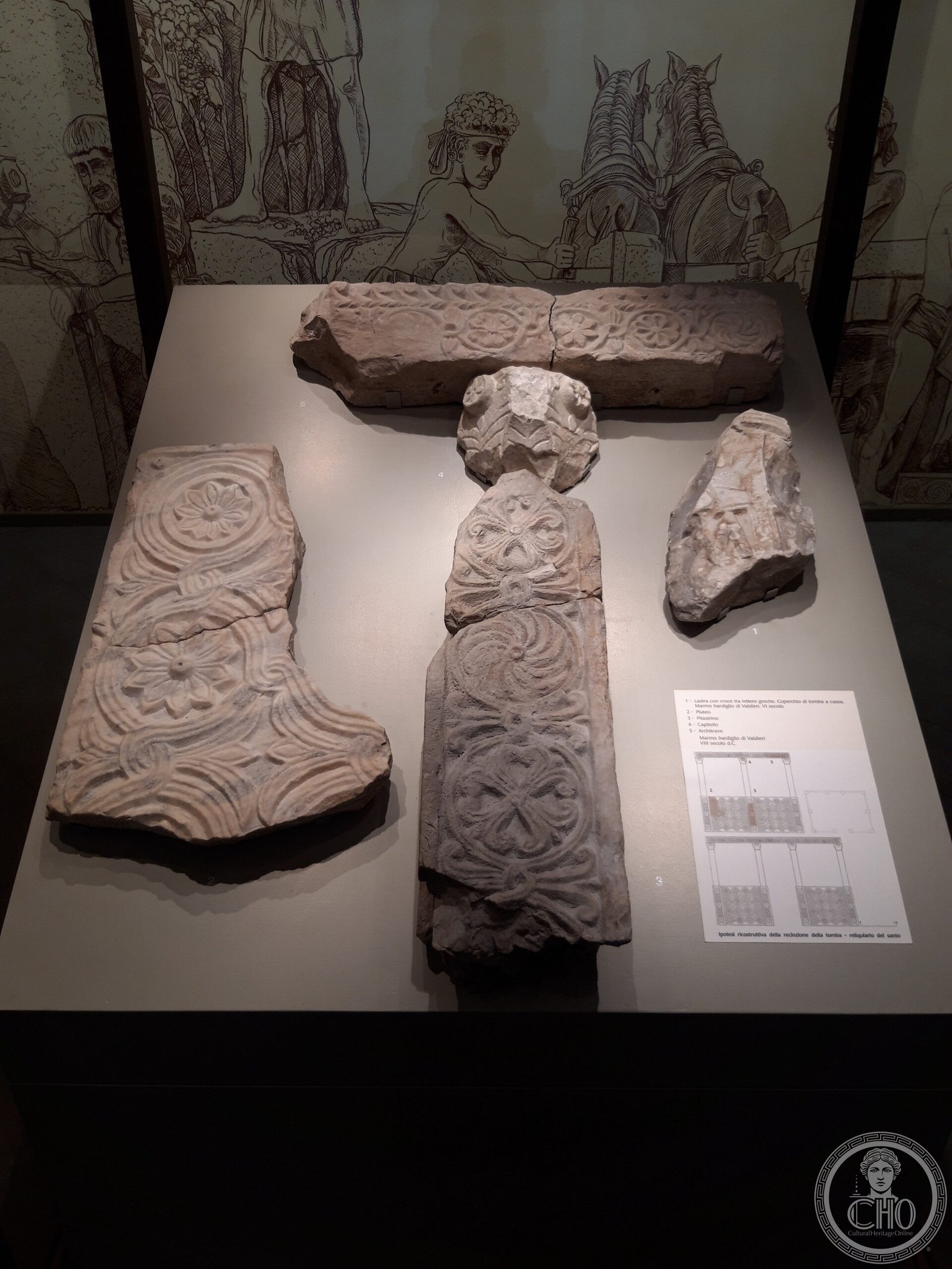
The surviving Romanesque apse and portions of the early medieval crypt form the architectural heart of the complex. The museum displays stone carvings, epigraphs with Latin inscriptions, pottery and metalwork finds organised chronologically from the Roman period through the medieval monastic phase. Interpretive panels contextualise the abbey within the broader history of the Piedmontese Alps and the Alpine road network. The surrounding landscape retains something of the isolated monastic character that made this valley a favoured site for religious communities.
Cultural significance
Pedona Abbey is among the oldest continuously documented religious sites in the Maritime Alps and a rare witness to early Benedictine monasticism in Piedmont. Its position on a major Roman and medieval road means its history intersects with commerce, pilgrimage and Alpine geopolitics over more than a millennium. The museum’s epigraphic collection is valued by scholars of early Christian and medieval Latin epigraphy in north-west Italy.
Practical information
The museum is located in Borgo San Dalmazzo, a short distance from the town centre. Opening hours and guided visit availability vary seasonally. Check with the local cultural associations or the Municipality of Borgo San Dalmazzo for current schedules. Entry fees, when charged, are modest.
Getting there
By car: Borgo San Dalmazzo is on the SS20 road south of Cuneo (approximately 5 km). From the A6 or A10 motorways, connect via Cuneo. By train: Borgo San Dalmazzo has a railway station on the Cuneo–Ventimiglia line; the abbey is a short walk or cycle from the station. Local buses also connect with Cuneo.
Sources & resources
Find it on the map
See this place and what’s around it →📷 Diventa un fotografo di Cultural Heritage Online
Condividi le tue foto dei luoghi: restano pubblicate con la tua firma come autore. Più vengono viste, più ti fai conoscere — e presto un concorso premierà le foto più apprezzate.
Accedi o registrati gratis per aggiungere una foto