
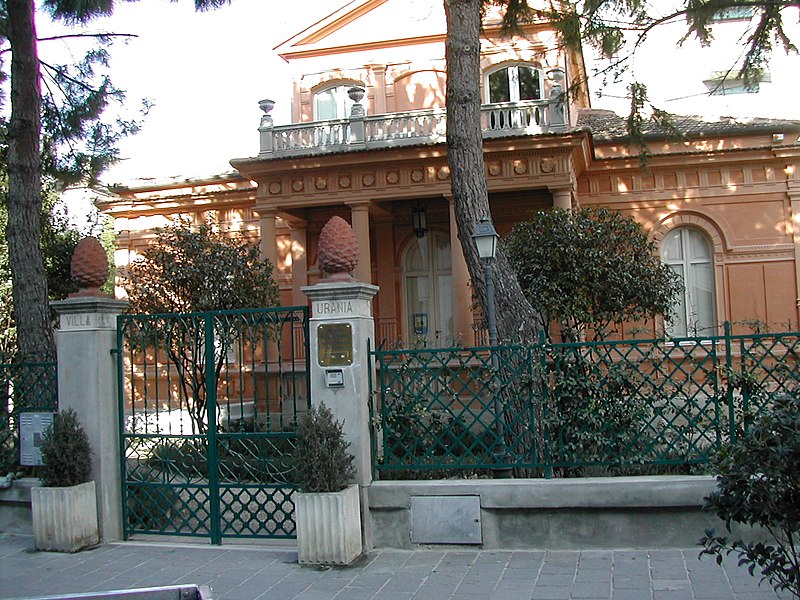
Paparella Treccia Devlet Museum — Villa Urania
The Museo Paparella Treccia Devlet, housed in the early-twentieth-century Villa Urania in Pescara, is the principal fine and decorative arts museum of the Abruzzo Adriatic coast. The collection encompasses paintings, sculptures, ceramics and furnishings spanning the seventeenth to the twentieth century, assembled by the Paparella Treccia family and later enriched by the Devlet bequest, and presented in the original domestic rooms of the liberty-style villa.
At a glance
- Type
- Civic museum of fine and decorative arts
- Period
- Collection: 17th–20th century; Villa Urania: early 20th century (Liberty style)
- Style
- Italian Liberty (Art Nouveau) villa architecture
- Location
- Pescara, Abruzzo, Italy
- Coordinates
- 42.4725° N, 14.2083° E
Overview
Villa Urania is one of the few surviving examples of Liberty architecture in Pescara, a city that suffered heavy bombardment during the Second World War and lost much of its pre-war built fabric. The museum provides an intimate encounter with the collecting tastes of the Abruzzese bourgeoisie in the early twentieth century, displaying easel paintings, majolica, silver and period furniture in rooms that retain their original decorative schemes. The Provincia di Pescara manages the museum, which serves as a cultural anchor for the regional arts community.
History
Villa Urania was built in the early decades of the twentieth century for the Paparella Treccia family, prominent figures in Pescara’s commercial and civic life. The family assembled a collection of paintings and decorative arts from Italian and European markets, reflecting the eclectic tastes typical of the Italian bourgeoisie of the Belle Époque. After the death of the last family members, the property and its collections passed to the Provincia di Pescara, which opened the museum to the public. A subsequent donation by the Devlet family added further works and gave the museum its extended name.
What you see
The collection includes seventeenth-century Italian paintings, including works attributed to Neapolitan and Venetian schools, alongside nineteenth-century landscapes and genre paintings by Abruzzese artists. Decorative arts are well represented by majolica from the Castelli tradition — the celebrated ceramic-making village in the Gran Sasso foothills — as well as silver objects, glassware and embroideries. The liberty-style villa itself, with its original wooden fittings, tiled floors and period wallpapers, forms an integral part of the museum experience.
Cultural significance
The museum occupies a unique position in Abruzzo as a house-museum that preserves a coherent private collection in its original domestic setting, a format now recognised as among the most culturally resonant in Italian museology. The Castelli majolica holdings are of particular scholarly importance, representing a production tradition that has been listed among Italian cultural heritage assets and is the focus of ongoing research. The villa itself is a protected monument.
Practical information
- Address
- Via Delle Caserme 22, 65127 Pescara PE, Italy
- Opening hours
- Check the Provincia di Pescara or official museum contacts for current hours
- Admission
- Check official sources for current admission fees
Getting there
Pescara Centrale railway station is served by Trenitalia regional and intercity trains connecting Rome, Ancona and Bari. From the station, the Villa Urania is reachable by local bus or on foot in approximately 20 minutes. By car, Pescara is on the A14 Adriatic motorway (Bologna–Taranto); take the Pescara Nord or Pescara Centro exit and follow signs to the city centre.
Sources & resources
Find it on the map
See this place and what’s around it →📷 Diventa un fotografo di Cultural Heritage Online
Condividi le tue foto dei luoghi: restano pubblicate con la tua firma come autore. Più vengono viste, più ti fai conoscere — e presto un concorso premierà le foto più apprezzate.
Accedi o registrati gratis per aggiungere una foto