
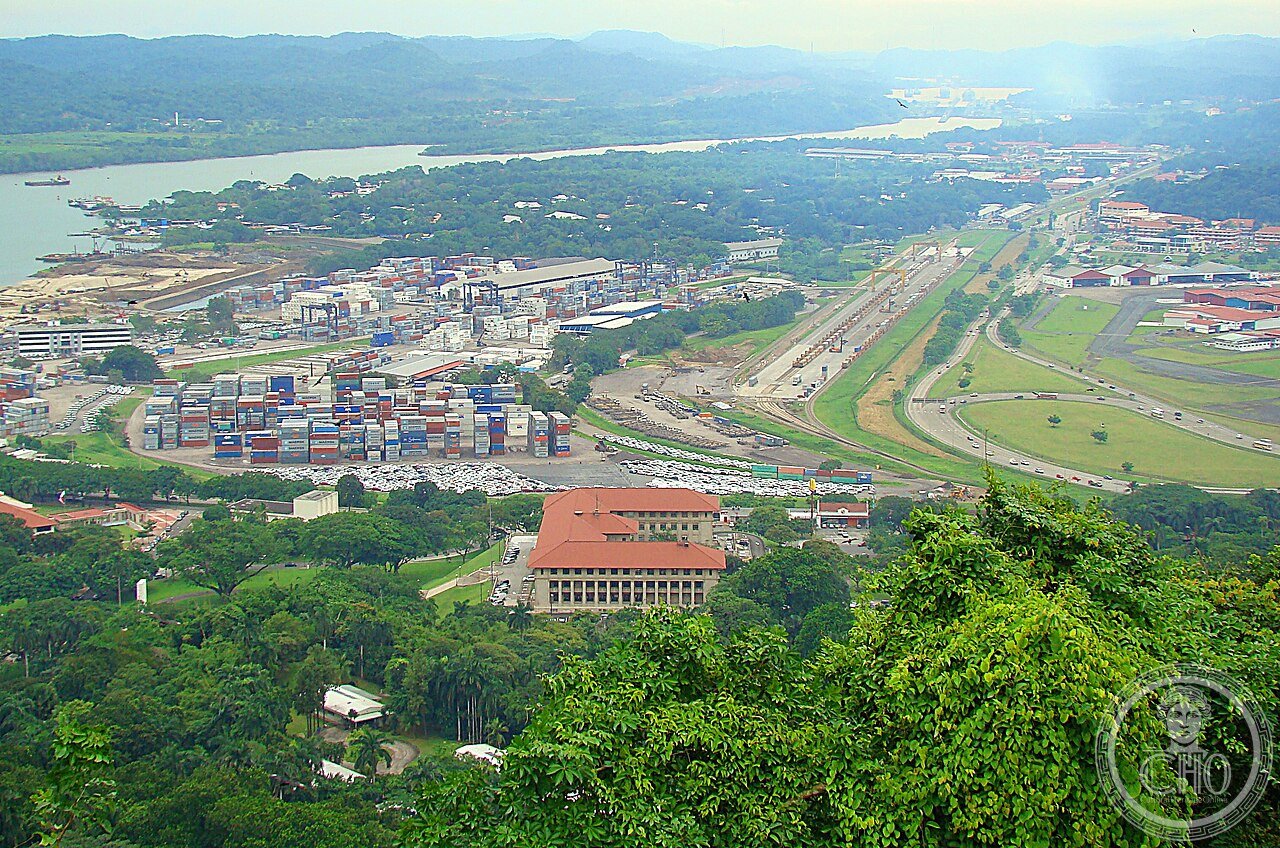
Perched at the summit of Ancon Hill with commanding views of the Pacific entrance to the Panama Canal, the Administration Building is among the most architecturally significant monuments of early twentieth-century American civil engineering. Completed in 1914, the same year the Canal opened to traffic, the structure combines Spanish Mission Revival forms with Beaux-Arts grandeur: arched loggias, red barrel-tile roofs, a prominent bell tower, and stuccoed cream facades designed to echo Panama colonials historic heritage while projecting American institutional authority. Inside the entrance rotunda hang four enormous murals painted by William B. Van Ingen, the artist who decorated the Library of Congress, depicting the engineering feats that made the Canal possible: the excavation of the Culebra Cut, the construction of Gatun Dam, and the building of the massive locks. For nearly a century the building served as the nerve centre of the Canal Zone, the US-administered territory that operated as a state within a state from 1903 until 1999. On 31 December 1999 the final handover ceremony was held here; the last American flag was solemnly lowered and the Panama Canal Authority assumed control. The building now serves as headquarters of that authority and is open to guided tours.
At a glance
- Type
- Government administration building
- Period
- Completed 1914
- Style
- Spanish Mission Revival with Beaux-Arts detailing
- Location
- Ancon Hill, Balboa, Panama City, Panama
- Coordinates
- 8.9686 N, 79.5565 W
- Architect(s)
- Austin Lord, US Army Corps of Engineers
Overview
The Panama Canal Administration Building was constructed to serve as the operational and symbolic headquarters of the Panama Canal during the final phase of its construction and throughout the era of the Canal Zone. Set on the highest point of Ancon Hill, the building overlooks the Pacific locks and the Bay of Panama, a position chosen both for its commanding sightlines and its symbolic elevation above the surrounding landscape. The Spanish Mission Revival style was selected as a deliberate architectural diplomacy, referencing the colonial heritage of Panama while communicating the permanence of American administration.
History
The Canal Zone was established under the Hay-Bunau-Varilla Treaty of 1903, giving the United States perpetual control over a ten-mile-wide strip of Panamanian territory. The Administration Building was completed in 1914, coinciding with the Canal opening on 15 August of that year. It remained the seat of power for the Canal Zone government and the Panama Canal Company through seven decades of American administration. Under the Torrijos-Carter Treaties of 1977, the United States agreed to transfer the Canal to Panamanian sovereignty by the end of 1999. The handover ceremony on New Years Eve 1999 took place on the buildings steps, marking the end of one of the most consequential chapters in twentieth-century geopolitics.
Architecture and Design
Architect Austin Lord of the US Army Corps of Engineers designed the building in the Spanish Mission Revival idiom, featuring wide arched loggias on the ground floor, a central bell tower that anchors the composition, and red clay barrel-tile roofs contrasting with cream-coloured stucco walls. Beaux-Arts symmetry governs the overall massing, with a formally composed entrance sequence leading to the rotunda. The interior highlight is the Van Ingen mural cycle: four large-format oil paintings documenting the Culebra Cut excavation, the Gatun Dam, and the construction of Miraflores and Gatun locks, executed with the same academic realism Van Ingen brought to the Library of Congress murals completed the previous decade.
Cultural significance
The building encapsulates a pivotal period of American imperial infrastructure and the subsequent decolonisation process. The 1999 handover ceremony, broadcast globally, represented one of the most peaceable transfers of a strategic asset in modern history. The Van Ingen murals are recognised as outstanding examples of American architectural painting of the Progressive Era. The building is listed on the US National Register of Historic Places and is considered a landmark of the former Canal Zone, now integrated into metropolitan Panama City.
Visiting today
The building serves as the headquarters of the Panama Canal Authority and is accessible to visitors on guided tours arranged in advance through the Authority. The surrounding Ancon Hill area is a protected nature reserve with trails open to the public, offering views of the Canal and Panama City. The Administration Building is a short drive from Miraflores Locks Visitor Centre, making it a natural pairing for Canal enthusiasts.
Getting there
The building is located in the Balboa district of Panama City, approximately 8 km southwest of the historic Casco Viejo neighbourhood. Taxis and ride-share services from central Panama City take roughly 15 to 20 minutes. The Miraflores Locks and the Biomuseo designed by Frank Gehry are nearby, making Balboa an efficient half-day heritage circuit from the city centre.
Sources and resources
Find it on the map
See this place and what’s around it →📷 Become a Cultural Heritage Online photographer
Share your photos of places: they stay published under your name as the author. The more they're seen, the more you get noticed — and soon a contest will reward the most appreciated photos.
Log in or sign up free to add a photoDo you manage this place?
This page is read by travellers and heritage enthusiasts who find it on Google. Keep it accurate — and make it work for you. Free for non-profit heritage institutions.