
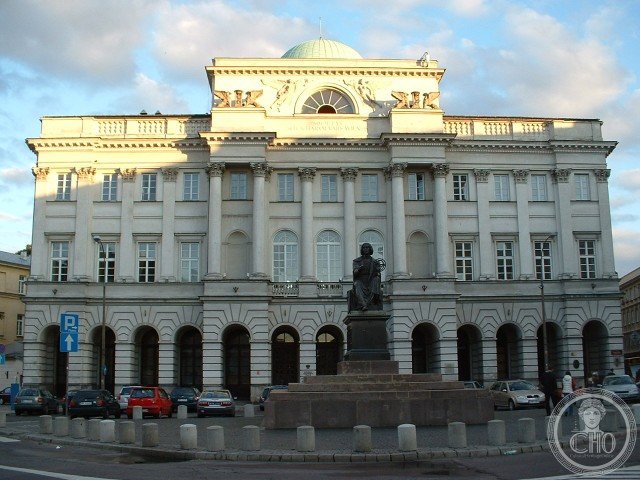
PAN — Polish Academy of Sciences, Rome Station
The Polish Academy of Sciences (Polska Akademia Nauk) is Poland’s state-sponsored national academy of sciences, headquartered in Warsaw and operating research stations across Europe. Its Rome scientific station, located near the Janiculum Hill, serves Polish scholars conducting research in history, archaeology, art history, and Mediterranean studies, maintaining a library and hosting visiting researchers in the heart of the Eternal City.
At a glance
- Type
- Academic research station / cultural institute
- Period
- Polish Academy of Sciences founded 1952; Rome station established mid-20th century
- Style
- Institutional academic building, historic Roman palazzo
- Location
- Via Giulia area, Rome (41.8969° N, 12.4817° E)
Overview
The Polish Academy of Sciences is responsible for spearheading the development of science across Poland through a society of distinguished scholars and a network of research institutes spanning the humanities, social sciences, and natural sciences. Its Rome scientific station is one of several foreign outposts that enable Polish academics to conduct extended field research in countries of paramount cultural and historical significance. The station functions as a bridge between Polish intellectual tradition and the rich documentary heritage preserved in Italian archives, libraries, and archaeological sites.
History
Poland’s scholarly engagement with Rome stretches back centuries, rooted in the presence of Polish ecclesiastical and diplomatic missions at the Holy See. The formal establishment of the Polish Academy of Sciences in 1952 provided institutional backing for a permanent scientific presence in Rome, formalising what had previously been ad hoc arrangements for Polish researchers working in the Vatican Archives, the Biblioteca Apostolica, and Italian state libraries. Over subsequent decades the station expanded its remit to cover archaeology, classical studies, and Italian Renaissance art history alongside its original diplomatic history focus. Today it participates in international research consortia and hosts annual lecture series open to the Roman academic community.
What you see
The station occupies a historic building in the scholarly quarter near Via Giulia, one of Rome’s most intact Renaissance streetscapes. Visitors find a working academic environment: reading rooms lined with specialist reference volumes in Polish, Italian, and Latin, seminar spaces used for workshops and conference presentations, and a small exhibition area periodically displaying results of ongoing Polish-Italian research collaborations. The surrounding neighbourhood places the institution within walking distance of the Palazzo Farnese, the Museo di Roma, and the Campo de’ Fiori.
Cultural significance
The PAN Rome station represents a living thread in the centuries-long dialogue between Polish and Italian culture, from medieval papal diplomacy through the Grand Tour era to contemporary academic exchange. Its presence ensures that Polish perspectives — linguistic, methodological, archival — continue to contribute to international scholarship on Roman, Mediterranean, and European cultural heritage.
Practical information
- Address
- Via Giulia area, Rome, Italy
- Access
- Research station; access primarily for accredited scholars and invited guests. Check the official PAN website for open lectures and public events.
- Hours
- Check official website for current schedule
Getting there
The station is reachable by bus along Corso Vittorio Emanuele II or Lungotevere. The nearest metro interchange is at Ottaviano (Line A) or Termini, each requiring an onward bus connection. From Campo de’ Fiori the station is a short walk south along Via Giulia. Taxis from central Rome take approximately 10 minutes.
Sources & resources
Find it on the map
See this place and what’s around it →📷 Diventa un fotografo di Cultural Heritage Online
Condividi le tue foto dei luoghi: restano pubblicate con la tua firma come autore. Più vengono viste, più ti fai conoscere — e presto un concorso premierà le foto più apprezzate.
Accedi o registrati gratis per aggiungere una foto