
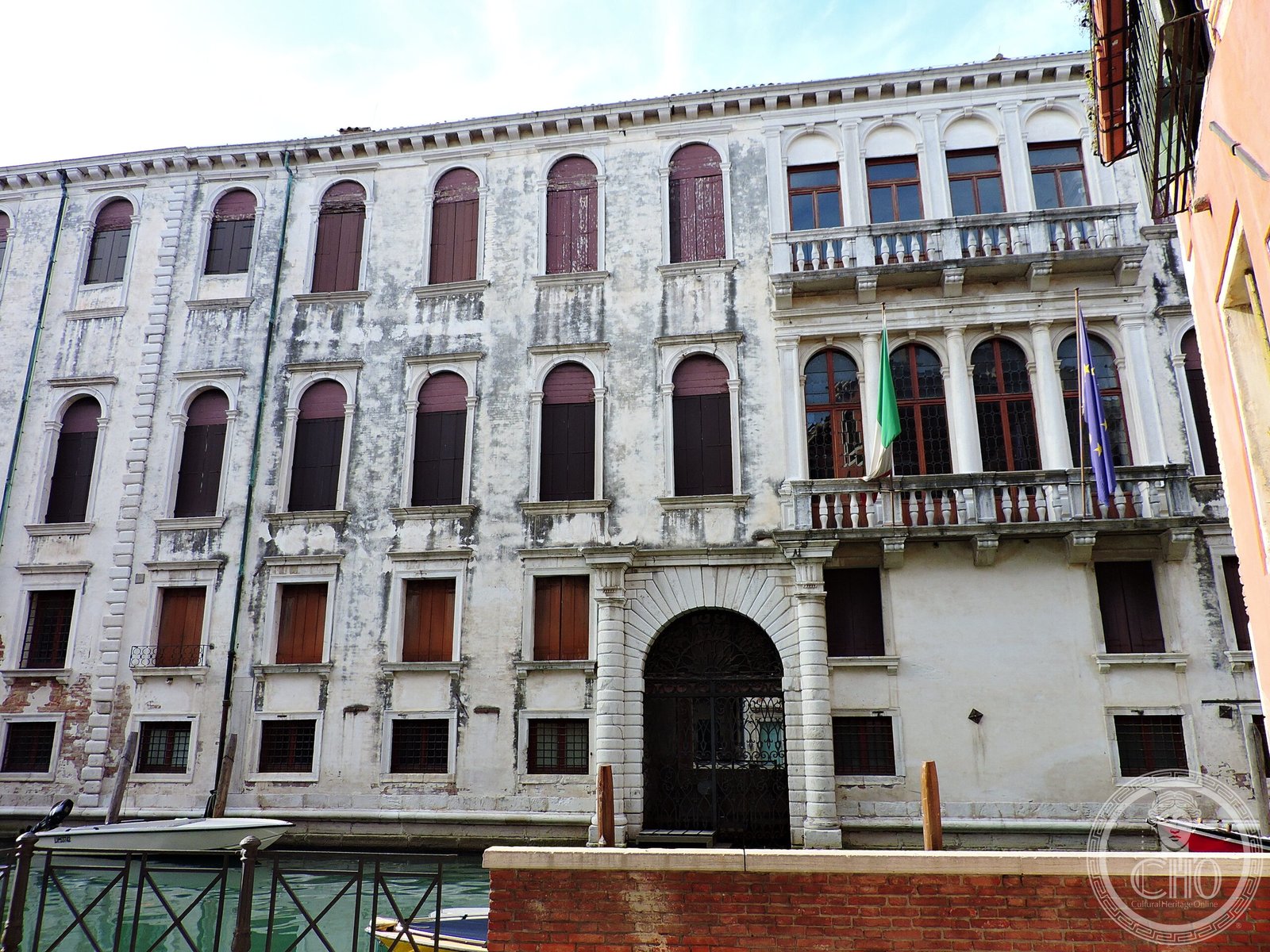
Palazzo Grimani Museum
The Palazzo Grimani Museum occupies the Palazzo Grimani di Santa Maria Formosa, one of Venice’s most exceptional examples of Roman Renaissance architecture, built in the first half of the 16th century for Cardinal Giovanni Grimani and designed to house his celebrated collection of Greco-Roman antiquities. Now a state museum managed by the Polo Museale del Veneto, the palace displays a permanent collection of ancient sculpture alongside its magnificently restored Renaissance interiors.
At a glance
- Type
- Renaissance patrician palace, now a state museum
- Period
- Constructed c. 1520–1575; collection formed by Cardinal Giovanni Grimani (1461–1523) and continued by his nephew Patriarch Giovanni Grimani
- Style
- Roman High Renaissance, inspired by ancient Roman house architecture
- Location
- Ramo Grimani 4858, Castello, Venice
- Coordinates
- 45.4370° N, 12.3396° E
Overview
The Palazzo Grimani di Santa Maria Formosa is considered one of the finest examples of Roman Renaissance architecture outside Rome itself, distinguished by its monumental entrance atrium, lavishly decorated rooms, and a spatial sequence that evokes the ancient Roman domus rather than the typical Venetian palace plan. Cardinal Giovanni Grimani, Patriarch of Aquileia, assembled one of the greatest private collections of Greco-Roman sculpture in 16th-century Europe, a portion of which was bequeathed to the Venetian Republic and now forms the nucleus of the Archaeological Museum of Venice. The palace itself was subsequently neglected and partially subdivided before being restored and reopened as a museum in 2008.
History
Construction of the palace began around 1520 under Cardinal Giovanni Grimani, who commissioned a design that departed radically from Venetian gothic tradition in favour of the classicising vocabulary he had encountered in Rome. His nephew Patriarch Giovanni Grimani continued the project, commissioning the extraordinary decorative programmes of the Sala a Fogliami and the Tribune, with frescoes by Giovanni da Udine and Francesco Salviati. After the Grimani line died out the palace passed to the Venetian state; it housed a law court and government offices for centuries before conservation works began in the late 20th century.
What you see
Visitors enter through a barrel-vaulted atrium whose scale and classical detailing immediately signal the owner’s Roman ambitions. The Sala a Fogliami (Room of Foliage) features a celebrated ceiling fresco of intertwining plant scrolls by Giovanni da Udine, a collaborator of Raphael. The Tribune is a domed octagonal chamber decorated with ancient statuary niches and illusionistic painted architecture. Throughout the palace, carved classical friezes, marble floors, and remnants of original frescoes evoke the humanist world of the High Renaissance.
Cultural significance
Palazzo Grimani is outstanding evidence of the Venetian nobility’s engagement with Roman humanist culture in the 16th century, and of the role private collecting played in transmitting ancient art to later generations. The palace’s architecture directly influenced subsequent Venetian classicism. Its restoration and reopening as a museum has made one of Italy’s most important Renaissance interiors accessible to the public for the first time in modern history.
Practical information
- Address
- Ramo Grimani 4858, Castello, 30122 Venezia VE, Italy
- Opening hours
- Tuesday–Sunday, approximately 10:00–18:00; closed Monday — check the Polo Museale del Veneto website for current hours and closures
- Admission
- Fee applies; concessions available — check official website
Getting there
The palace is located in the Castello sestiere of Venice. The nearest vaporetto stop is Ospedale on lines 4.1 and 4.2 (about 5 minutes on foot), or San Zaccaria on lines 1, 2, 4.1, 4.2, 5.1, 5.2 (about 10 minutes on foot). From San Marco, follow Calle dei Fabbri or Via Garibaldi northward into Castello toward Campo Santa Maria Formosa.
Sources & resources
Find it on the map
See this place and what’s around it →Historical events at this place (1)
📷 Diventa un fotografo di Cultural Heritage Online
Condividi le tue foto dei luoghi: restano pubblicate con la tua firma come autore. Più vengono viste, più ti fai conoscere — e presto un concorso premierà le foto più apprezzate.
Accedi o registrati gratis per aggiungere una foto