
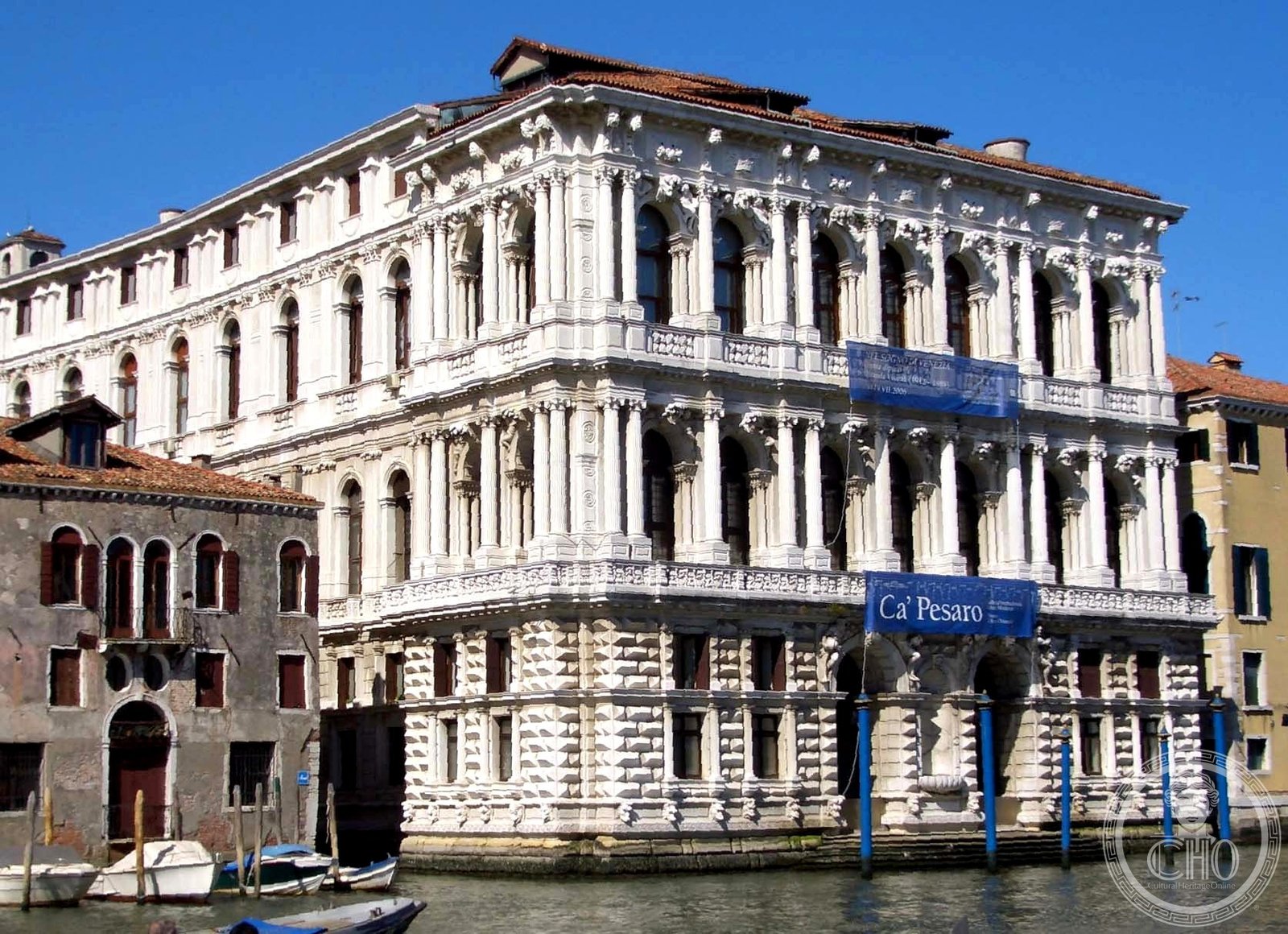
Oriental Art Museum of Venice
The Oriental Art Museum (Museo d’Arte Orientale) in Venice occupies the upper floors of Ca’ Pesaro, the grand Baroque palazzo on the Grand Canal that also houses the city’s Museum of Modern Art. The collection, one of the largest assemblages of Japanese Edo-period decorative arts in Europe, was formed during a long voyage to Asia undertaken between 1887 and 1889 by Count Enrico di Borbone, Duke of Reggio, and donated to the city of Venice in 1898.
At a glance
- Type
- Museum of oriental decorative arts
- Period
- Collection: mainly Edo period (17th–19th century); palace: 17th century
- Style
- Venetian Baroque palace (Ca’ Pesaro); Japanese, Chinese, Indonesian objects
- Location
- Ca’ Pesaro, Santa Croce, Venice, Italy
- Coordinates
- 45.4412° N, 12.3316° E
Overview
The Oriental Art Museum offers a rare concentration of East Asian art and craft within one of Venice’s most celebrated Baroque buildings. The collection spans lacquerwork, armour, swords, ceramics, textiles, prints and ivory carvings, with particular strength in Japanese material culture of the Edo and Meiji periods. Administered by the Fondazione Musei Civici di Venezia alongside the Museum of Modern Art in the same palazzo, it forms part of the civic museum network that includes the Correr, the Mocenigo and several other institutions.
History
Ca’ Pesaro was built to designs by Baldassare Longhena, the leading Venetian Baroque architect, between 1659 and 1682, with the facade completed later by Antonio Gaspari. After passing through several owners the palace was acquired by the Duchess Felicita Bevilacqua La Masa and eventually came to the city. The oriental collections were assembled by Count Enrico di Borbone on his extended journey through Japan, China, India and South-East Asia in 1887–1889, acquiring thousands of objects that represented the full spectrum of Asian craft traditions. The museum opened to the public in the early twentieth century and has been reorganised several times, with its most recent renovation improving thematic displays and conservation conditions.
What you see
The museum’s galleries present Japanese lacquered boxes, inro, netsuke, samurai armour and sword fittings alongside Meiji-era ivory carvings and cloisonné enamelwork. Chinese porcelain, Indonesian kris daggers and Indian textiles round out the Asian geographic scope of the collection. The rooms of Ca’ Pesaro themselves — with their monumental ceilings and views onto the Grand Canal — provide a theatrical setting that throws the delicacy of the Asian craftsmanship into sharp relief.
Cultural significance
The collection is notable as a largely intact nineteenth-century aristocratic assembly formed by direct purchase in situ, rather than through dealers or later aggregation, giving it coherence as a document of late-Meiji Japanese export culture as perceived by a European collector. Its location in Venice — historically one of Europe’s principal gateways to Asia — adds a long-run symbolic resonance to the museum’s mission. The museum is a key node in the Fondazione Musei Civici di Venezia network, drawing visitors interested in cross-cultural exchange.
Practical information
- Address
- Ca’ Pesaro, Santa Croce 2076, 30135 Venezia VE, Italy
- Opening hours
- Tuesday–Sunday, 10:00–18:00 (November–March until 17:00); closed Mondays
- Admission
- Combined ticket with Museum of Modern Art; check Fondazione Musei Civici for current pricing
- Website
- capesaro.visitmuve.it
Getting there
From the Santa Lucia railway station, take Vaporetto line 1 or 2 towards the Rialto and alight at the San Stae stop on the Grand Canal, a short walk from Ca’ Pesaro. Alternatively, the Ferrovia stop is a pleasant 15-minute walk through the Cannaregio and Santa Croce sestieri. Water taxi service is available from the station and from Marco Polo airport.
Sources & resources
Find it on the map
See this place and what’s around it →📷 Diventa un fotografo di Cultural Heritage Online
Condividi le tue foto dei luoghi: restano pubblicate con la tua firma come autore. Più vengono viste, più ti fai conoscere — e presto un concorso premierà le foto più apprezzate.
Accedi o registrati gratis per aggiungere una foto