
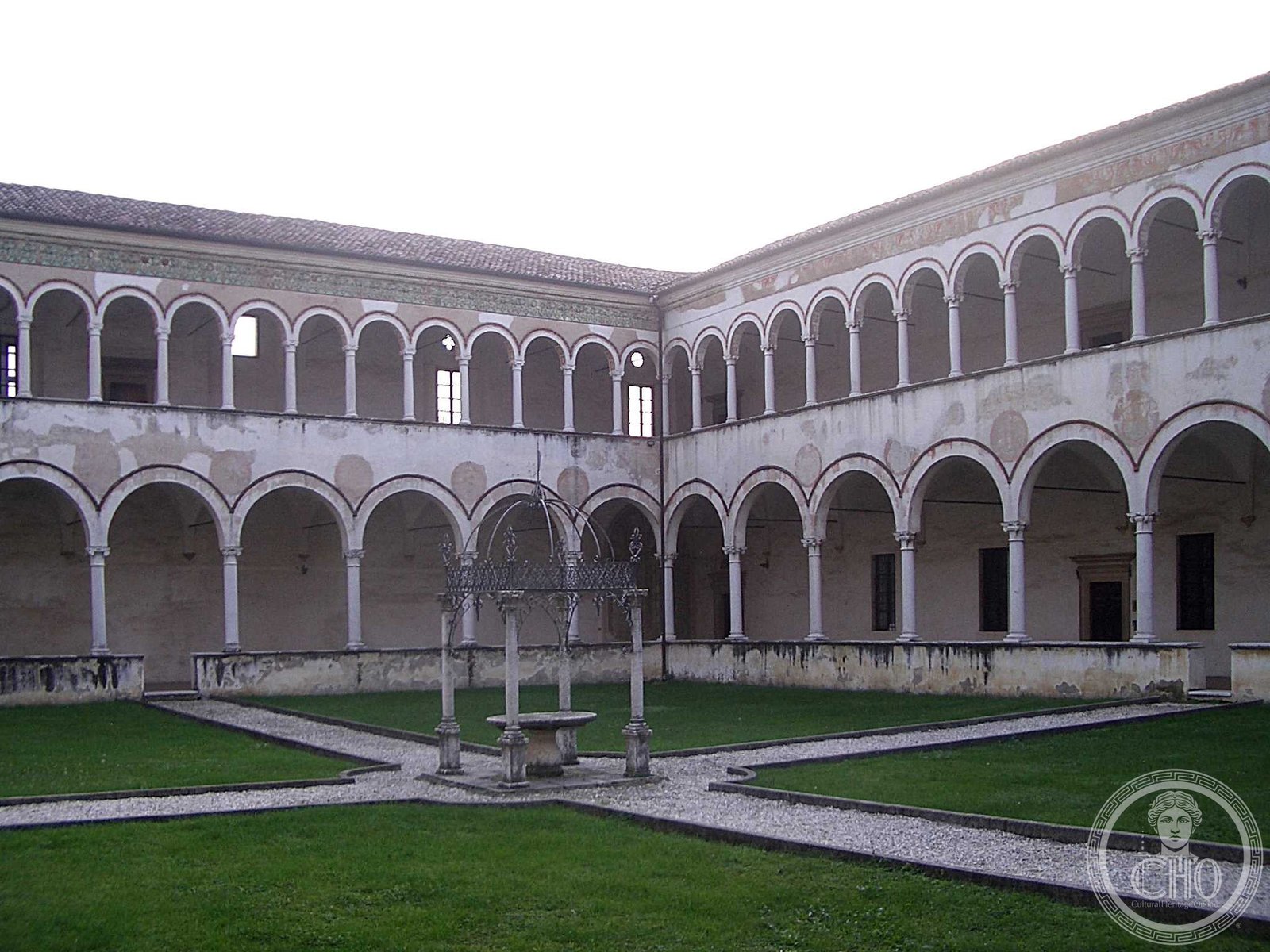
A spiritual and artistic landmark in Franciacorta, this Benedictine abbey stands as one of northern Italy’s most significant monastic complexes, rebuilt and enriched over three centuries by master artists and devoted communities.
At a glance
Founded by Cluniac monks around the mid-11th century, the abbey was revitalized by the Olivetan order from 1450 onward. The complex showcases Renaissance and later artistic achievements across its church, cloisters, and decorative works.
History
The site occupied a strategic Roman crossroads leading to the city and serving pilgrims bound for Rome. Archaeological excavations have uncovered Roman wall remains and a Longobard structure, indicating continuous habitation from antiquity.
A document from 1085 records the monastery’s existence; another from 1109 confirms its dedication to Saint Nicholas. Under Cluniac governance and support from abbeys at Pontida and San Paolo d’Argon, the monastery developed rapidly through land donations and property acquisitions managed by lay brothers.
Decline began in the late 13th century, with fewer than ten monks and lay brothers by the 1300s. Commendatory abbots installed at century’s end accelerated this decay, creating disputes among papal, diocesan, Venetian, and municipal authorities over governance.
In 1446, Pope Eugene IV transferred the abbey to the Olivetan order. After contested negotiations with the last commendatory abbot, the transition became definitive in 1450, initiating a dramatic spiritual and economic recovery.
Reconstruction commenced immediately, beginning with the church of San Nicola. Over three centuries, the Olivetans commissioned major artists and constructed the western and great cloisters, creating an ensemble of remarkable artistic significance.
Napoleonic suppression came in 1797; the monastery passed to Brescia’s women’s hospital. Pope Paul VI’s intervention in 1969 returned the abbey to Olivetan monks, launching ongoing restoration efforts supported by local superintendencies and associations.
What you see
The church of San Nicola, entirely rebuilt from 1450, stands at the complex’s heart. The western cloister and great cloister (later expanded in 1560–70) frame the monastic spaces with Renaissance proportions and later additions.
Sixteenth-century frescoes by Romanino, Moretto, Lattanzio Gambara, and Grazio Cossali decorate interior spaces. Later painters including Gian Giacomo Barbelli and Giovan Battista Sassi contributed additional works.
Cristoforo Rocchi’s inlaid choir (1480) exemplifies the abbey’s woodwork tradition. Marble and ceramic decorations of the main cloister further enhance the ensemble’s artistic richness.
Cultural significance
The abbey represents a successful monastic revival and represents the Olivetan order’s architectural and spiritual renewal in northern Italy. Its multi-generational construction involved the region’s leading artists, making it a repository of Renaissance and post-Renaissance aesthetic achievement.
The complex documents the evolution of monastic life—from Cluniac reform through Olivetan renewal—and the shifting interplay of ecclesiastical, state, and civic powers across medieval and early modern periods.
Key facts
- Founded: Mid-11th century (Cluniac); transferred to Olivetan order, 1446–1450
- Rebuilding commenced: 1450
- Address: Via Brescia, 25050 Rodengo-Saiano
- Coordinates: 45.5894274, 10.1112498
- Phone: 030 610182
- Website: http://www.abbaziasannicola.it/
Practical information
The abbey remains an active monastic community housing monks and nuns of different Christian faiths. The complex offers hospitality to visitors. Check the official website for visiting hours, guided tours, and access policies.
Getting there
Rodengo-Saiano is located in Franciacorta, in the province of Brescia, Lombardia. The abbey is accessible by road via Via Brescia. For detailed directions and public transport options, consult the abbey’s official website or contact them directly.
Sources & resources
Find it on the map
See this place and what’s around it →📷 Become a Cultural Heritage Online photographer
Share your photos of places: they stay published under your name as the author. The more they're seen, the more you get noticed — and soon a contest will reward the most appreciated photos.
Log in or sign up free to add a photoIs this page about you?
This page is read by travellers and heritage enthusiasts who find it on Google. Tell us how you are connected to this place and we will take it from there.