
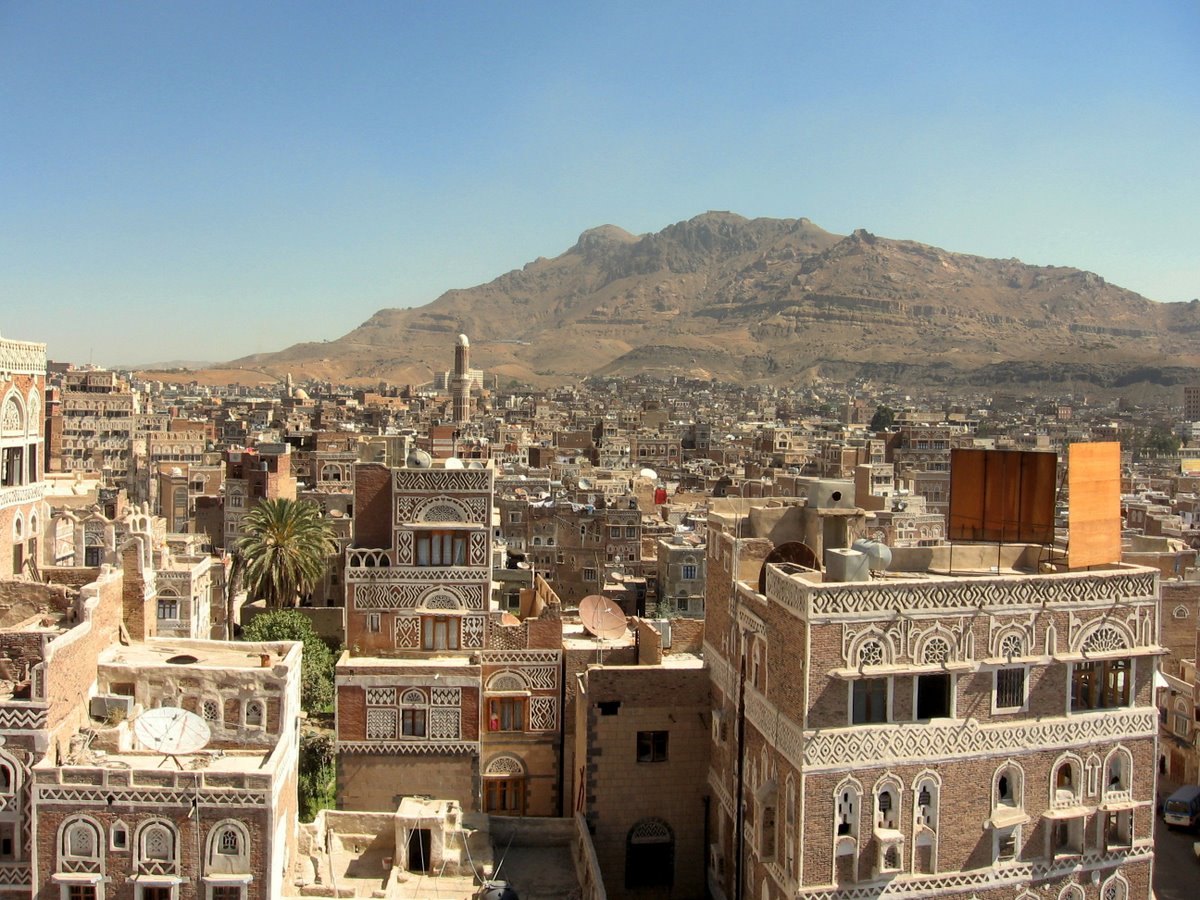
A fortified urban labyrinth inhabited for over 2,500 years, Sanaa’s densely packed old quarter rises in tower-like houses adorned with carved frames and stained glass, surrounded by clay walls that have sheltered one of the world’s oldest mosques and a sophisticated network of quarters centred on mosque complexes.
At a glance
The Old City of Sanaa is enclosed by ancient clay walls standing 9–14 metres high and contains more than 100 mosques, 12 bathhouses, and 6,500 houses. As of 2003, the city had 63,398 inhabitants. UNESCO designated it a World Heritage Site in 1986, recognising its exceptional preservation of medieval Arabian architecture and urban planning.
History
Sanaa has been continuously inhabited for more than 2,500 years. The Ghumdan Palace, though only partially standing, ranks among the oldest architectural structures in the Old City. The Great Mosque (Jāmiʿ al-Kabīr), built in the 7th century, is one of the world’s oldest mosques and remains largely intact. The Bāb al-Yaman gateway, which pierces the city walls, dates to more than 1,000 years ago.
The traditional quarter-based urban system developed around endowed complexes containing a mosque, bathhouse, and agricultural garden. One notable quarter was Qa’ al-Yahud, the Jewish Quarter on the western side, distinguished by its own architectural conventions including elevated main rooms and shorter building profiles.
What you see
The city’s signature forms are tower-like residential buildings that rise several storeys high with flat roofs. These structures feature elaborate frieze decoration, intricately carved window frames, and stained-glass windows that filter light across narrow streets. The Bāb al-Yaman remains an iconic entry point through the defensive clay walls.
Within the old quarter, the Great Mosque demonstrates the sophistication of early Islamic architecture. The Samsarh, over 1,400 years old, represents the enduring mercantile character of the city. Modern commercial districts such as Al Madina now operate alongside historic quarters.
Cultural significance
Sanaa exemplifies medieval Arabian urban design and domestic architecture with remarkable continuity. The intact quarter-system reveals sophisticated resource management: human waste dried in mountain air was used as fuel for bathhouses, while ablution water from mosques irrigated gardens. This closed-loop sustainability shaped daily life for centuries.
The city’s cultural impact extends to modern literature. British writer Jonathan Raban, visiting in the 1970s, evoked its “fortress-like” character and maze-like layout as resembling “a vast pop-up picture book.” The Suq al-Milh (Salt Market) remains a vital commercial hub where salt, spices, textiles, metalwork, and antiques are traded as they have been for generations.
Key facts
- Country: Yemen
- Coordinates: 15.5°N, 44.3°E
- UNESCO World Heritage Site: designated 1986
- Population (2003): 63,398
- Walls: 9–14 metres high
- Great Mosque: 7th century
Practical information & getting there
The Old City remains an active residential and commercial centre. Suq al-Milh is a primary shopping destination for traditional goods. Al Madina district in the newer commercial area offers three large hotels, numerous restaurants, and shops alongside three parks. Consult current travel advisories regarding Yemen before planning a visit.
Sources & resources
Find it on the map
See this place and what’s around it →📷 Become a Cultural Heritage Online photographer
Share your photos of places: they stay published under your name as the author. The more they're seen, the more you get noticed — and soon a contest will reward the most appreciated photos.
Log in or sign up free to add a photo