
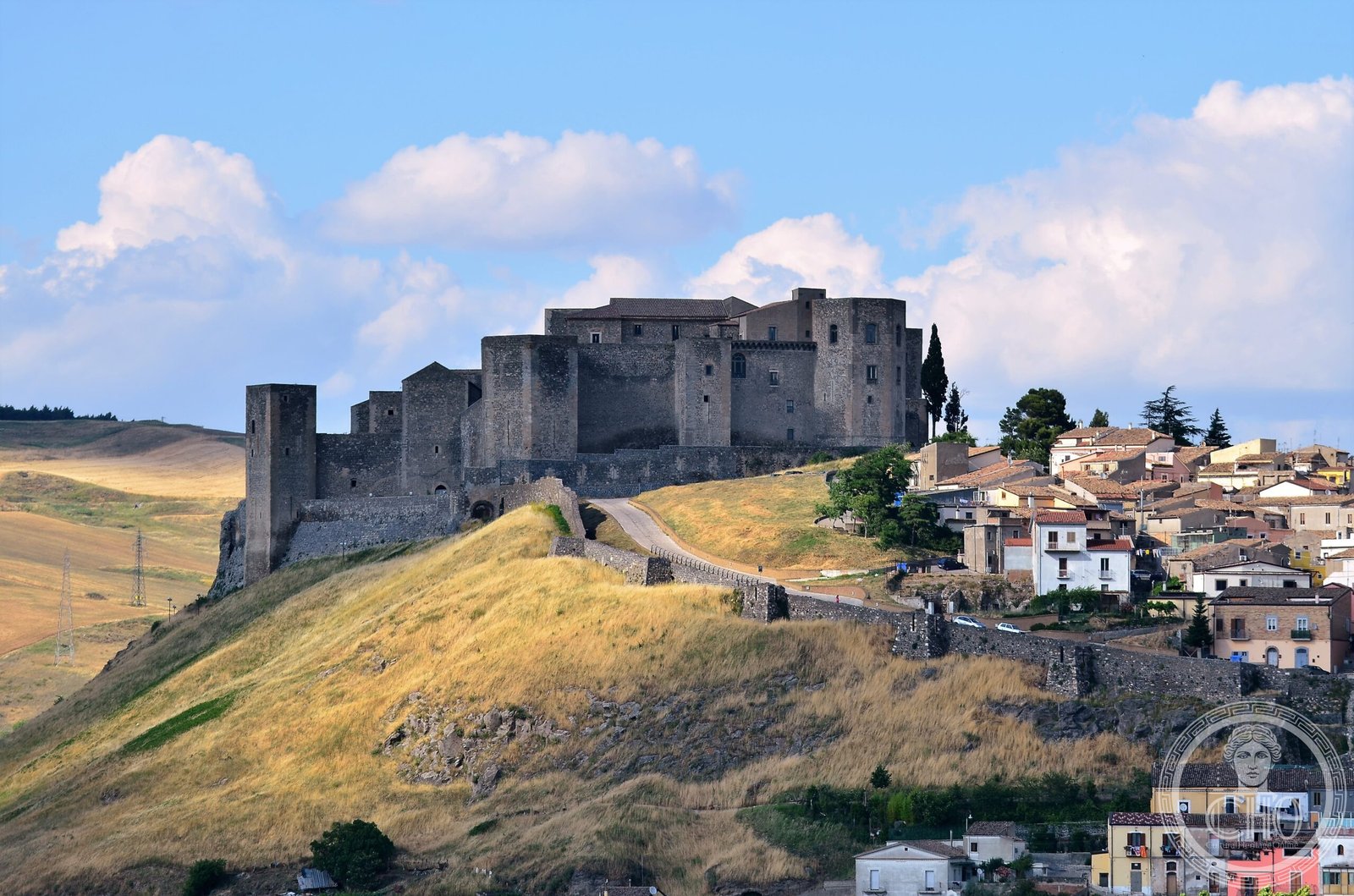
Norman-Swabian Castle of Melfi
The Castle of Melfi is one of the most important medieval fortresses in southern Italy, located in the town of Melfi in the Vulture sub-region of Basilicata. A State-owned monument, its visible structure dates primarily from the Norman conquest of southern Italy in the 11th century, with substantial modifications under the Hohenstaufen emperors, particularly Frederick II, and later under the Angevin and Aragonese dynasties. The castle served as the principal seat of Norman power in the south, hosted multiple imperial councils including the 1059 Council of Melfi that defined the relationship between the papacy and the Norman rulers, and today houses the National Archaeological Museum of Melfi.
At a glance
- Type
- Medieval royal fortress and castle complex
- Period
- Norman origins 11th century; major modifications 12th–16th century
- Style
- Norman military architecture with Swabian, Angevin, and Aragonese additions
- Location
- Melfi, Province of Potenza, Basilicata, southern Italy
- Current use
- National Archaeological Museum of Melfi (Museo Nazionale Archeologico di Melfi “Massimo Pallottino”)
- Ownership
- Italian State (Ministero della Cultura)
- Coordinates
- 40.9983° N, 15.6529° E
Overview
The Castle of Melfi stands as one of the most important medieval castles in Southern Italy, a monument owned by the Italian State with origins in the Norman conquest of the 11th century that has undergone significant changes under the House of Anjou and the Crown of Aragon. Melfi itself was the first Norman capital of the southern Italian territories, making the castle the symbolic centre of a political transformation that reshaped the entire Mediterranean world. The fortress rises dramatically on a volcanic hill above the town, commanding views of the Vulture volcano and the Apennine foothills of Basilicata.
History
The Normans, expanding southward from their base at Aversa, established Melfi as their principal city in the 1040s under Robert Guiscard, who made it the capital of the new County of Apulia. The 1059 Council of Melfi formalised the alliance between Pope Nicholas II and the Norman leaders, granting them recognition as papal vassals over southern Italy and Sicily — a deal that changed the political map of the medieval Mediterranean. Holy Roman Emperor Frederick II, who spent much of his life in southern Italy, used the castle as an imperial residence and issued the Constitutions of Melfi (Liber Augustalis) here in 1231, one of the earliest comprehensive legal codes of medieval Europe. Subsequent Angevin and Aragonese rulers maintained and expanded the structure through the 15th and 16th centuries.
What you see
The castle presents a roughly trapezoidal plan with eight towers of different dates arranged around a central courtyard; the towers range from the original Norman cylindrical type to later rectangular Angevin additions. The exterior walls of dark volcanic stone give the structure a severe, imposing character that reflects its defensive military function. Inside, the rooms now housing the National Archaeological Museum display finds from pre-Roman Daunian and Lucanian cultures, Roman-era material from the Vulture area, and the celebrated 2nd-century AD sarcophagus of Rapolla with exceptional sculptural quality.
Cultural significance
The Castle of Melfi encodes a dense layer of European history: the Norman southward expansion that connected Scandinavia to the Arab-Byzantine Mediterranean, the Swabian imperial ideal of Frederick II, and the long Angevin and Aragonese rule that shaped the character of southern Italian society. As a museum venue, it places world-class archaeological collections within an architecturally exceptional setting that deepens their historical context.
Practical information
Address: Via Normanni, 85025 Melfi (PZ), Basilicata. The National Archaeological Museum of Melfi is open Tuesday–Sunday; check the MiC (Ministero della Cultura) official website for current hours and admission fees. Closed Mondays and on major national holidays. Guided tours may be available; enquire at the ticket office.
Getting there
By car: Melfi is located approximately 30 km north of Potenza, accessible via the A16 Naples–Bari motorway (exit Candela or Lacedonia) and then the SS93 towards Melfi, or from the SS658 Potenza–Melfi road. By rail: the nearest mainline station is Potenza Centrale, served by Trenitalia from Naples, Bari, and Rome; local buses connect Potenza to Melfi. Melfi is also accessible from the Foggia direction via the SS93.
Sources & resources
- Wikipedia: Castle of Melfi
- Ministero della Cultura — Musei: musei.basilicata.beniculturali.it
- Cultural Heritage Online: culturalheritageonline.com
Find it on the map
See this place and what’s around it →📷 Diventa un fotografo di Cultural Heritage Online
Condividi le tue foto dei luoghi: restano pubblicate con la tua firma come autore. Più vengono viste, più ti fai conoscere — e presto un concorso premierà le foto più apprezzate.
Accedi o registrati gratis per aggiungere una foto