
Napoleonic Gardens of the Biennale
The Napoleonic Gardens of the Biennale, known in Italian as the Giardini della Biennale, are a public park in the Castello sestiere of Venice created by order of Napoleon Bonaparte between 1807 and 1810. Established through the demolition of several churches and convents to create open green space in an otherwise densely built city, the gardens became the permanent site of the Venice Biennale from its foundation in 1895 and today house the national pavilions of the world’s most celebrated international contemporary art exhibition.
At a glance
- Type
- Historic public gardens / international exhibition site
- Period
- Created 1807–1810 under Napoleonic Kingdom of Italy
- Style
- Neoclassical landscape garden; later pavilions in various national architectural styles
- Location
- Castello sestiere, Venice, Italy
- Coordinates
- 45.4287° N, 12.3582° E
Overview
The Giardini occupy a large area at the eastern end of Venice’s main island, providing one of the city’s few extensive green public spaces. Laid out along the waterfront of the Bacino di San Marco and the Rio dei Giardini, they offer panoramic views across the lagoon toward the island of San Giorgio Maggiore and the Lido. The gardens are divided into a public park area and the Biennale exhibition grounds proper, which contain over thirty permanent national pavilions built between the late 19th century and the present.
History
Napoleon’s viceroy Eugène de Beauharnais ordered the creation of the gardens between 1807 and 1810 as part of a broader Napoleonic programme of urban renewal in Venice, which included the suppression of religious institutions and the opening of civic spaces. Several churches and monasteries were demolished to make way for the park. In 1895 the city of Venice selected the gardens as the site for the first Venice Biennale, inaugurated under Mayor Riccardo Selvatico as an international art exhibition held every two years. National pavilions began to appear from 1907, transforming the eastern portion of the gardens into an architectural anthology of 20th-century national styles.
What you see
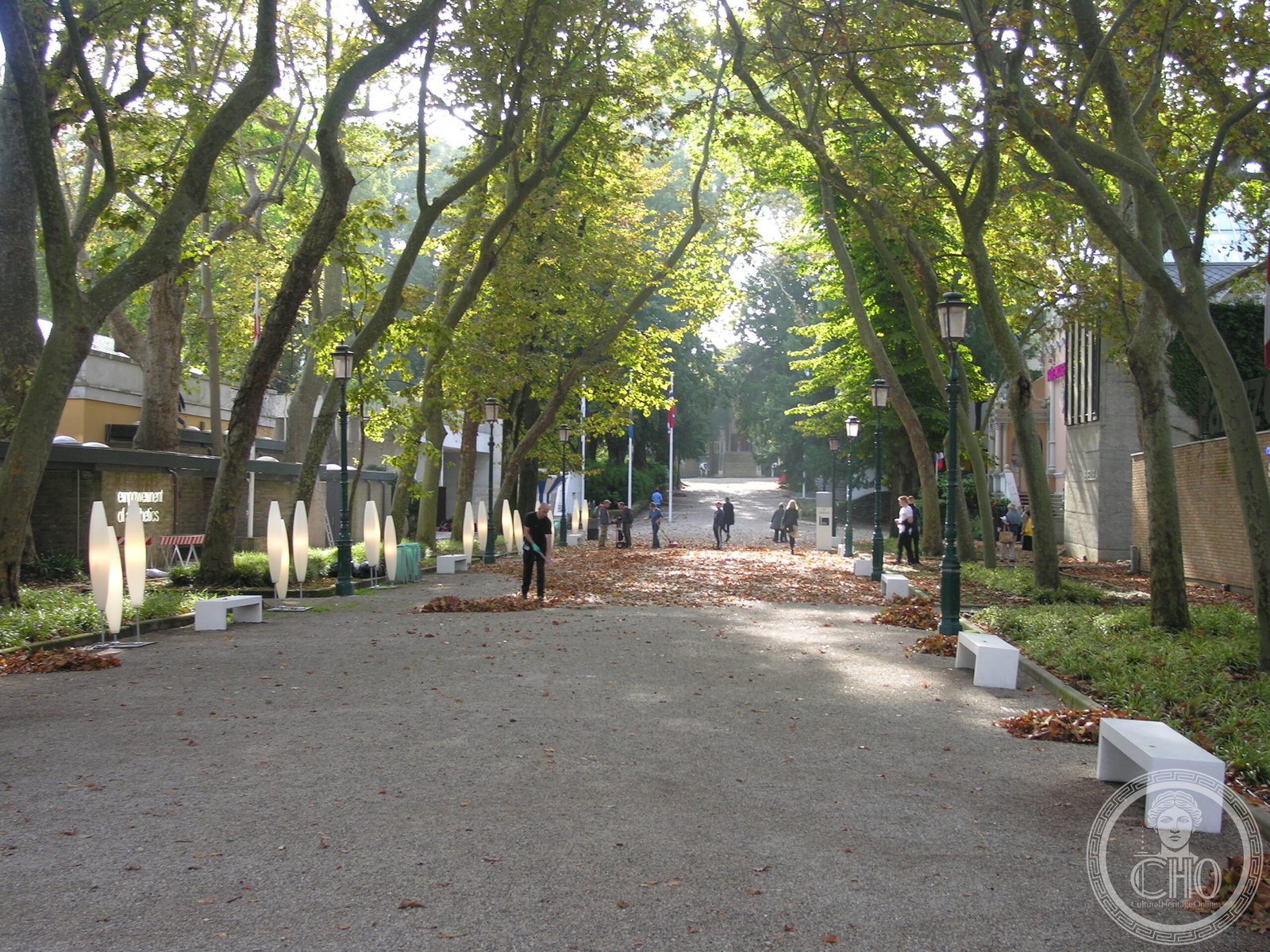
The gardens combine mature trees, waterfront promenades, and an extraordinary concentration of purpose-built national pavilions representing architectures from the Austrian Secession to Brazilian modernism, Finnish functionalism, and beyond. The Central Pavilion — the main Biennale venue — dates to 1894 and has been repeatedly expanded. Outside Biennale years the gardens function as a public park, with children’s play areas, benches, and lagoon views making them a valued retreat from Venice’s dense urban fabric.
Cultural significance
The Giardini della Biennale represent a unique layering of Napoleonic urban history and 125 years of international contemporary art, making them one of the world’s most culturally charged public spaces. The concentration of national pavilions — each a distinct architectural statement — has no parallel anywhere, offering a compressed history of 20th-century architecture alongside the world’s most prestigious biennial contemporary art event.
Practical information
- Address
- Giardini della Biennale, Castello, 30122 Venice, Italy
- Hours
- Public gardens open daily; Biennale pavilions open only during exhibition periods (check labiennale.org for schedules)
Getting there
The gardens are reached via Vaporetto Line 1 or 4.1/4.2 to the Giardini stop. From Piazza San Marco, the walk along the waterfront Riva degli Schiavoni takes approximately 20 minutes. Water taxis and rented boats can also dock at the gardens’ lagoon frontage.
Sources & resources
Find it on the map
See this place and what’s around it →📷 Diventa un fotografo di Cultural Heritage Online
Condividi le tue foto dei luoghi: restano pubblicate con la tua firma come autore. Più vengono viste, più ti fai conoscere — e presto un concorso premierà le foto più apprezzate.
Accedi o registrati gratis per aggiungere una foto