
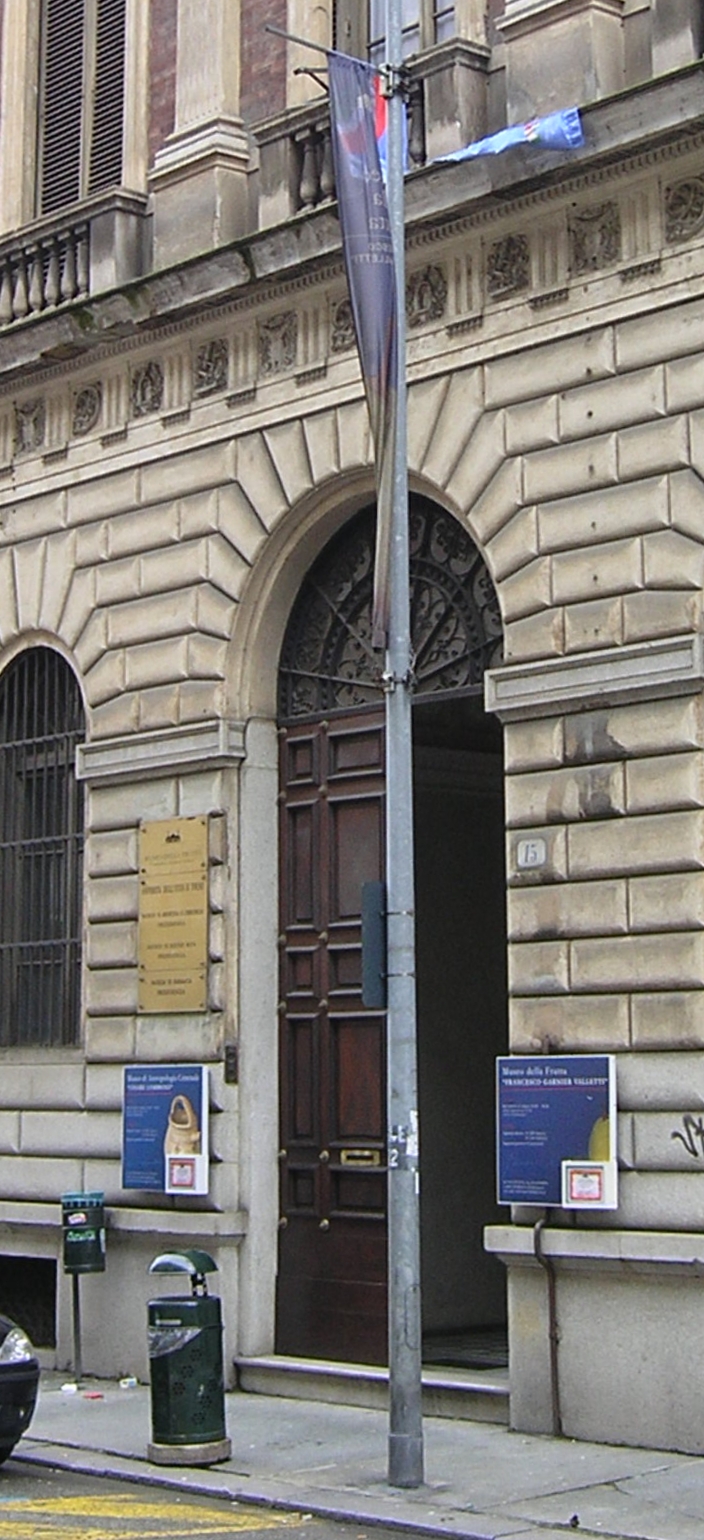
Museum of Criminal Anthropology Cesare Lombroso
The Museum of Criminal Anthropology Cesare Lombroso in Turin is one of the most controversial collections in Italian science, housing the artefacts, skulls, brain specimens, and case-study materials assembled by the criminologist Cesare Lombroso (1835–1909) in support of his theory that criminal behaviour had biological and anatomical determinants. Founded in 1876 and reconstituted as a public museum at the University of Turin in 2009, the collection documents a pivotal and deeply problematic chapter in the history of medicine, anthropology, and criminal justice. It is classified as both a scientific heritage collection and a site of critical reflection on racism and pseudo-science in modern European thought.
At a glance
- Type
- University museum of criminal anthropology and history of science
- Period
- Collection assembled 1876–1909; reopened as public museum 2009
- Style
- University museum with critical interpretive framework
- Location
- Via Pietro Giuria 15, 10126 Turin, Italy
- Coordinates
- 45.0497° N, 7.6797° E
Overview
Cesare Lombroso was a physician and professor at the University of Turin who became the founding figure of the Italian positivist school of criminology. His central claim — that criminals constituted a distinct biological type, recognisable by measurable physical stigmata including skull shape, brain characteristics, and facial features — dominated European and American criminological discourse from the 1870s into the early twentieth century. The museum he assembled to support this theory is now studied as a primary document of the relationship between scientific authority, racial categorisation, and state power in the liberal and colonial Italian state.
History
Lombroso began collecting skulls, brains, and physical specimens from prisoners, psychiatric patients, and executed criminals in the 1870s, initially to demonstrate his atavism hypothesis — the idea that criminals were evolutionary throwbacks exhibiting primitive traits. By the time of his death in 1909, the collection comprised thousands of skulls, numerous preserved brains, weapons confiscated from criminals, artworks produced by prisoners, and extensive documentation. The collection was housed at the University of Turin and periodically studied by researchers. In 2009 the university reopened it as a critical museum — one that presents the original artefacts alongside a rigorous dismantling of Lombroso’s scientific claims and their harmful consequences for Italian and colonial subjects.
What you see
The museum retains Lombroso’s original display cases, measurement instruments, plaster death masks, and anatomical specimens alongside interpretive panels that contextualise each element. The visitor progresses through galleries covering Lombroso’s methodology, the collection of skulls and brains, the category of “born criminals,” studies of women and political offenders, and the global spread and eventual refutation of Lombrosian criminology. A dedicated section addresses the harm caused by these theories in colonial Africa and the Italian South, where they were weaponised to pathologise entire populations. Lombroso’s own skull and preserved brain are among the exhibits.
Cultural significance
The museum occupies a unique position in European heritage as an institution that preserves scientific material it simultaneously critiques. It has been a flashpoint for debates about repatriation — southern Italian communities and descendants of colonial subjects have raised claims for the return of remains — and about the ethics of displaying human bodies collected without consent. Its critical framing has been cited internationally as a model for how universities can engage honestly with the harmful legacies of their founding disciplines.
Practical information
Address: Via Pietro Giuria 15, 10126 Turin. The museum is managed by the University of Turin (Università degli Studi di Torino). Opening hours are limited; check the university’s museum portal (musei.unito.it) for current schedules and booking requirements. Admission is charged. The museum is not recommended for visitors under 14 due to the nature of its contents.
Getting there
The museum is located in the university district of Turin, approximately 15 minutes on foot from Turin Porta Nuova railway station (reached from Milan in 45 minutes by high-speed rail, from Rome in approximately 4.5 hours). Tram lines 4 and 9 serve the surrounding streets. Turin’s city centre is compact and walkable from Porta Nuova; the museum neighbourhood also contains the Museo Egizio and the Mole Antonelliana.
Sources & resources
Find it on the map
See this place and what’s around it →📷 Diventa un fotografo di Cultural Heritage Online
Condividi le tue foto dei luoghi: restano pubblicate con la tua firma come autore. Più vengono viste, più ti fai conoscere — e presto un concorso premierà le foto più apprezzate.
Accedi o registrati gratis per aggiungere una foto