
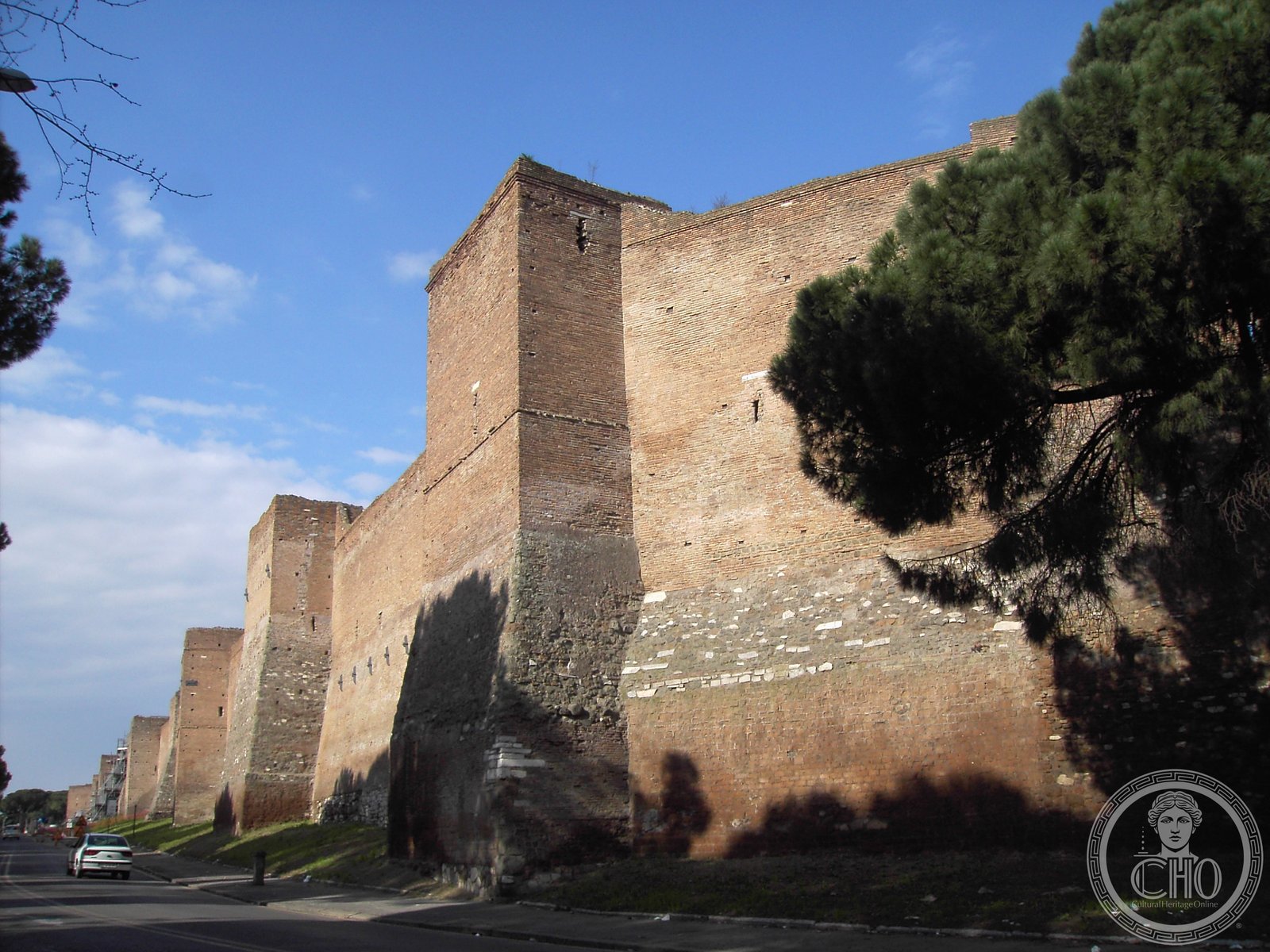
Mura Aureliane
The Aurelian Walls (Mura Aureliane) are a line of city walls built in Rome between 271 and 275 AD, during the reign of the Roman emperor Aurelian. They superseded the much earlier Servian Wall of the 4th century BC, enclosing a far larger area that by then included the populous districts and the seven hills. Stretching for roughly nineteen kilometres and pierced by monumental gates, large stretches of the circuit still survive today, making them among the best-preserved ancient city walls in the world.
At a glance
- Type
- Ancient defensive city walls
- Period
- 271–275 AD, reign of Aurelian; later raised and reinforced
- Style
- Roman military architecture in brick-faced concrete
- Location
- Rome, Italy
Overview
The Aurelian Walls encircle the historic centre of Rome, marking the city’s late-antique boundary. They replaced the Republican-era Servian Wall, which the growing city had long outgrown. Much of the circuit, with its towers and gates, still stands and shapes the cityscape of modern Rome.
History
Emperor Aurelian ordered the walls in the early 270s AD, at a moment when external threats made Rome’s open expanse vulnerable for the first time in centuries. They were built rapidly, in brick-faced concrete, incorporating existing structures into their line where convenient. In later centuries the walls were repeatedly heightened and strengthened, and they continued to define and defend the city throughout the Middle Ages and beyond.
What you see
The surviving walls present long curtains of brickwork punctuated by square towers at regular intervals. Monumental gates, such as the well-known Porta San Sebastiano and Porta San Paolo, pierce the circuit. The masonry shows successive phases of construction and repair, layering centuries of Roman engineering. In places the parapet walks and chambers within the gates can still be appreciated.
Cultural significance
The Aurelian Walls are among the most complete sets of ancient city defences anywhere, a monument to Roman engineering on an urban scale. They remain a defining feature of Rome’s topography and a key landmark of the city’s late-antique and medieval history.
Practical information
Long stretches of the walls can be seen freely from the surrounding streets. The Museo delle Mura, housed in the Porta San Sebastiano, allows visitors to walk a section of the rampart. Opening hours and admission vary, so check the official website before visiting.
Getting there
The walls ring the historic centre and are accessible from many points across Rome by metro, bus and tram. The Museo delle Mura at Porta San Sebastiano lies near the start of the Appian Way and is reached by city bus, with the metro and tram networks serving nearby districts.
Sources & resources
Find it on the map
See this place and what’s around it →Historical events at this place (1)
📷 Diventa un fotografo di Cultural Heritage Online
Condividi le tue foto dei luoghi: restano pubblicate con la tua firma come autore. Più vengono viste, più ti fai conoscere — e presto un concorso premierà le foto più apprezzate.
Accedi o registrati gratis per aggiungere una foto