
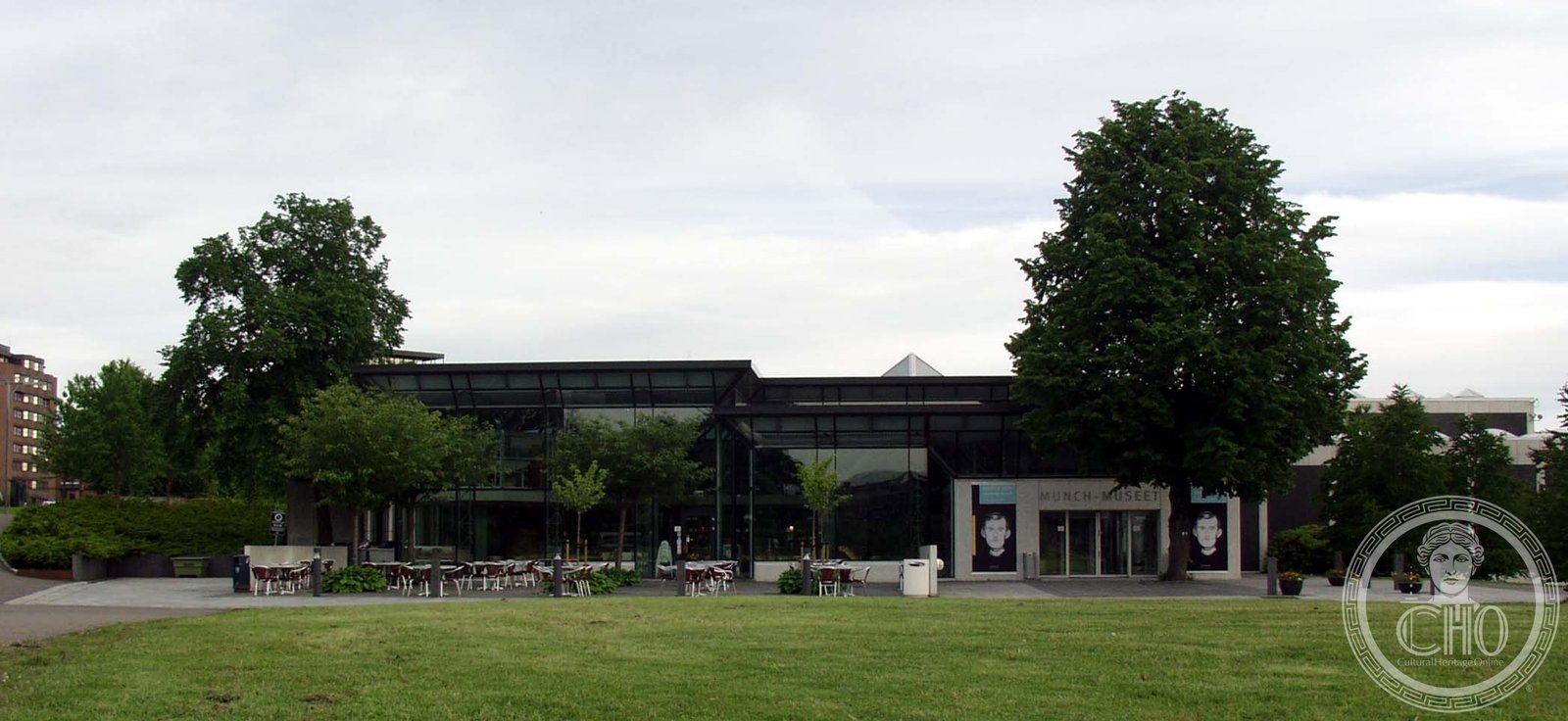
Munch Museum
The Munch Museum — marketed as MUNCH since 2020 — is an art museum in the Bjørvika waterfront district of Oslo, Norway, dedicated entirely to the life and works of the Norwegian Expressionist painter Edvard Munch (1863–1944). Its new thirteen-storey landmark tower, designed by Spanish firm Estudio Herreros and opened in October 2021, holds the world’s largest collection of Munch’s art and replaced the original 1963 building in Tøyen.
At a glance
- Type
- Public art museum
- Period
- Original museum 1963; new building opened 2021
- Style
- Contemporary architecture (cantilevered tower)
- Location
- Bjørvika, Oslo, Norway
- Coordinates
- 59.9059° N, 10.7551° E
Overview
MUNCH is home to the world’s most comprehensive collection of works by Edvard Munch, encompassing paintings, prints, drawings, watercolours, sculptures, and personal archives. The new building in Bjørvika — an angular, asymmetric tower clad in perforated aluminium — opened to the public on 22 October 2021 after years of planning and construction. It immediately became one of Oslo’s most distinctive landmarks, situated beside the Oslo Opera House on the waterfront.
History
Edvard Munch bequeathed his entire artistic estate to the City of Oslo upon his death in 1944, forming the foundation of what would become the Munch Museum. The original museum opened in Tøyen in 1963 and served visitors for nearly six decades. The decision to build a new, larger facility was driven by the growing collection and the need for modern conservation standards, with the Bjørvika site chosen as part of Oslo’s waterfront regeneration. The new museum opened in 2021, designed by Spanish architects Estudio Herreros, and the Tøyen building subsequently closed.
What you see
The thirteen-storey tower features a dramatic cantilever that tilts over the Oslo Fjord, clad in a perforated aluminium screen that filters natural light. Inside, the museum’s 26,313 square metres accommodate permanent galleries across multiple floors, temporary exhibitions, a library and archive, a restaurant, and panoramic terraces with views over the fjord. The permanent collection includes approximately 26,000 objects — among them multiple versions of The Scream, Madonna, and Melancholy — displayed in rotating thematic presentations.
Cultural significance
Edvard Munch’s work is foundational to European Expressionism, and The Scream (1893) is among the most recognisable images in Western art history. The museum’s custodianship of the largest and most intimate body of evidence of Munch’s practice — including his diaries and letters — makes it a primary research site for the study of late 19th- and early 20th-century Northern European art.
Practical information
- Address
- Edvard Munchs plass 1, 0194 Oslo, Norway
- Opening hours
- Check official website: munchmuseet.no
- Admission
- Check official website for current prices
Getting there
The museum is easily accessible by public transport from Oslo city centre. The nearest metro station is Bjørvika on Line 2 (Ruter), and multiple tram and bus routes stop nearby on Dronning Eufemias gate. The museum is a ten-minute walk from Oslo Central Station. Cycling infrastructure is available along the waterfront.
Sources & resources
Find it on the map
See this place and what’s around it →📷 Diventa un fotografo di Cultural Heritage Online
Condividi le tue foto dei luoghi: restano pubblicate con la tua firma come autore. Più vengono viste, più ti fai conoscere — e presto un concorso premierà le foto più apprezzate.
Accedi o registrati gratis per aggiungere una foto