
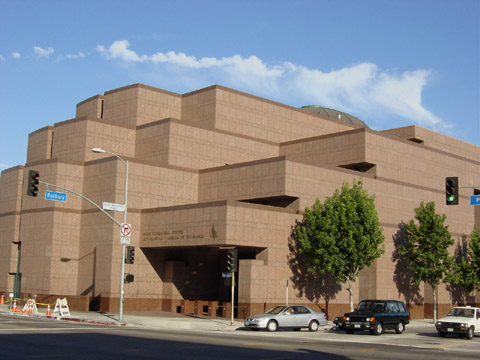
Museum of Tolerance — Beit HaShoah, House of the Holocaust
The Museum of Tolerance (MOT), also known as Beit HaShoah — House of the Holocaust — is an interactive human rights and Holocaust education museum in Los Angeles, founded in 1993 by the Simon Wiesenthal Center. Using immersive exhibits and testimonies from survivors, it confronts visitors with the history of the Holocaust and encourages reflection on contemporary prejudice, discrimination, and genocide. The museum is one of the foremost Holocaust remembrance institutions in the United States and attracts over 400,000 visitors annually.
At a glance
- Type
- Holocaust museum and human rights center
- Period
- Opened 1993
- Style
- Contemporary museum architecture with immersive exhibit design
- Location
- Los Angeles, California, USA
Overview
The Museum of Tolerance was established by the Simon Wiesenthal Center as a living memorial to the six million Jews who perished in the Holocaust and as an educational platform for exploring civil and human rights issues. Its two main permanent sections — the Holocaust section and the Tolerancenter — guide visitors through different historical and contemporary dimensions of hatred and injustice. The museum draws school groups, families, and adult learners from around the world, positioning Los Angeles as a significant centre for Holocaust remembrance outside Israel and Europe.
History
The Simon Wiesenthal Center, founded in 1977 and named after the celebrated Nazi hunter Simon Wiesenthal, conceived the Museum of Tolerance as its flagship educational facility. Construction on the current building at 9786 West Pico Boulevard began in the late 1980s, and the museum opened to the public in February 1993. Subsequent expansions have added new exhibit galleries, a multimedia learning centre, and a dedicated space for survivor testimonies. The institution has hosted world leaders, heads of state, and millions of students since its inaugural year.
What you see
The Holocaust section opens with an experiential journey through pre-war Jewish life in Europe, tracing the rise of National Socialism and culminating in a deeply affecting re-creation of life and death in the camps. The Tolerancenter features interactive kiosks and simulations designed to confront personal bias and reflect on contemporary civil rights struggles. A permanent exhibit on the life and work of Simon Wiesenthal occupies a dedicated gallery, and rotating exhibitions address topics ranging from global genocide to social media hate speech.
Cultural significance
As one of the largest Holocaust museums in the United States, the Museum of Tolerance holds enormous symbolic and educational weight in American Jewish cultural life and in the broader human rights community. Its integration of personal survivor testimonies with interactive technology set a standard for experiential museum design that influenced institutions worldwide. The Wiesenthal Center’s advocacy mission extends beyond the museum walls through policy engagement, digital content, and international outreach.
Practical information
- Address
- 9786 West Pico Boulevard, Los Angeles, CA 90035, USA
- Coordinates
- 34.0537° N, 118.4038° W
- Hours
- Check official website for current opening times; advance reservations recommended
- Admission
- Paid entry; discounts available for students and groups
Getting there
The museum is located in the Pico-Robertson neighbourhood of Los Angeles, near Beverly Hills. By car, take the I-10 (Santa Monica Freeway) to Robertson Boulevard and head north. Limited street parking and a paid lot are available nearby. By public transit, Metro Bus lines serve Pico Boulevard; the museum is a short walk from the Pico/Robertson bus stop.
Sources & resources
Find it on the map
See this place and what’s around it →📷 Diventa un fotografo di Cultural Heritage Online
Condividi le tue foto dei luoghi: restano pubblicate con la tua firma come autore. Più vengono viste, più ti fai conoscere — e presto un concorso premierà le foto più apprezzate.
Accedi o registrati gratis per aggiungere una foto